Case file 012 · Social Psychology
Philip Zimbardo
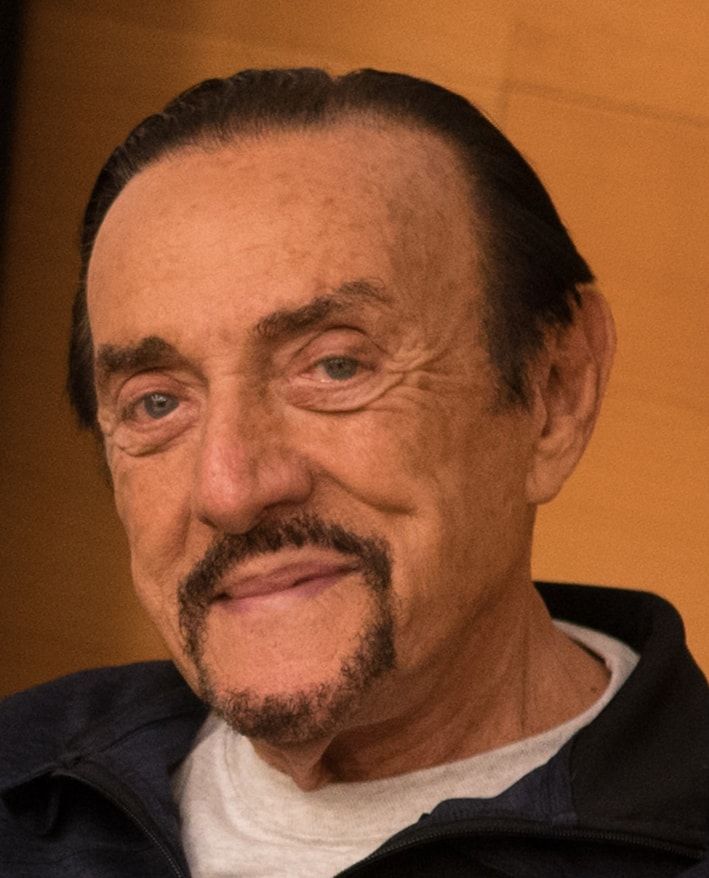
.jpg)
Philip George Zimbardo was born on 23 March 1933 in New York City, the child of a family with Sicilian roots, and grew up in the South Bronx in poor circumstances — illnesses, moves, the street as the school of socialisation. He often told later that the question of good people in bad environments found him there, long before any degree: the boy from the Bronx watched neighbourhood children disappear into gangs and wanted to know why some went and some stayed. Like Stanley Milgram he attended James Monroe High School — the two were classmates and remained professionally connected; that the century’s two most famous researchers of the situation shared a schoolroom belongs to the improbable facts of this archive.
He studied — the first of his family at a college — psychology, sociology and anthropology at Brooklyn College and took his doctorate at Yale in 1959. After posts at Yale, New York University and Columbia College he moved in 1968 to Stanford University, where he taught until his retirement in 2007. His early work concerned deindividuation — the behaviour of anonymised people — and supplied the preliminary studies to the great case: hooded subjects dealing out harsher shocks, and the abandoned car stripped within days in the Bronx that stood untouched for weeks in Palo Alto.
In 1971, in the basement of the Stanford psychology building, he ran the prison experiment that would stamp his name. It made him a public figure far beyond the field — testimony before congressional committees after that year’s prison revolts, television, front pages — and it is today the reason his work is being re-evaluated: the archival analyses of 2018 turned the showpiece experiment into a contested case, and Zimbardo fought the dispute himself into his final years.
Zimbardo was an extraordinarily effective communicator of science — perhaps the most effective the field ever had. The television series Discovering Psychology of 1990 and his introductory textbook Psychology and Life shaped generations of students; colleagues elected him president of the American Psychological Association for 2002. The price of this reach was that his most famous story always circulated in its most pointed version — and that its later revision filled the same public space.
Whoever studied at Stanford knew him first as a performance: the introductory lectures of the professor with the black goatee filled halls, worked with demonstrations, costumes and stories, and made psychology an event — a talent he later extended into the television camera. His book Shyness of 1977 became a bestseller and showed the other side of the same interest: captivity without an institution, the inner prison of people who guard themselves.
His second body of work is quieter and has weathered the tests better. At the end of the 1970s he founded the Stanford shyness clinic and was the first to make shyness a serious research subject; with John Boyd he developed the time perspective inventory, which measures whether people live out of the past, the present or the future. After the pictures from Abu Ghraib he appeared in 2004 as an expert witness in the court-martial of one of the guards and wrote, with The Lucifer Effect (2007), the summa of his situationism — including a closing chapter that reversed the direction of view: if situations can favour evil, then heroism must be trainable just as banally. From this thought grew, from 2010, the Heroic Imagination Project, which aims to teach pupils and adults to intervene in critical moments — the old situationist as a didact of civil courage.
Into old age he remained approachable, fond of travel and of argument — an emeritus who gave interviews the way others hold office hours, answered the criticism of his life’s work as long as his strength lasted, and promoted his heroism project undeterred alongside.
His broadest influence came not through studies but through teaching material. In the 1970s Zimbardo took over the introductory textbook Psychology and Life, which he issued in ever new editions for decades, and in the 1990s he presented a television series on psychology that still runs in American courses. Whole cohorts came to know the field in his formulation — which explains why the version of the prison experiment that appears in the textbooks stayed his version for so long.
The marriage with Christina Maslach, the colleague who forced the prison experiment’s end in 1971, lasted from 1972 to his death — the woman who contradicted him became the constant of his life, and Zimbardo liked to tell that point himself. He died on 14 October 2024 in San Francisco, at the age of 91. The obituaries had to do what this file attempts: to honour a man whose most famous contribution was at once his most questionable — and whose effect on the public image of psychology scarcely anyone has matched.
No classic in this archive stands on a thinner base of data — and none on thicker folders: the study lasted six days and fills shelf-metres at Stanford.
The context was the prison debate of the day, and the funding source belongs in the file: the study was financed by the Office of Naval Research, which wanted to know why military prisons chronically escalate between guards and inmates. Zimbardo, who had previously worked on deindividuation — anonymised subjects dealt harsher shocks; an abandoned car in New York was stripped within days —, wanted to switch off the dispositional explanation: if you sort healthy, average people into a prison by lot and the institution still derails, then it is the institution. The question was Milgram’s question, extended by an institution — no longer one man in a coat, but a whole building as authority.
In August 1971 a corridor in the basement of Jordan Hall at Stanford was converted into a prison block: three cells with barred doors, a closet as solitary confinement, no windows, no clocks. A newspaper advertisement sought participants for a study of prison life, at 15 dollars a day. As consultant served Carlo Prescott, who had spent seventeen years in San Quentin; the furnishings — from the delousing spray to the ankle chain — followed his recollections.
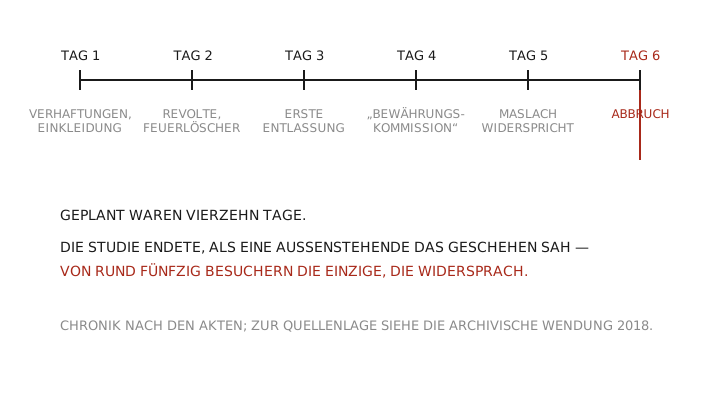
From about 75 applicants, 24 were selected as physically and mentally unremarkable and assigned by chance to the roles of guard and prisoner. Two weeks were planned. The prisoners were picked up at home by the real Palo Alto police — siren, search, booking —, deloused, and given smocks with numbers and stocking caps; from then on they were addressed only by number. The guards wore khaki uniforms, mirrored sunglasses and batons and worked eight-hour shifts — they could go home, the prisoners could not. The asymmetry was the design.
Zimbardo himself took the role of prison superintendent — he did not observe from outside but was part of the arrangement. This double role later became a central point of criticism: the experimenter who was to measure the escalation was at the same time the employer who tolerated it.
Events escalated fast. On the second day the prisoners barricaded their cells; the guards answered with fire extinguishers, withdrawal of mattresses, solitary confinement and increasingly degrading orders — nightly counts, push-ups, cleaning toilets with bare hands, later sexually tinged games of humiliation. The prisoner with the number 8612 was released after about 36 hours with an acute stress reaction; others followed. A prison chaplain invited as visitor noted that the simulation felt more real than some institutions; parents on visiting day demanded lawyers. On the sixth day Zimbardo stopped the experiment. Decisive was the objection of Christina Maslach, then freshly doctored and later his wife: brought in for an interview, she was the first to say plainly that people were being abused here — of some fifty outsiders who had seen the block, as Zimbardo himself later recorded, the only one.
Two scenes from the tapes carry the study’s fame to this day. One is the parole board chaired by the consultant Carlo Prescott: the man who knew the arbitrariness of such hearings from seventeen years in San Quentin caught himself reproducing it with visible relish — and afterwards described his horror at it. The other is the night on which fellow prisoners chanted in chorus that inmate 819 was a bad prisoner, while 819 had broken down next door and Zimbardo only let him go once the weeping man could no longer bear the sentence. Both scenes show the same thing: how quickly the simulation lost its as-if status for everyone involved — consultant, director, prisoners.
For the file’s completeness: the study was approved by the rules of its day — the Stanford committee for human experimentation had agreed, and participants were formally assured the right to leave — a right the proceedings then systematically blurred, until prisoners believed they could not get out. The case thus shows the limit of the formalities: an approval reviews the plan, not the institution it becomes.
The conclusion Zimbardo drew ran: not dispositional traits but the situation and the assigned role explain the behaviour. This reading — ordinary people are made perpetrators by an institution — was carried for decades through textbooks, documentaries and feature films, from the congressional committee after the Attica uprising to Zimbardo’s appearance as expert witness in an Abu Ghraib court-martial in 2004, and his book The Lucifer Effect made it a world formula in 2007. The study itself was never published where its fame would suggest: the main report appeared in 1973 in a criminological journal without strict peer review — the field’s most famous study never passed through its testing procedures.
The archival turn carries a date: 2018. The French researcher Thibault Le Texier worked through the Stanford holdings — tapes, notes, duty rosters — and found that the textbook version does not match the files at decisive points. The guards did not invent their harshness: they were sworn in at an orientation to demonstrations of power, received suggestions for harassment, and the warden David Jaffe expressly instructed hesitant guards to act tougher — the tape of that address survives. At the same time Ben Blum published interviews in which prisoner 8612, Douglas Korpi, described his famous breakdown as an act — he had wanted out, to study. And one detail of the prehistory was reweighted: a large part of the design came from a student exercise Jaffe had run in his dormitory months earlier. Zimbardo replied at length in 2018 — the orientation, he argued, changes nothing about the fact that no one was forced into cruelty and not all guards became cruel; the file holds both statements side by side, and the editorial checking of his reply is expressly still open in this archive.
An independent repetition exists, and it came out differently: for the BBC study of 2002 Stephen Reicher and Alexander Haslam built a comparable institution without coaching the guards — and got no tyranny but its disintegration: the guards found no shared identity, the prisoners organised and tipped the system. The authors' conclusion: people do not slide into roles automatically; tyranny needs leadership that swears a group to a programme. That is no rescue of the old reading but its more precise successor — and it fits the Stanford files themselves, in which the coaching is, after all, documented.
How the textbooks handle all this has meanwhile been measured itself: Richard Griggs checked the standard American introductory works in 2014 and found the study told prominently almost everywhere and the published criticism mentioned almost nowhere. Only after 2018 did that begin to turn. The archive records this inertia as a finding of its own: a discipline that lives by revision left its most famous story unrevised the longest.
The study’s largest public appearance came thirty-three years after it was broken off. When the pictures from Abu Ghraib emerged in 2004, Zimbardo appeared as an expert witness in the court-martial of one of the guards and set out what his study suggested: the abuses were explained not by a flaw of character but by a situation without supervision, without clear rules, and with a mission that rewarded harshness. The court did not follow him — the defendant was convicted — but the argument shaped the public debate about the responsibility of chains of command. Read strictly, the file must record that an expert opinion was here founded on a study whose evidence base fell apart fourteen years later. Read charitably, it can be said that the claim about supervision and rules is documented without Stanford too — by the military’s own investigative reports.
What stands today is therefore less and more at once. As an experiment in the strict sense the study cannot be saved — no control group, an involved experimenter, instructed actors, confounded measurement; as a demonstration it remains the most vivid object lesson in how fast an institution with assigned power can derail when its leadership expects the derailment. The textbooks have begun to rewrite it accordingly — from proof to case study, from human nature to the responsibility of leadership. It is the archive’s best-documented case of a study falling methodologically while remaining historically important: what happened in that basement is instructive precisely because it was not an experiment.
The Stanford prison experiment never appeared in a peer-reviewed psychological journal. The full report of 1973 was published in the International Journal of Criminology and Penology, a further version in the Naval Research Reviews — funded by the Office of Naval Research. For a study of this reach that is a remarkably thin publication basis.
In 2018 Thibault Le Texier worked through the tapes, notes and letters archived at Stanford. His findings, published in the American Psychologist in 2019, concern the core of the arrangement: the guards were not left to themselves but were expressly instructed in a briefing to come on hard and to convey powerlessness to the prisoners. What was presented as spontaneous role-taking was in part instructed.
Le Texier further documents that the central conclusions were fixed before the study began, that there was no control condition, and that the supporting material was selected selectively. Douglas Korpi, who as number 8612 showed the first breakdown, later said he had faked the reaction in order to be released early.
The counter-test came from Stephen Reicher and Alexander Haslam with the BBC Prison Study of 2002, published in 2006. Under systematic observation it was not the guards who developed dominance but the prisoners who developed collective resistance; the guard group fell apart. Roles alone do not produce tyranny — what matters is whether a group identifies with its role.
What remains is an object lesson in the communication of science. The study was so powerful for decades precisely because it told a simple and disturbing story. Correcting it took archival work, not new experiments.
For this archive the file is therefore kept open rather than closed: the case is interesting as a case; its results no longer are.
Replication status: not replicated.
A direct repetition has never taken place and will not take place under current ethical standards. The only serious reconstruction under scientific observation — Reicher and Haslam’s BBC Prison Study — came to markedly different results: no automatic brutalisation through the guard role, but collective resistance from the prisoners and a collapse of the guard group.
On top of that, the arrangement itself does not meet the preconditions for a replication. Without a control condition, with instructed guards and with the experimenter in the role of prison superintendent, there is no determining which condition would even have to be repeated.
The status therefore refers not only to repetitions that never happened but to how much weight the original findings can bear. The archival analysis of 2019 took apart the reading of spontaneous role-taking.
Primary sources:
- Haney, C., Banks, W. C., & Zimbardo, P. G. (1973). Interpersonal dynamics in a simulated prison. International Journal of Criminology and Penology, 1, 69–97.
- Zimbardo, P. G. (2007). The Lucifer Effect: Understanding How Good People Turn Evil. Random House.
Criticism and counter-test:
- Le Texier, T. (2019). Debunking the Stanford Prison Experiment. American Psychologist, 74(7), 823–839.
- Reicher, S., & Haslam, S. A. (2006). Rethinking the psychology of tyranny: The BBC prison study. British Journal of Social Psychology, 45(1), 1–40.
- Blum, B. (2018). The Lifespan of a Lie. Medium/Trust Issues.
Overview: https://en.wikipedia.org/wiki/Stanford_prison_experiment