Case file 009 · Cognitive Psychology
Elizabeth Loftus
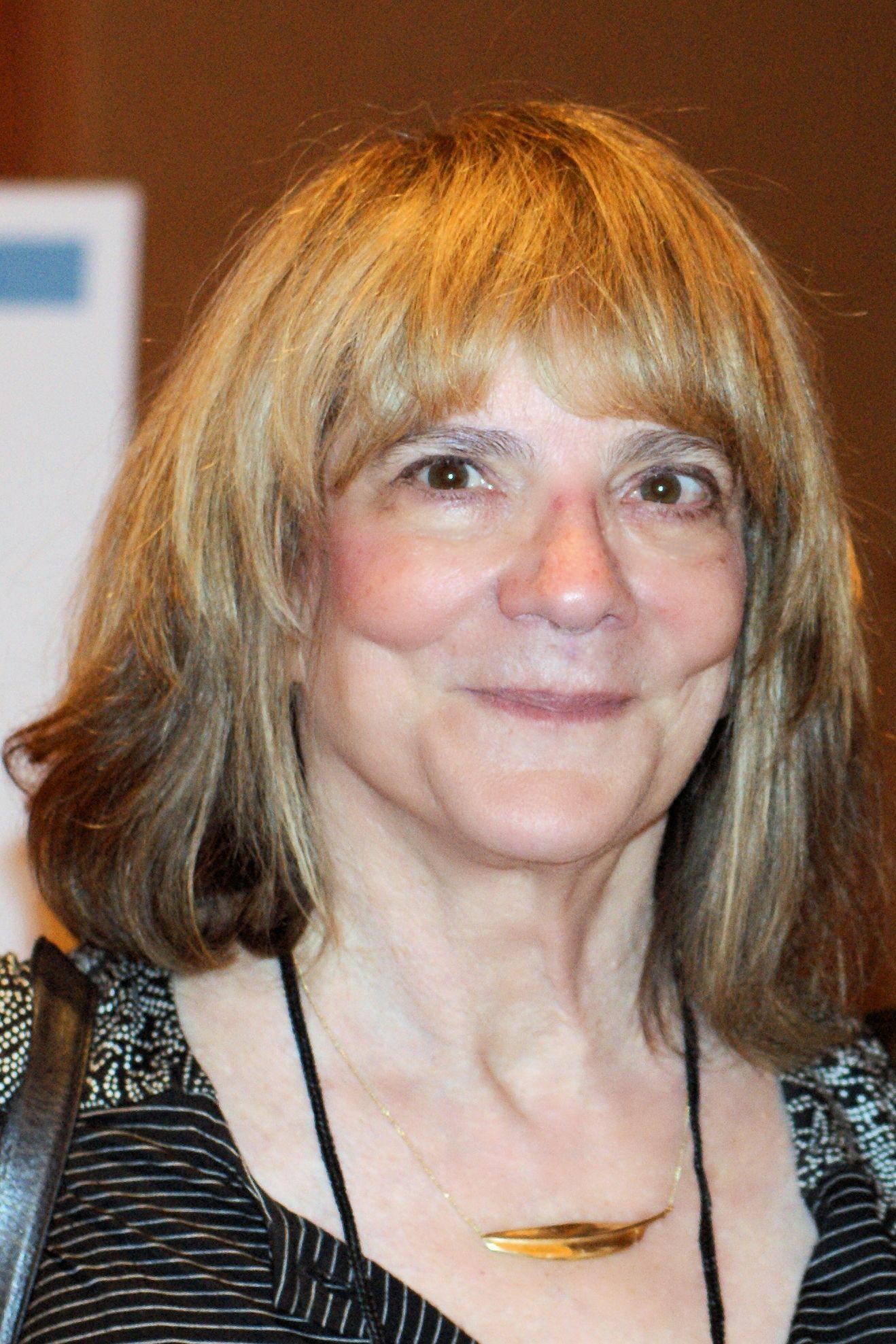
Fig. 1 — CC BY-SA 3.0 · Photo: BDEngler

Fifty students watched the same film of a traffic accident. One half was asked how fast the cars were going when they smashed into each other; the other, how fast they were going when they contacted. A week later came the decisive question: did you see broken glass? There was none in the film. Elizabeth Loftus had shown that a single verb changes a memory.
Loftus was born on 16 October 1944 in Los Angeles as Elizabeth Fishman. When she was fourteen, her mother drowned in the swimming pool of a relative’s house — and decades later this loss became her most-told self-experiment: at a family gathering an uncle told her that she herself had found the body. In the days that followed, images began to arrive, details, a growing certainty — until the family corrected him: it was an aunt who had found her mother. The leading researcher of false memories had experienced on her own memory how quickly someone else’s sentence becomes an inner scene. She has told the story in lectures ever since — as a warning that expertise does not immunise.
She studied mathematics and psychology at UCLA and took her doctorate at Stanford in 1970 on semantic memory — concept networks, retrieval times, questions far from any courtroom. The turn came, by her own account, out of impatience with her own elegance: she wanted research with consequences outside the journal. A project on traffic accidents for the Department of Transportation supplied the subject, the University of Washington in Seattle became her laboratory for three decades, and in 1974 the paper on cars and verbs appeared — the study that refounded the psychology of testimony.
The answer she assembled over decades of experiments runs: eyewitness testimony is far less reliable than courts assume. Memory is not an archive from which one retrieves, but a reconstruction that can change with every retrieval — and that can be influenced from outside without the person noticing. With Eyewitness Testimony (1979) she carried the finding into the legal literature, and the researcher became a figure of trials: Loftus has testified or consulted in several hundred proceedings, from everyday cases to the darkest names of American criminal history — though by her own account she declined the defence’s request in the Jerusalem Demjanjuk trial, and wrote a chapter about the struggle over it.
Her books carried the dispute beyond the field: Witness for the Defense (1991, with Katherine Ketcham) told the trial work from inside; The Myth of Repressed Memory (1994, also with Ketcham) became the pamphlet of the memory wars — read by one side as enlightenment, by the other as an attack on survivors' credibility.
From the 1990s she was drawn into the public battle that entered the field’s history as the “memory wars.” In the United States, cases multiplied in which adults accused their parents of abuse remembered only in therapy. Loftus asked whether such memories can also arise without the event having happened — and showed experimentally that they can. The shopping-mall paradigm of 1995 became the crown exhibit; the case of George Franklin, whose conviction rested solely on a recovered memory and later fell, the object lesson.
The price was high. She received death threats, needed personal protection at lectures for a time, lost friendships in the field, and was attacked by colleagues working with survivors as an advocate of perpetrators. When she re-investigated the published model case of a recovered memory, the woman concerned sued her for invasion of privacy; after years the proceedings ended essentially in her favour. In 2002 she moved to the University of California, Irvine — by her own account also because the climate in Seattle had grown inhospitable.
The field’s recognition came nonetheless, and it came massively: presidency of the Association for Psychological Science, election to the National Academy of Sciences, the Grawemeyer Award in psychology; in the much-cited ranking of the most influential psychologists of the twentieth century she leads the women. Criticism aims to this day at her findings being cited in court even where they do not fit — an objection she herself has phrased most sharply: the laboratory can show that false memories are possible; whether a particular memory is false, it never can.
Loftus still teaches at Irvine, psychology and law in one person, and likes to open her lectures with the same sentence with which this file can close: memory is not a recording but a narrative — and narratives always have several authors.
The question of 1974 arose in the courtroom before it reached the laboratory: what does the manner of questioning do to what a witness remembers? The assumption of the day was that a memory is either there or not — a question can retrieve it but not change it. On this assumption rested the entire practice of examination, from the patrol officer to the cross-examination, and the psychology of memory had little to set against it, because it worked with syllable lists rather than events. Loftus, freshly doctored on semantic memory and looking for a question with consequences, found hers in traffic accidents: everyday enough for the laboratory, consequential enough for court.
Loftus and John Palmer presented two experiments. In the first, 45 students watched seven film clips of traffic accidents and estimated the speed. Only one word in the question was varied. With "smashed into each other“ the mean estimate was 40.8 miles per hour, with ”contacted" 31.8 — on identical footage. Five verbs, five means, cleanly ordered by the force of the word. That allowed two readings: either the word merely shifts the answer — witnesses say what the question suggests — or it shifts the memory itself. The difference is legally anything but academic.
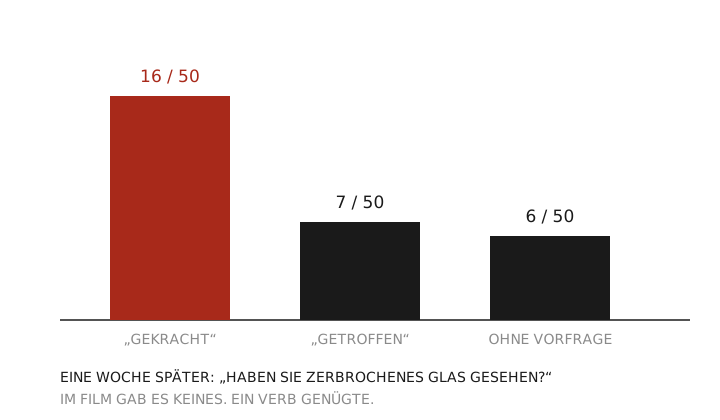
The second experiment separated the readings. 150 students watched a film with an accident. One third got the question with “smashed,” one third with “hit,” one third no speed question at all. A week later all returned and were asked, among other things, whether they had seen broken glass. In the film there was no broken glass at all.
In the “smashed” group 16 of 50 said yes, in the “hit” group 7 of 50, in the control group 6 of 50. One verb, one week earlier, had more than doubled the share. Whoever merely wanted to answer what the question suggested would have had no cue left in the second session — the glass question was neutrally put. The obvious interpretation: the verb had become part of the memory and had amended it toward a heavier accident.
Out of this pattern Loftus built a standard paradigm in the following years: show an event, slip in misinformation casually, test neutrally later. With traffic signs it became canonical — subjects saw a stop sign, later read of a yield sign, and at recognition mostly chose the wrong picture. The misinformation effect proved dosable, time-dependent and robust across laboratories; the theoretical question of whether the original trace is overwritten or merely overlaid occupied the literature of the 1980s and is not fully settled to this day. For practice it was secondary: on both readings the witness afterwards says something false with honest conviction.
In parallel, testimony research measured what turns memories besides words. Gary Wells separated the sources of error into those the system can control — lineups, instructions, feedback — and those lying in the event itself: stress, distance, attention narrowed onto the weapon. Out of this bookkeeping came reform proposals that now stand in guidelines: double-blind lineups, neutral instructions, the witness’s confidence recorded at once, before feedback inflates it. And Loftus’s own workshop delivered the verb question’s sequel with imagination inflation: whoever merely imagines an event vividly afterwards holds it more likely to have been experienced — the exercise of certain therapies had arrived in the laboratory as a source of memory.
Then the question left the laboratory with a force no one had planned. From about 1990, cases multiplied in the United States in which adults accused their parents — on the basis of memories of abuse that had first surfaced in therapy, under hypnosis, guided imagery or insistent interpretation. The first murder trial of this kind, the case of George Franklin in 1990, ended in a conviction resting solely on his daughter’s recovered memory; the verdict was overturned years later. Loftus, called into such proceedings as an expert, put the question that split the field: can memories arise of entire events that never happened — not merely shifted details, but episodes with a beginning, a place and a feeling?
The answer of 1995 is the file’s second centrepiece. Together with Jacqueline Pickrell she presented 24 subjects with short accounts of four events from their childhood, purportedly supplied by family members. Three were real, one invented: having been lost in a shopping mall as a child — plausible, mildly distressing, “confirmed” by the family. After two interviews, six of the 24 participants remembered the event that had never taken place, wholly or in part — some with details that did not occur in the account: the old man in the flannel shirt, the crying, the scolding. Follow-up studies by other groups drove the paradigm further — with doctored childhood photos of a balloon ride, about half developed at least partial memories, and in 2015 Julia Shaw and Stephen Porter reported even implanted memories of having committed a crime, though a reanalysis corrected that rate substantially downward. The spread of the rates has itself become a research subject.
The theory carrying these findings today is called source monitoring: remembering, on Marcia Johnson’s framework, is not playback but attribution — memory checks vividness, embedding and plausibility to decide where an inner scene comes from, and this check can fail. Heard becomes seen, imagined becomes experienced, told becomes remembered first-hand. That such confusions are no exotic malfunction has been shown since 1995 by Roediger and McDermott’s DRM paradigm with disquieting economy: whoever learns a list like bed, rest, awake, dream afterwards “remembers,” at a high rate, the never-presented word sleep — false memory in thirty seconds, without any suggestion, purely from the material’s associative density.
The textbook version makes of this: memories can be implanted. The more precise statement is narrower and stronger. What is shown is that under conditions of repeated, suggestive questioning by a source experienced as credible, some people form memories of everyday events that did not take place. What is not shown is that every recovered memory is false — Loftus never claimed that either. Chris Brewin and Bernice Andrews calculated in 2017 that full adoption of false events is the exception rather than the rule; the paradigm’s defenders reply that partial adoptions suffice in court to change a life. Both sides are right, and exactly that makes the finding so uncomfortable.
The dispute was fought personally, into the courts: when Loftus re-investigated the published model case of a supposedly recovered memory, the woman concerned sued her — the proceedings dragged on for years and ended essentially in Loftus’s favour. The file records this episode because it shows what was at stake: this was never only about memory theory, but about families, sentences, and the question of whom a court may believe.
Whether a planted memory also changes behaviour Loftus tested in a series of her own, and the answer is uncomfortable. After a questionnaire, participants received a supposedly computer-generated evaluation of their childhood stating that a particular food had once made them sick. Some held this to be true — and those afterwards reported liking the food less, and chose it less often when it was later on offer. The same arrangement worked with the sign reversed and with foods people want to eat. The reach is limited and the effects are small; but they show that a false memory is not merely an error about the past — it helps carry a decision in the present.
What stands today: the misinformation effect itself, in hundreds of studies and meta-analyses. It belongs to the best-attested findings of memory research and has changed practice — open questions first, no suggestive questions, wording recorded, identifications by protocol. The DNA exonerations of the Innocence Project era supplied the field confirmation: in the great majority of later-refuted verdicts sat an honestly convinced, false eyewitness statement. The verb in the question of 1974 has thereby become one of the most consequential vocabulary items in the history of law.
The everyday picture of memory is an archive: events are filed away, retrieved later, and someone who cannot remember has failed to find the folder. From that picture it follows that a memory is either genuine or does not exist at all.
Research describes something else. Remembering is a reconstruction: out of fragments — images, smells, sentences, knowledge of how such a thing usually goes — a scene is assembled anew at every retrieval. This is mostly astonishingly reliable. But it has a consequence that counts in court: whatever arrives between the event and the retrieval can migrate into the reconstruction without being marked as foreign. A newspaper photograph, another witness’s account, the verb in a question.
The most important practical point is that the two cannot be told apart. A memory into which foreign material has migrated does not feel weaker than an intact one, and it is often held with greater certainty — the same finding that Neisser’s Challenger study shows elsewhere. Nothing about the correctness of a witness’s statement can therefore be inferred from her conviction. That is precisely the coupling juries and courts usually assume.
Replication status: replicated.
The misinformation effect has been confirmed in hundreds of experiments and several meta-analyses, across age groups, materials and languages. It is among the most stable findings in memory research. The implanting of whole events has also been replicated repeatedly; a 2016 synthesis of eight studies with 423 participants in total arrives at a proportion of about 30 per cent who develop a false memory — with considerable spread depending on method.
What the status does not say: it says nothing about whether a particular memory is correct in an individual case. The experiments show that false memories can arise, not that a given memory is false. That distinction is the core of the criticism of how the findings are used in court, and it belongs in the file.
Primary sources:
- Loftus, E. F., & Palmer, J. C. (1974). Reconstruction of automobile destruction. Journal of Verbal Learning and Verbal Behavior, 13(5), 585–589. — The two experiments with the verb and the broken glass.
- Loftus, E. F., & Pickrell, J. E. (1995). The formation of false memories. Psychiatric Annals, 25(12), 720–725. — The shopping-mall study.
Replication and overview:
- Scoboria, A., et al. (2017). A mega-analysis of memory reports from eight peer-reviewed false memory implantation studies. Memory, 25(2), 146–163. — The pooled analysis.
- Zaragoza, M. S., & Lane, S. M. (1994). Source misattributions and the suggestibility of eyewitness memory. Journal of Experimental Psychology: Learning, Memory, and Cognition, 20(4), 934–945. — The mechanism: source confusion.
Criticism:
- Brewin, C. R., & Andrews, B. (2017). False memories: Wide of the mark. Applied Cognitive Psychology, 31(1), 2–13. — Argues that the rate of fully implanted memories is overstated in how the work is received.
German-language:
- Volbert, R. (2004). Beurteilung von Aussagen über Traumata. Huber, Bern. — Forensic statement analysis in the German-speaking legal world; sets out what does and does not follow from the findings in court.