Case file 020 · Gestalt & Field
Max Wertheimer
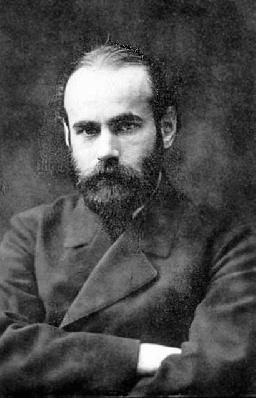
Fig. 1 — Public domain · Wikimedia Commons
.jpg)
A holiday train from Vienna to Frankfurt, autumn 1910: a thirty-year-old private scholar looks out of the window and thinks about apparent motion — about lights that flash one after another and look like one travelling light. In Frankfurt he simply gets off, buys a stroboscope in a toy shop and begins to experiment in his hotel room. So the school itself told it later, and the file carries the anecdote as what it is: the most handsomely furnished founding legend in the field — with a real core, for in Frankfurt Wertheimer stayed, and there arose the study that founded a school.
Wertheimer was born on 15 April 1880 in Prague, into a German-speaking Jewish family; the father directed a private business school, the mother played the violin, the son likewise — music remained his second medium of thought for life, and whoever reads his papers finds the melody as his favourite example of a Gestalt: transposed into another key it remains itself, although not a single note is the same. He began law in Prague, switched to philosophy, studied under Carl Stumpf in Berlin and took his doctorate in Würzburg in 1904 under Oswald Külpe — with a thesis on forensic diagnosis: the attempt to detect guilty knowledge through word associations, contemporaneous with Jung’s Zurich studies. The man who would rebuild the psychology of perception began as the inventor of a lie detector.
In Frankfurt he found, in 1910, Friedrich Schumann’s laboratory and the two experimental subjects who became the punchline of the field’s history: Wolfgang Köhler and Kurt Koffka, both young assistants, sat before the tachistoscope and saw motion where there was none. The subjects became the co-founders — Gestalt psychology is the only school in the field whose founding trio met inside an experiment. In 1912 the motion study appeared; after war years in which Wertheimer worked on listening devices for U-boats and harbours, Berlin became the centre: the Psychological Institute in the City Palace, the journal Psychologische Forschung co-founded in 1921, the legendary paper of 1923 on the Gestalt laws.
The Berlin years were also the time of his most productive supporting role: as examiner and patron of a circle of doctoral students out of which half the field’s emigration history came — among the students and auditors of the Berlin Gestaltists were Rudolf Arnheim, who carried the Gestalt doctrine into the psychology of art, and Karl Duncker, whose candle problem opens every chapter on creativity to this day. The school passed itself on through problems: whoever learned with the Berliners learned to build tasks on which thinking becomes visible.
Wertheimer was the school’s head and its slowest writer — thinking in seminars, in conversation, at the piano suited him better than publication, and a considerable part of his effect ran through students' lecture notes. In 1929 he became full professor in Frankfurt; there he witnessed the seizure of power, and the family emigrated in March 1933 — before the civil service law — across the Czechoslovak border and on to New York. The New School for Social Research, which made itself the gathering place of expelled scholars with its University in Exile, became his last post; among the friends of the American years was Albert Einstein, whose path to relativity Wertheimer recorded in long conversations — as a case study for the book he worked on to the end.
Whoever experienced him describes a man who thought as his school taught: in wholes, aloud, with his whole body. Colleagues remember the seminars as performances in which Wertheimer threw problems onto the blackboard and wrestled with the audience for the restructuring; music remained the touchstone — whoever can recognise a melody that shares no common element with its transposition, he liked to say, has already understood the school’s argument.
The estate was administered by the family, in the literal sense: his son Michael became a psychologist himself, edited later, expanded editions of the book, and worked for decades on the history of the school. Part of what the field knows today about Wertheimer’s way of working — the seminars, the slips of paper, the unfinished chapters — is handed down by this route: first-hand sources, with the reservation that attaches to estates kept in the family.
Productive Thinking appeared in 1945, two years after his death: a psychology of understanding thought against blind drill, with schoolchildren, geometry problems and the Einstein chapter as evidence that great discoveries are restructurings — the same sudden flip his school had described in Köhler’s apes and in reversible figures. Wertheimer died on 12 October 1943 in New Rochelle near New York of a heart attack, aged sixty-three. His son Michael became a psychologist himself and one of the field’s historians — the father’s papers are among the best-catalogued of the emigration.
The question of 1912 was a trick question put to the ruling doctrine. The psychology of the day — Wundt’s inheritance in one line, English associationism in the other — assembled perception out of elements of sensation: what we see is the sum of point stimuli plus experience. Apparent motion was a long-standing nuisance for this view; the stroboscope had been fairground technology since the 1830s, and the cinema had been demonstrating for a decade that still images can learn to run. The element doctrine’s explanations — eye movements, afterimages, errors of judgment — no one had ever tested strictly. Wertheimer tested them, in such a way that nothing of the doctrine remained.
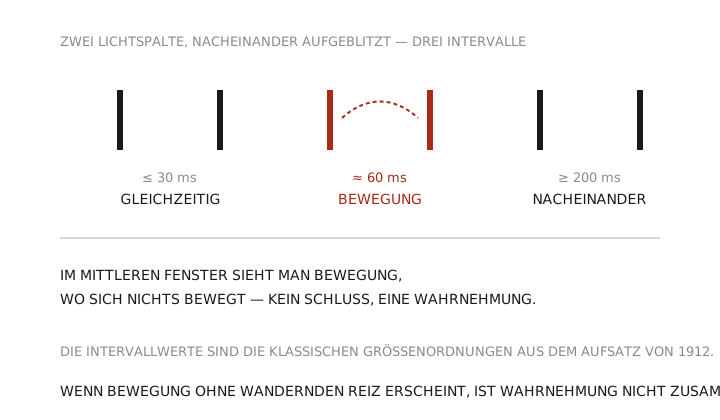
The scene: Friedrich Schumann’s Frankfurt institute, whose tachistoscope could dose stimuli to fractions of a second. On the screen two lines, first one, then the other, at a variable interval. As observers sat — beside Wertheimer himself — two young assistants named Wolfgang Köhler and Kurt Koffka: the school that grew from this study has its founders in the experimental record. At long intervals they saw two events in succession, at very short ones two lines at once. In between, however, around the sixtieth of a second, one saw a single line in motion — clean, compelling, impossible to know away. And stranger still: at certain settings the travelling object vanished, and what remained was pure seen motion without anything that moves — the "pure phi" that gave the phenomenon its name.
The word the school made its name was older than the school. Christian von Ehrenfels had described Gestalt qualities in 1890 — the melody that is more than its notes because it survives transposition — and thereby named a riddle the element doctrine could only administer: it appended the Gestalt to the sum as one further element. The Berlin radicalisation consisted in turning the relation around: the elements are not what comes first, joined by a Gestalt quality — the whole comes first, and “elements” are artefacts of analysis. The paper of 1912 is the moment Ehrenfels’s riddle became a research programme with apparatus.
The finding carried more than it weighed. If motion can be seen where no stimulus travels, then perception is no mosaic of sensation tiles to which judgment retrofits movement — then the experience of motion is a process of its own, a whole that cannot be extracted from its parts. Wertheimer drew the conclusion in the paper with a boldness the field caught up with only decades later: there are transverse processes in the nervous system that carry the seen connection itself. The study of 1912 counts therefore as Gestalt psychology’s founding document — not because it described a curiosity, but because at a curiosity it brought down the building code of the ruling theory.
The care of the 1912 paper is easily underestimated because its point is so vivid. Wertheimer varied systematically — distances, intervals, brightnesses, positions —, tested the rival explanations one by one and let them fail one by one: eye movements cannot produce two counter-running apparent motions at once, which he produced with ease; afterimages explain no motion across colour changes; and the error of judgment fails when practised observers know that nothing travels and compellingly see it anyway. It was element-criticism with the weapons of element research — the same tachistoscope beat, the same trained observers, only a question that turned the instrument against its theory.
The second stroke followed in 1923: the paper on the Gestalt laws, in which the motion finding became a general grammar of seeing. Points that lie near one another group; like finds its way to like; what moves together belongs together; lines continue smoothly; the open closes — and above them all the principle of Prägnanz, the tendency toward the simplest, most ordered form. No chapter on perception has done without this list since; design, cartography and interface work have adopted it as workshop rules, mostly without knowing where it comes from.
The reception saddled the school with two distortions that belong in the file. The small one: what the textbooks call the “phi phenomenon” and illustrate with two jumping dots is almost always beta motion — the seen travelling object. Actual phi, the objectless motion, is subtler and more rarely cleanly staged; vision science put the confusion on record around the turn of the millennium. The large one: out of "the whole is other than the sum of its parts“ the retelling made ”more than the sum" — a thesis about structure became mood lyricism, and under this label the concept migrated into therapy names and management prose with which the Berlin school had little to do.
To the effect belongs a detour across the Atlantic. Kurt Koffka introduced the school to the American public in 1922 in the Psychological Bulletin — under the unfortunate title “Perception,” which labelled the movement as a pure doctrine of perception for decades, although Wertheimer had long meant thinking and Lewin acting as well. American reception therefore read Gestalt psychology as a specialism of seeing and was later surprised that group dynamics came out of the same school. Schools too have their textbook distortion; this one was a translated title.
The serious objection came early and stayed: the Gestalt laws describe what is grouped but do not explain why — a list of tendencies without weighting, without prediction in cases of conflict. The school answered with physiology on credit: Köhler’s isomorphism thesis, by which field processes in the brain correspond to the Gestalten of seeing, could not be tested with the means of the day and was not supported in the blunt electrophysiological tests of the 1950s. The criticism struck the explanation — not the phenomena.
The school’s line on thinking has its own testing history, and it runs through Wertheimer’s students. Karl Duncker’s candle problem — a candle, a box of tacks, and the box is first seen as container, then as platform — made functional fixedness measurable, that fixation which productive thinking, after Wertheimer, must overcome; the finding belongs to the most stable in the psychology of thinking. Wertheimer’s own classroom example from Productive Thinking — children who understand the parallelogram’s area, instead of memorising the formula, solve twisted figures too; formula-learners fail — became the founding text of understanding-oriented mathematics teaching. Restructuring, claimed of the apes and seen in phi, got its third stage in the schoolchild.
To the oldest objection — the laws describe without explaining — there is by now an answer, and it comes from an unexpected direction. Since the 1990s research groups have measured the statistics of natural images: how often do two edges in photographs of real scenes belong to the same object when they are similarly oriented, close together or alike in colour? The answer agrees remarkably closely with Wertheimer’s rules. Proximity, similarity and good continuation are accordingly not an arbitrary feature of the apparatus but built-in bets on a world in which things that belong together do mostly appear close, alike and continuous. With that Gestalt psychology has got what it lacked — a reason why these particular rules hold — only not from the brain physiology Wertheimer and Köhler had banked on, but from the environment.
What stands today is therefore a divided but solid balance. The phenomena: replicated without any reservation — apparent motion is the operating basis of cinema, screen and neon sign, and whoever wants to repeat the study needs two LEDs and a timer. The laws: confirmed as descriptions and since retrofitted — modern vision science has quantified grouping, translated Prägnanz into probabilistic models, and mapped with area MT a brain region that answers to motion as such: Wertheimer’s transverse process has received an address. The school’s grand theory, by contrast — field physics in the cortex — is history. It is this folder’s pattern in pure form: the observations outlived their explanation, and the language outlived both.
The most famous sentence of Gestalt psychology stands in none of its texts in that form. Wertheimer and Köhler insisted that the whole is something other than the sum of its parts — a statement about structure: the melody is no accumulation of notes but a relation that survives the change of key. The popular version “more than the sum” turns this into an increase in value, as if assembling paid a bonus.
The difference is no quibble. “Other than” is testable — one can show that the transposed melody is recognised although no element stayed the same, and that two flashes yield a motion contained in neither flash. “More than” is mood, and as mood it has had a career: in team-building brochures, wholeness prose, and a therapy name that shares only the word with the Berlin school — Fritz Perls’s Gestalt therapy rather annoyed its ancestress than continued her, as the school’s historians dryly note.
The note therefore records what this collection keeps finding: the dilution of a concept begins with a small word. “Other” became “more,” Asch’s independents became conformists, Wundt’s protocol-keepers became introspection enthusiasts. Whoever quotes decides, with one word, which science remains.
Replication status: replicated. Apparent motion is one of the most effortlessly reproducible phenomena in the field — every neon sign demonstrates it — and the grouping laws are confirmed many times over as descriptions. What did not hold is the school’s physiological explanation.
Primary sources. Wertheimer, M. (1912). Experimentelle Studien über das Sehen von Bewegung. Zeitschrift für Psychologie, 61, 161–265. — The founding study, with Köhler and Koffka among the observers. Wertheimer, M. (1923). Untersuchungen zur Lehre von der Gestalt II. Psychologische Forschung, 4, 301–350. — The Gestalt laws. Wertheimer, M. (1945). Productive Thinking. New York: Harper. — Posthumous; thinking as restructuring, with the Einstein chapter.
Precision and critique. Steinman, R. M., Pizlo, Z., & Pizlo, F. J. (2000). Phi is not beta, and why Wertheimer’s discovery launched the Gestalt revolution. Vision Research, 40(17), 2257–2264. — The textbook confusion, put on record. On the modern quantification of grouping: Wagemans, J., et al. (2012). A century of Gestalt psychology in visual perception. Psychological Bulletin, 138(6), 1172–1217. — Vision science’s centennial balance: phenomena robust, field physics discarded, principles carried into models.