Case file 014 · Humanistic Psychology
Abraham Maslow
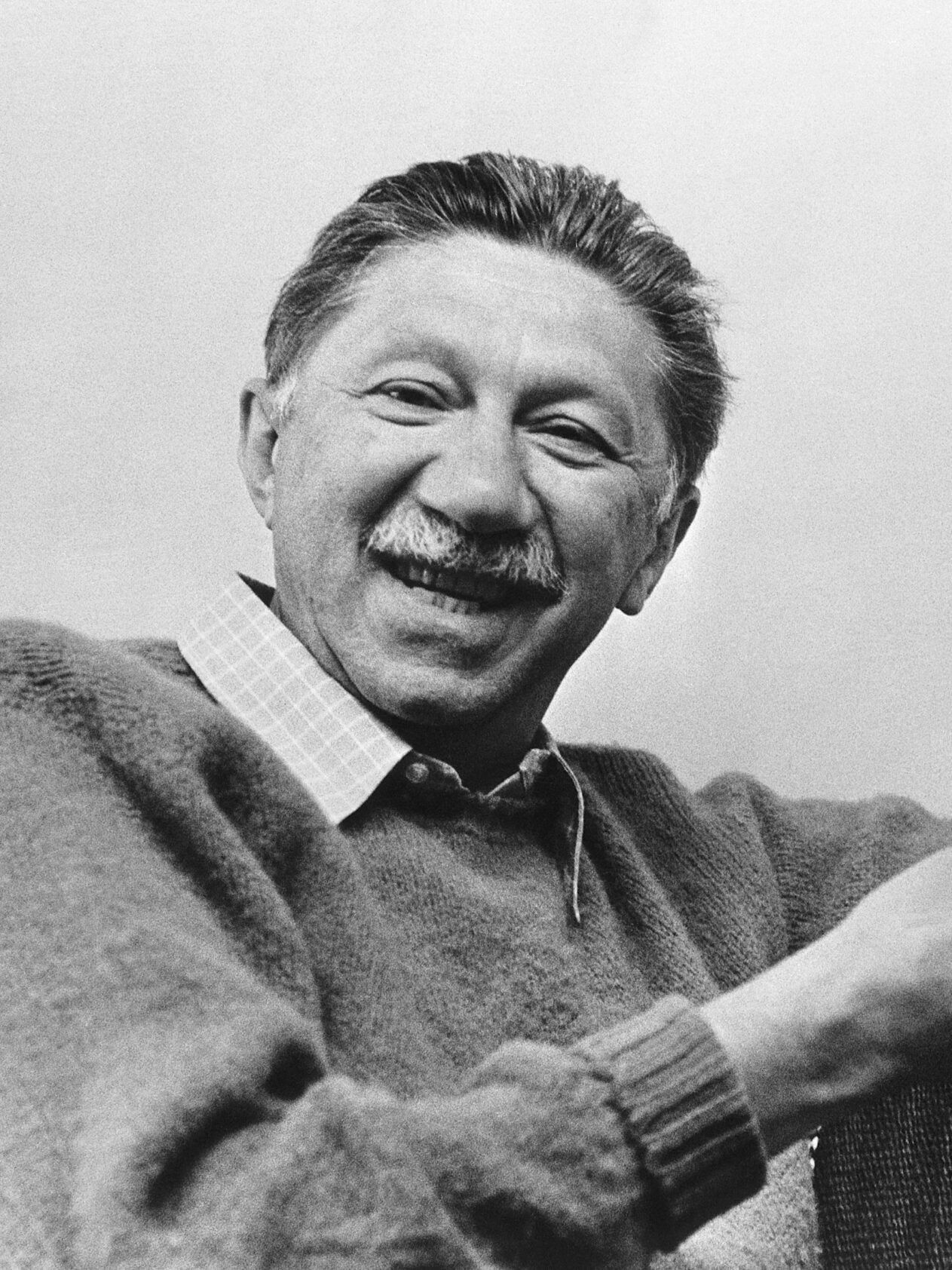
Fig. 1 — Public domain · Wikimedia Commons
.jpg)
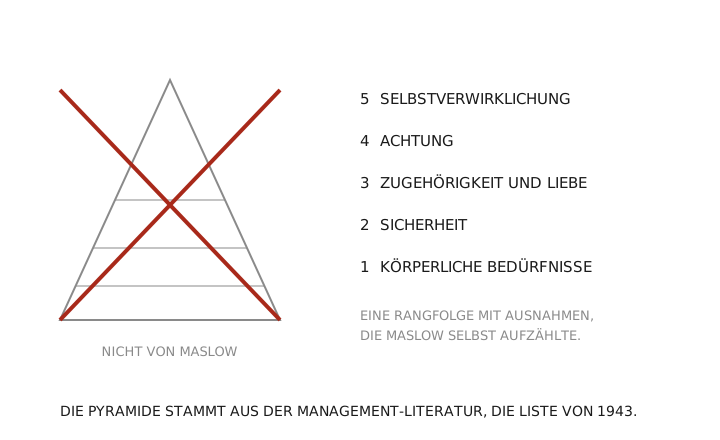
On a page in a management handbook of 1960 stands a pyramid, divided into five steps, physiological needs at the bottom, self-actualisation at the top. It is the best-known picture in psychology, and it does not come from Abraham Maslow. In his paper of 1943 there is not a single figure.
Maslow was born on 1 April 1908 in Brooklyn, the eldest of seven children of Jewish immigrants from the Russian Empire. He described his childhood as lonely and unhappy — a slight boy in a non-Jewish neighbourhood, harassed in the street and unloved at home; about his mother he spoke all his life with a harshness his biographers read as a key to the work: the psychology of growth came from someone who had lived its opposite. The library was his refuge.
He first studied law at the family’s wish, could not bear it, and switched to psychology at Wisconsin, where he worked under Harry Harlow — the primate researcher whose experiments with rhesus monkeys later became a contested case themselves. Maslow’s early work concerned dominance in monkeys; the question of what rank and safety do to behaviour he thus learned at the cage before carrying it to human beings. In 1928, aged twenty, he married his cousin Bertha — against the families' resistance; he later called that day the real beginning of his life.
In New York, to which he returned in 1935, he came into contact with the European emigration: Max Wertheimer, Kurt Goldstein — whose concept of self-actualisation he adopted and rebuilt —, Ruth Benedict, Erich Fromm, Alfred Adler, Karen Horney. From this circle comes his basic motif, which he later told as the report of a double veneration: on Wertheimer and Benedict, the two people he admired most, he began noting what they had in common — the starting point of the studies of self-actualising people. That psychology had won its picture of the human being from the sick and from rats, and therefore came out systematically too dark, became his standing objection.
In 1943 A Theory of Human Motivation appeared in the Psychological Review. He ordered the needs into a sequence: physiological, safety, belongingness and love, esteem, self-actualisation. Only when one level is sufficiently met does the next become the guide of action. For fourteen years afterwards he taught at Brooklyn College, where students described him as a devoted teacher; in 1951 he moved as founding chair of psychology to the new Brandeis University, where the books arose that established his reach — Motivation and Personality (1954) and Toward a Psychology of Being (1962), together with the studies of peak experiences, those moments of total presence he took for the signature of the actualised life.
From the 1950s he became the figurehead of humanistic psychology, which expressly understood itself as the third force beside psychoanalysis and behaviourism; the movement’s journal and society arose with his participation, and in 1967 the American Psychological Association elected him its president — the outsider at the head, which he himself commented on with dry astonishment. At the same time his vocabulary migrated into the world of work: a summer at a Californian electronics plant became the journal Eupsychian Management — the dream of a factory that lets people grow —, and the management literature that drew on it finally drew the pyramid he had never drawn.
He helped build the movement institutionally as well: in 1961 he founded with Anthony Sutich the Journal of Humanistic Psychology, the society followed — and shortly before his death the same two men helped transpersonal psychology, the “fourth force,” into the world. In 1969 he left Brandeis for a free fellowship of a Californian foundation — the last station, given over entirely to writing.
A period of fieldwork from his early years has lately become a point of dispute. In the summer of 1938 Maslow spent some weeks among the Siksika in southern Alberta and noted how strongly standing there depended on generosity rather than possession. Since the 2010s indigenous scholars have argued that the hierarchy of needs was borrowed from that stay and its origin concealed. The stay and its impression on him are documented; so is the fact that he barely mentions the Blackfoot in his later writings. An adoption of the model cannot be shown from his notes, and the hierarchy has a sufficient prehistory in its own source, the Viennese and New York debates on motivation. The file records the dispute and does not settle it.
His late thinking drove past his own sequence of stages: in the last years he sketched self-transcendence as a level above self-actualisation and a “psychology of Being” he could no longer work out. After a severe heart attack in 1967 he lived on borrowed time, noting his own condition with the curiosity of a motivation researcher, and died on 8 June 1970 in Menlo Park of a second infarction, during a light run his doctors had prescribed. He was 62. The pyramid everyone knows him for he never drew — and the ranking it shows, research has discarded, while his question has remained.
The question of 1943 was one of ordering: if people have many needs, what decides which one is acting right now? The motivation psychology of the day had two unsatisfying answers — the drive lists of the instinct theorists, who invented a separate impulse for every behaviour, and the homeostasis models of the physiologists, who described the human being as a creature of deficits in permanent rebalancing. Maslow’s answer in the Psychological Review was a ranking in which a need only becomes effective once the one below it is sufficiently satisfied — and, less quoted, the claim that a person whose want is stilled does not come to rest but wants onward: a perpetually wanting animal, as the paper has it.
Five levels: physiological needs, safety, belongingness and love, esteem, self-actualisation. Later came cognitive and aesthetic needs, and in the 1960s self-transcendence — an extension the popular version ignores to this day, because it saws off the top of the familiar order: above self-actualisation would stand absorption in something larger than oneself. The 1943 paper was, moreover, expressly framed as a programme, not a result; Maslow called it a framework for future research. The reception framed the framework as a finding.
The data base is the part the reception passes over. For self-actualisation Maslow relied on a selection of people he admired — historical figures such as Lincoln, Jefferson and Einstein, and contemporaries from his circle, among them the anthropologist Ruth Benedict and the Gestalt psychologist Max Wertheimer, the two people in whom the whole category had its origin. There was no random sample, no comparison group and no criteria another person could have applied; who entered the list was decided by the admirer. Maslow himself conceded this and expressly declined to call his inquiry a regular study — by ordinary standards, he wrote, it was not one at all. The file records this honesty; it also records that the textbooks rarely quote the caveat along.
And then there is the pyramid. It does not appear in Maslow’s writings. Bridgman, Cummings and Ballard traced in 2019 where it comes from: the earliest known depiction stems from the management literature of the 1960s, not from psychology — a consultancy scheme that cast the doctrine of stages into a triangle for training purposes. The form is not harmless. A pyramid suggests that there is little room at the top, that one completes stages like storeys, and that self-actualisation is a reward for successful climbing. Maslow claimed the opposite: that needs exist simultaneously and are partially satisfied — for illustration the paper reckons with overlapping percentages of satisfaction, not with floors. The most famous graphic in psychology is thus a double error: wrongly attributed and misleading as to content.
Into the world of work the hierarchy came through a translator with an agenda of his own: Douglas McGregor built it in 1960, in The Human Side of Enterprise, into the foundation of his Theory Y — the thesis that people want to work if the organisation does not starve their higher needs. The book became a classic of management teaching, and with it Maslow’s order migrated into training rooms, organisation charts and finally those diagrams from which the pyramid emerged. The model’s career is thus to a considerable degree a career in other disciplines — where it was useful, not where it was tested.
The empirical testing of the staged sequence began when the model had long been course material, and went badly from the start. Mahmoud Wahba and Lawrence Bridwell reviewed the available studies in 1976 — mostly from the world of work, where the model was used most eagerly — and found evidence neither for the five levels as separate classes nor for the claimed dynamic that satisfaction below activates motivation above. Clayton Alderfer thereupon folded the five stages into three and struck the fixed order; this repair too remained empirically thin. The model was unimpressed: it stands to this day in textbooks for nursing, marketing and personnel management — most stubbornly where testing is rarest.
One reason for the thin record of testing lies in the measuring instrument, or more precisely in its absence. For self-actualisation there was never a generally accepted questionnaire. The most widespread was the Personal Orientation Inventory of 1964, which appeared in studies for decades and drew methodological criticism early — its scales correlated highly with one another, its items already presupposed the theory, and no agreement was ever reached on its factor structure. With the instrument the concept too gradually disappeared from the empirical literature. Whoever measures today what Maslow meant measures it under other names — autonomy, competence, meaning — and with scales from other workshops.
What stands today: the needs themselves, not their sequence. Louis Tay and Ed Diener analysed Gallup World Poll data from 60,865 people in 123 countries in 2011. Result: the needs Maslow described can be found worldwide and are each independently associated with well-being — but they are not fulfilled in order. People report fulfilling social relationships while material safety is lacking; they report meaning while basic needs go unmet — the authors compared the needs to vitamins: each works on its own, none waits for another. The list holds. The staircase does not.
Rebuilding has been attempted too: Douglas Kenrick and colleagues presented an evolutionarily renovated version in 2010 that replaces the stages with life tasks from survival to parenting and strikes self-actualisation entirely — which set off a dispute of its own, because the storey the model is famous for is precisely the one that falls. And disaster research has supplied the staircase its perhaps finest counter-example: in emergencies the social does not collapse until basic provision stands — people share, organise and console in the middle of want. The lower steps do not switch off the upper ones; sometimes the upper carry through the failure of the lower. Frankl’s camp observation, in the neighbouring folder of this row, says the same with the sign reversed.
Maslow himself was a sterner reader of his situation than the movement that raised him on its shield cared to know. His posthumously published journals show a man who taxed his own state of evidence soberly, urged the testing of his theses, and feared in the third-force movement precisely the unscientific quality its opponents charged it with. At the same time he drove the extension into the larger himself: with Anthony Sutich, shortly before his death, he launched transpersonal psychology as the “fourth force” — the attempt to make experiences of self-transcendence a research subject. The self-actualiser list, in turn, has a critical history of its own: mostly men, mostly Western, chosen by their admirer — a canon that mirrors its compiler’s values and passes them off as an image of humanity. This objection too has stood in the files since the 1970s, and has not slowed the model’s spread.
A second Maslow sentence has nearly caught the pyramid in circulation and, unlike it, really is his: whoever has only a hammer for a tool tends to treat everything like a nail. The warning from The Psychology of Science of 1966 was aimed at his own guild — a methodology that selects its questions by its instruments — and has become a saying that has forgotten its author. It fits this file that its person disappears twice behind its sentences: once behind a picture that is not hers, and once behind a sentence that is.
A second strand has rehabilitated Maslow’s summit independently: research on the self-determination theory of Deci and Ryan has found, since the 1980s, three basic needs — autonomy, competence, relatedness — whose satisfaction goes with psychological health across cultures. That is not Maslow’s catalogue, but it is his programme: motivation beyond deficiency, empirically redeemed with the means he lacked. The file therefore closes not with a verdict on an error but with a division of labour: Maslow asked the right question in untestable form; others tested it, and the answer was half him.
Hardly any psychological term has travelled so far into everyday language, and hardly any has lost so much on the way. Self-actualisation today mostly means: doing what you want. For Maslow it meant almost the opposite — becoming what you are by disposition, and as a rule in the service of something outside your own person.
The people he described as self-actualised share striking features in his account: they perceive reality more clearly than others, tolerate uncertainty better, are focused on problems rather than on themselves, have few but deep relationships, and can bear their own company. What does not appear on that list is self-optimisation.
The testable core of the concept has ended up elsewhere over the decades. Deci and Ryan’s self-determination theory broke it down into three basic needs — autonomy, competence, relatedness — and these are measurable and have been examined in hundreds of studies. The price is the loss of the aura: what Maslow suspected was a rare state, reached by an estimated one per cent of the population, has become something every person gets more or less satisfied in every ordinary day. Scientifically that is the progress; rhetorically it is the loss.
Replication status: not replicated.
The status applies to the hierarchy, not to the list. That the needs Maslow named exist and are related to well-being is well established. That they become effective in a fixed order, with one level activating only after the one below, has been tested repeatedly and not confirmed.
Primary source:
- Maslow, A. H. (1943). A theory of human motivation. Psychological Review, 50(4), 370–396. — The paper. Without a diagram.
- Maslow, A. H. (1954). Motivation and Personality. Harper. — The elaboration, including the description of self-actualised people.
Testing:
- Wahba, M. A., & Bridwell, L. G. (1976). Maslow reconsidered: A review of research on the need hierarchy theory. Organizational Behavior and Human Performance, 15(2), 212–240. — The early balance sheet: little support for the ranking.
- Tay, L., & Diener, E. (2011). Needs and subjective well-being around the world. Journal of Personality and Social Psychology, 101(2), 354–365. — 60,865 people in 123 countries; needs universal, order not.
On the pyramid:
- Bridgman, T., Cummings, S., & Ballard, J. (2019). Who built Maslow’s pyramid? Academy of Management Learning & Education, 18(1), 81–98. — The reconstruction of the image’s history and its consequences for how the work is received.
What became of it:
- Deci, E. L., & Ryan, R. M. (2000). The “what” and “why” of goal pursuits. Psychological Inquiry, 11(4), 227–268. — Self-determination theory as the measurable successor.
German-language:
- Maslow, A. H. (1981). Motivation und Persönlichkeit. Rowohlt, Reinbek. — German edition of Motivation and Personality.
Overview: https://en.wikipedia.org/wiki/Maslow%27s_hierarchy_of_needs