Case file 004 · Behaviorism
Iwan Pawlow
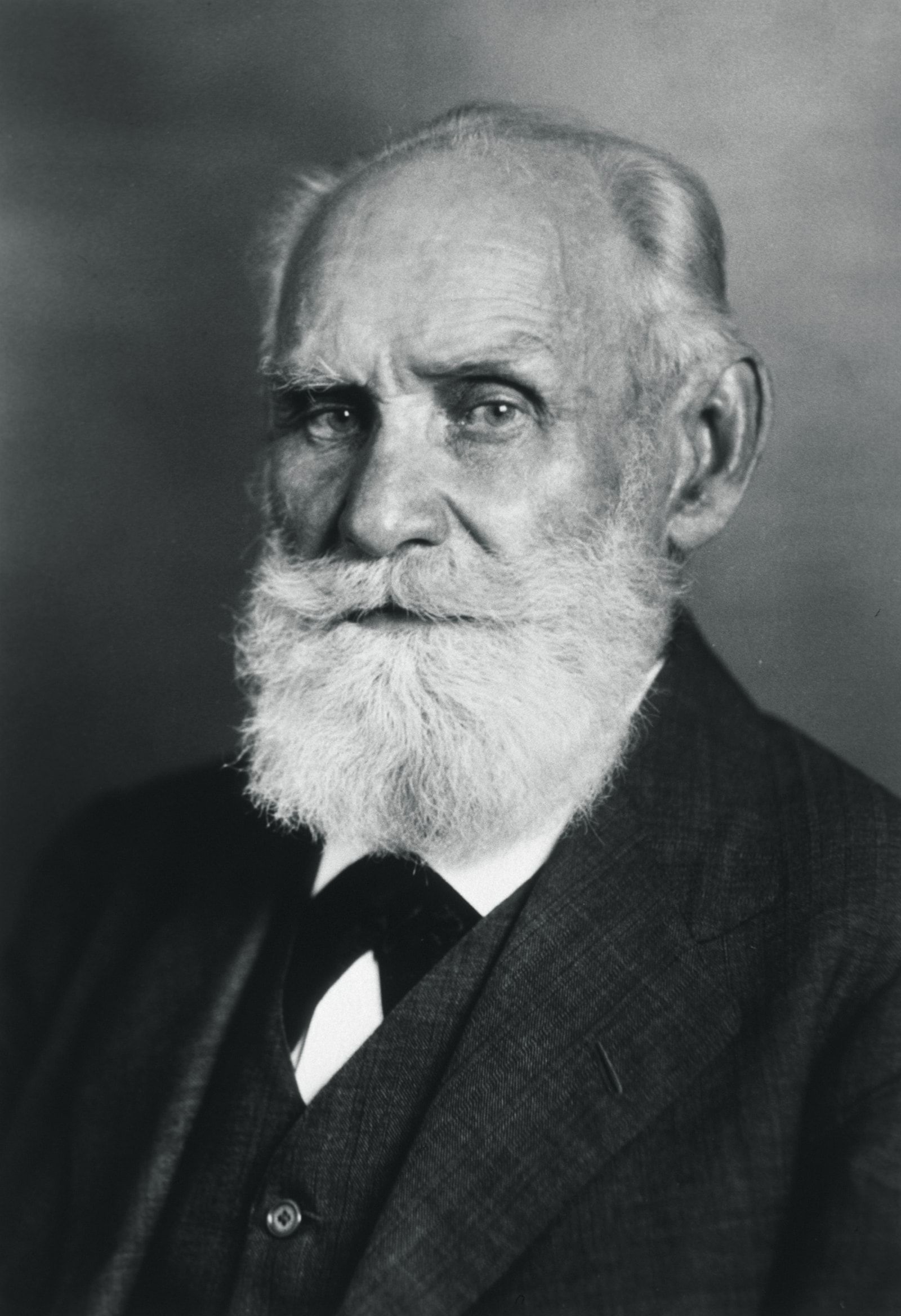
Fig. 1 — Public domain · Wikimedia Commons

A dog stands in a sound-damped room in St. Petersburg, harnessed, a fistula in its cheek. A tube leads the saliva into a graduated glass. Next door, behind a wall, a co-worker sits noting drops. Ivan Pavlov wanted to understand digestion — and hit on a problem that occupied him for the rest of his life: the dogs salivated before any food was in the room.
Pavlov was born on 26 September 1849 in Ryazan, the eldest son of an Orthodox priest, and was himself destined for the seminary — the family had supplied clergymen for generations. Reading works of natural science, above all the Russian edition of George Henry Lewes’s physiology and Sechenov’s essays on the reflexes of the brain, turned him from that path; in 1870 he left the seminary and went to St. Petersburg to study the natural sciences. The seminarian became a physiologist — but the seminary’s discipline of work, his biographers say, he never laid down: Pavlov’s laboratory knew fixed hours, fixed rituals and a chief who took Sunday work for granted.
The years before a department of his own were long and lean. Pavlov worked as an assistant in other men’s laboratories, without means and long without a settled post; his wife Serafima, whom he married in 1881, described the poverty of those years in her memoirs — at times the couple lived apart because the money for a flat was lacking. Only in 1890, past forty, did he receive the direction of the physiological department of the new Institute of Experimental Medicine — the position from which the life’s work grew.
His surgical precision was the real advance. With permanently implanted fistulas he could measure digestive secretions in the living, healthy animal instead of killing and dissecting it — the “chronic experiment” he set against the vivisection practice of his day. The operated dog lived, recovered, and supplied data for years. For this digestive physiology he received the 1904 Nobel Prize in Physiology or Medicine, the first Russian to do so — not for the work everyone knows him for today; that was then only beginning.
The premature salivation his co-workers first called “psychic secretion.” Pavlov rejected psychological explanations and sought a physiological one: the conditioned reflex. From 1903 he presented the programme internationally — first at the Madrid medical congress, in 1906 in the Huxley Lecture in London — and around the programme grew a factory of science: the “Tower of Silence” with its damped chambers, dozens of co-workers, hundreds of dogs, a decades-long system of dissertations whose results Pavlov drew together in weekly meetings. He himself published little of it; the knowledge lay in his students' theses, and whoever reads the case file is, strictly speaking, reading the balance sheet of a collective.
His relation to Soviet power was contradictory and is well documented. He criticised the regime openly — in letters to the government, in speeches no one else would have been allowed to give —, protested against the persecution of colleagues and clergy, and pointedly refused to disown his origins. And at the same time he received institutes, funds and staff on a scale scarcely any other scientist in the country was granted: Lenin signed a special decree for his support in 1921, and at Koltushi near Leningrad an entire research village was built for him. The regime needed the Nobel laureate as the figurehead of a materialist science; the priest’s son took the means and refused the bow. Both sides knew what they had in each other.
Beside the laboratory his daily life knew a single passion with a competitive edge: gorodki, the Russian skittles game played with a throwing stick, which he pursued into old age with the seriousness of an experimenter — his fellow players were often his doctoral students, and he did not like to lose.
His last great appearance came in 1935, when the International Physiological Congress met in Leningrad and Moscow — with the eighty-six-year-old as president and host. Colleagues from all over the world celebrated him as the elder of the guild; the regime displayed him as proof that Soviet science had world rank. Both stagings ran in the same hall, and Pavlov fully served neither.
Pavlov died on 27 February 1936 in Leningrad of pneumonia — by tradition he was still dictating his self-observations to a co-worker on his deathbed, the last record of a life made of records. His laboratory had at that point worked on the same question for more than three decades; the Soviet Union elevated the dead man to doctrine soon after, which harmed his science more than any opponent. The dogs of Koltushi have a monument of their own — Pavlov had commissioned it in his lifetime, as the physiologist’s promissory note to his experimental animal.
The starting question was physiological, not psychological: why does a dog begin to salivate before it gets food? For Pavlov this was no curiosity but a disturbance in his digestion measurements — until, around the turn of the century, he decided to make the disturbance itself the subject. The decision was riskier than it looks in hindsight: a Nobel candidate of digestive physiology turned to a phenomenon his colleagues considered psychology — and psychology counted as a term of abuse in his laboratory. Pavlov forbade his co-workers mentalistic expressions; whoever said the dog “expected” the food paid, according to the anecdote, a small fine into the laboratory kitty. Whether the kitty existed is transmission; the language ban is not.
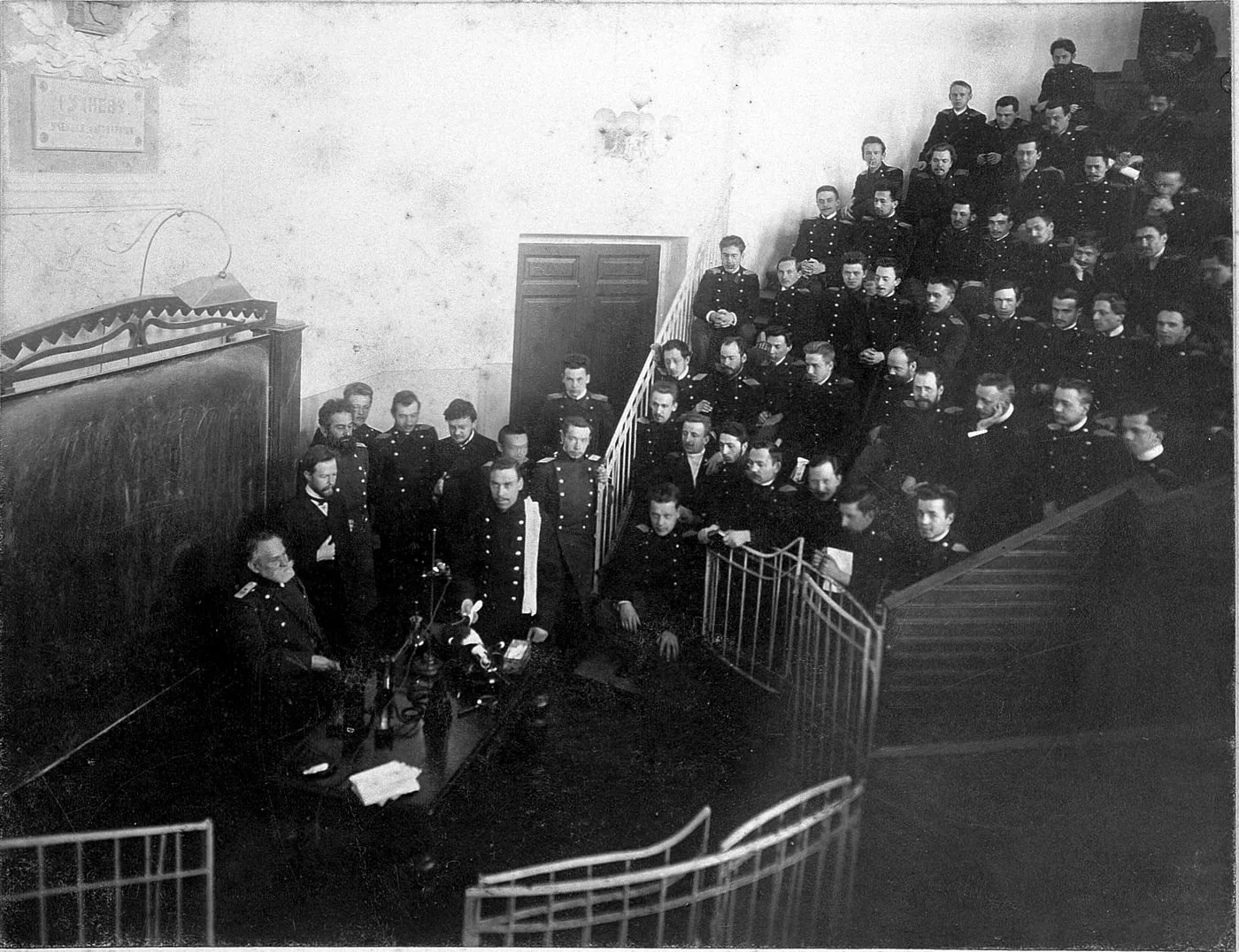
The scene that carried everything was a building. In the “Tower of Silence,” a laboratory erected for the purpose in St. Petersburg, the dogs stood in sound-damped chambers, harnessed on a stand, with a surgically created cheek fistula leading the saliva of one gland outward — into graduated tubes whose drops a co-worker counted in the next room. The experimenter was separated from the animal by walls, windows and pneumatic mechanics, so that no smell, no footstep, no glance entered as an uncontrolled stimulus. That was the real innovation: not the idea that animals learn — every dog owner had that — but an apparatus that translated learning into drops per minute.
The design is so simple it fits into every textbook. A stimulus that triggers no salivation on its own — the neutral stimulus — is presented repeatedly just before the food. After several trials it triggers the secretion alone. The neutral stimulus has become a conditioned one, the salivation a conditioned response.
What Pavlov described beyond this is the part textbooks cut: extinction, when the conditioned stimulus comes several times without food; spontaneous recovery, when the extinguished response returns by itself after a pause; generalisation to similar stimuli; and differentiation, when the animal learns to tell two similar stimuli apart. Extinction unlearns nothing — it layers something over. That is the most clinically consequential of his observations: whoever has “unlearned” a fear still carries it, overwritten, not erased — which is why it can return in a new context, under stress, or with time. Modern exposure research continues spelling at exactly this point.

From differentiation comes the darkest chapter of the series. When one of Pavlov’s co-workers taught a dog to distinguish a circle from an oval and then brought the oval closer to the circle step by step, the animal broke down: it whined, bit at the apparatus, refused the trial — the famous “experimental neurosis.” Pavlov, by then past eighty, took this as a bridge to psychiatry and spent his last years in clinics, trying to understand patients with his concepts. This extension has weathered time worse than the basic series; what remains is the insight that an organism can break on an unsolvable discrimination task.
What was measured, incidentally, was never “the dog” but always a particular one: the records carry the animals by name — Baikal, Zolotisty, Krasavietz — and some series hang recognisably on the peculiarities of a single experienced subject. The individuality the theory did not provide for stands in the footnotes of its own data tables.
And then there is the bell. In the textbook version Pavlov rings a bell and the dog salivates. In the laboratory records it barely occurs. Pavlov worked with metronomes, buzzers, tones, light signals and a rotating object — stimuli that can be dosed and repeated exactly. Daniel Todes, who worked through the Russian primary sources, records: Pavlov practically never used a bell. It is an invention of the reception, born on the way through translations and summaries.
A second inaccuracy sits in the English technical term itself. The Russian uslovny refleks means “conditional” — provisional, tied to a condition. The early English translation made it conditioned — completed rather than conditional. The difference is small and shifted the reception nonetheless: a provisional, always revocable connection became, linguistically, a finished “conditioned” animal — and the provisionality Pavlov stressed became the image of an imprint for life, which Watson and the psychology of advertising then took over.
The reception ran faster than the translations anyway. Watson made the conditioned reflex the foundation of behaviourism in 1913 without reading Russian; American learning psychology built on secondary sources for half a century. In the Soviet Union, Pavlov was elevated to state doctrine after his death — the “Pavlovian Session” of the academies in 1950 formally committed the sciences to his teaching and thereby damaged it more thoroughly than any critic could have, for a doctrine can no longer be tested, only cited.
The second half of the twentieth century then reinterpreted the reflex without dethroning it. Robert Rescorla showed in the 1960s that pairing alone is not enough: the conditioned stimulus must predict the food, not merely accompany it — an animal learns contingency, not contiguity. The Rescorla-Wagner model of 1972 turned this into an equation describing learning as the correction of prediction errors; and when neurophysiology in the 1990s found dopamine neurons signalling exactly such prediction errors, Pavlov’s preparation had arrived at the centre of modern brain science. “The dog salivates at the tone” has become "the brain is a prediction machine" — a reinterpretation Pavlov would presumably have liked, because it replaces mentalistic words with a rule of calculation.
For the human being Pavlov reserved, in his last years, an extension of his own: the second signal system. Where the animal reacts to signals of the world, the human reacts additionally to signals of signals — to words standing for stimuli. With him the idea remained a sketch; in Soviet psychology after 1950 it became a compulsory formula with which nearly everything human could be retroactively Pavlovised. That too belongs in the file: a concept can perish of its own decree.
How far from arbitrary the linkage is was shown in the 1960s by a Pavlovian in spirit: John Garcia let rats drink flavoured water and made them nauseous hours later by irradiation — the animals henceforth avoided the taste, but not the light or the sound presented at the same time; with electric shocks it was exactly the other way round. Taste links to nausea across hours, light to pain only across seconds — evolution has pre-sorted what can belong together. The journals at first rejected the findings; one reviewer, by tradition, compared their probability to bird droppings in a cuckoo clock. Today taste aversion stands in every textbook, as the place where biology reached into the reflex scheme’s workings.
What stands today: the thing itself, to an extent few findings in the field reach. Classical conditioning is reproduced across species, laboratories and decades — from the sea slug Aplysia, in which Eric Kandel found its cellular basis, to human fear in the MRI scanner. Its neural foundations are described down to the level of individual nuclei, and it carries the most effective treatment psychotherapy knows for anxiety disorders: exposure therapy. What does not stand is Pavlov’s own interpretation that the brain works by waves of excitation and inhibition running across the cortex — the cortex is not even necessary for the salivary reflex. It is the rare fate of a classic that its finding has outlived the ages and its theory not a single one.
Extinction is the least conspicuous term from Pavlov’s laboratory and the most consequential for the clinic. It describes what happens when the conditional stimulus arrives repeatedly without the unconditional one: the tone sounds, the food fails to come, and after a few trials the dog no longer salivates.
The obvious conclusion would be that the connection has been erased. Pavlov himself showed that this is not so. After a pause the response returns by itself — he called it spontaneous recovery. A change of place brings it back too, and a single unannounced unconditional stimulus is enough to restore it completely. The old connection, then, is not gone. A second one has been laid over it, saying: not here, not now.
That explains one of the more stubborn experiences in treating anxiety. Exposure therapy is applied extinction at its core — the patient seeks out the feared situation without the feared thing happening. It works well and it is prone to relapse, and both follow from the same mechanism. That is why practice today works in several places, with varying stimuli and with refreshers: not to erase the old, but so that the new holds in more contexts.
Replication status: replicated.
Classical conditioning is among the best-secured findings in psychology. It has been shown across species — from nematodes and sea slugs to humans — its parameters have been modelled quantitatively, and its neural basis is described for individual pathways down to identified cells. The status refers to the phenomenon and its regularities, not to Pavlov’s explanation by cortical waves of excitation and inhibition; that is obsolete.
Primary work:
- Pavlov, I. P. (1927). Conditioned Reflexes. Oxford University Press. — Translation of the lectures; the authoritative account of extinction, spontaneous recovery, generalisation and differentiation.
On the legend and the sources:
- Todes, D. P. (2014). Ivan Pavlov: A Russian Life in Science. Oxford University Press. — The analysis of the Russian laboratory records. Establishes that the bell comes from reception, and corrects the translation of uslovny as “conditional”, not “conditioned”.
What became of it:
- Rescorla, R. A., & Wagner, A. R. (1972). A theory of Pavlovian conditioning. In Black & Prokasy (Eds.), Classical Conditioning II (pp. 64–99). Appleton-Century-Crofts. — The model that turns Pavlov’s observations into a quantitative learning theory: learning happens on surprise, not on contiguity.
- Bouton, M. E. (2004). Context and behavioral processes in extinction. Learning & Memory, 11(5), 485–494. — Why extinction is context-bound and exposure therapy stays prone to relapse.
- Craske, M. G., et al. (2014). Maximizing exposure therapy: An inhibitory learning approach. Behaviour Research and Therapy, 58, 10–23. — The clinical consequence.
German-language:
- Pawlow, I. P. (1953). Sämtliche Werke. Akademie-Verlag, Berlin.
Overview: https://en.wikipedia.org/wiki/Classical_conditioning