Case file 005 · Behaviorism
John B. Watson
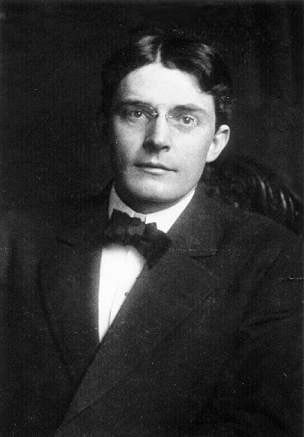
Fig. 1 — Public domain · Wikimedia Commons

Twelve men, healthy and picked from the crowd, and John B. Watson would make of each whatever he chose: doctor, lawyer, artist, merchant, beggar, thief — regardless of talent, inclination, ancestry and race. The sentence stands in Behaviorism in 1930, and Watson himself added that in saying it he was going beyond his evidence — the other side, he wrote, had been doing so for thousands of years. To this day the first half is what gets quoted.
Watson was born on 9 January 1878 in Travelers Rest, South Carolina, and grew up poor — his father drank and left the family when the boy was thirteen; his devout mother named him after a Baptist preacher and wished for a clergyman. It turned out otherwise, and biographers like to read the later crusade against everything inward against this background. Watson described himself as a bad, insubordinate pupil, arrested twice, before he fought his way through Furman College and at twenty-one moved to the University of Chicago — with fifty dollars, as the tradition records.
In Chicago he took his doctorate in 1903, the university’s youngest, on the development of learning in the rat — an animal in which he showed how much can be explained without any statement about consciousness. The fieldwork continued: summer months on the Dry Tortugas with the terns, laboratory series on instinct and training. Introspection, the standard procedure of the psychology of his day, he never mastered and mistrusted early — what he could not do in himself, he finally declared to be the method’s fault.
In 1908 he went to Johns Hopkins University as professor; in 1913 the Psychological Review carried the essay Psychology as the Behaviorist Views It, which the field has called the behaviourist manifesto ever since. Its demand: psychology should abandon introspection and confine itself to observable behaviour; its goal is prediction and control, not the understanding of inner states. The text made the thirty-five-year-old the head of a movement — in 1915 the American Psychological Association elected him its president, and the young American psychology, looking for a profile beside German consciousness research, got one: useful, measurable, practical.
In 1920 came the experiment with an infant he called Albert B., and in the same year the end of the academic career: the affair with his doctoral student and co-worker Rosalie Rayner became public through Watson’s divorce proceedings — the letters were in the press — and Johns Hopkins forced his resignation. Watson married Rayner in 1921; science did not take him back. By everything the sources show, he never got over the expulsion.
What followed is the second career, and it belongs to the effective history of behaviourism as much as the manifesto: Watson joined the advertising agency J. Walter Thompson, worked his way up — by legend from selling coffee door to door — and within a few years was vice-president. Campaigns he worked on sold coffee, baby powder and toothpaste with the means the laboratory had tested — appeals to fear, status and conditioning rather than information. The psychology of the advertisement, as it shaped the twentieth century, has one of its founding fathers here.
The science from which he had been expelled he practised henceforth as journalism: Watson wrote on behaviourism in Harper’s, Cosmopolitan and McCall’s, gave radio talks, and put his doctrine before the public in print runs any faculty could only dream of — the banished professor became the country’s first popular psychologist.
In parallel he became the country’s most-read parenting adviser. Psychological Care of Infant and Child of 1928 counselled parents never to kiss and hug their children, to shake their hands at bedtime, and to regard affection as an error of training — the book sold in the hundreds of thousands and shaped a generation of parents. Watson himself later called it his least considered work; his sons bore witness to the harshness of that upbringing, and the family history — Rosalie’s early death in 1935, the sons' depressions — is not carried as a footnote in the biographies.
Watson withdrew to a farm in Connecticut and lived there increasingly apart. When the American Psychological Association awarded him a citation for his life’s work in 1957, he travelled to the ceremony and at the last moment sent his son into the hall — for fear of losing his composure. He died on 25 September 1958 in New York. Shortly before his death he burned his unpublished papers — letters, manuscripts, memories — in the fireplace: the behaviourist as his own archivist, making the inner view unobservable one last time.
The question of 1920 was whether fear can be conditioned in a human being the way salivation is in a dog. Watson and Rosalie Rayner wanted to show that an emotional reaction need not be an innate instinct but can be learned — and that this can be manufactured in the laboratory. The stakes were higher than the report’s four pages suggest: Watson had promised the field in his manifesto seven years earlier that behaviourism would explain emotional life too, and the instinct lists of the competition — William McDougall was then running dozens of innate propensities — were to shrink to three inborn reactions: fear, rage, love. Everything else, ran the claim, is conditioning. Little Albert was the evidence meant to carry that claim, and he carries more textbook pages to this day than any other single child in the history of science.
The subject was an infant, called Albert B. in the report, eight months and 26 days old at the first test — son of a wet nurse who lived and worked at the Harriet Lane Home of Johns Hopkins University. He was described as calm and unusually fearless; at a white rat, a rabbit, a dog, cotton wool and burning newspaper he at first reacted with curiosity. Exactly this stability was the selection criterion: Watson and Rayner wrote that with so robust a child the experiment could do “relatively little harm” — a sentence proving that the question of harm was raised and set aside.
The unconditioned stimulus was a noise: a steel bar four feet long was struck with a hammer behind Albert’s back. At this the child startled and cried — one of the three inborn reactions Watson had catalogued in preliminary studies of hundreds of infants. In the conditioning trials the rat appeared, and at the moment Albert touched it, the hammer fell. After a total of seven such pairings, spread over two sessions, he cried as soon as the rat appeared alone, and crawled away from it.
Five days later they tested generalisation. Albert reacted to a rabbit, a dog, a fur coat, cotton wool and a Santa Claus mask with a beard. The fear had spread to similar things. A month later he still showed the reactions, weakened but present — the report scored that as a finding too: learned fear endures.

The textbook version ends here, often with the addition that Watson afterwards trained the fear away again. That is false. The report itself records that a deconditioning was planned and did not happen: Albert left the hospital before it could begin. Watson knew the date in advance. The confusion has a real core, and it belongs to the reception history: the untraining existed — but on another child. In 1924 Mary Cover Jones, advised by Watson, treated three-year-old Peter, who came into her study with a fear of rabbits, and dismantled the fear step by step by bringing the animal a little closer at every meal. The case of Peter is the counterpart that the textbooks narrate into the case of Albert — and at the same time the first documented behaviour therapy: Joseph Wolpe, who developed systematic desensitisation, later called Cover Jones the mother of the method.
The series was run in the winter of 1919–20 and published in February 1920 in the Journal of Experimental Psychology — four pages, without statistics, in the tone of a workshop report. Watson also had the sessions filmed and cut them into a teaching film on his infant research: Little Albert is thus among the first experimental subjects in psychology whose behaviour was not only recorded in writing but captured on film — the beginning of a form of evidence that occupies the field to this day, because films show but do not measure.
Methodologically the study does not bear weight by today’s standards. Sample: one child. No control condition. The fear reaction was not measured but judged by the experimenters — the same people who had framed the hypothesis and wielded the hammer. The surviving film footage shows reactions that can be read otherwise: a tired, beleaguered child turning away. Replication attempts by other laboratories in the 1930s — Bregman, for instance, failed to condition fear onto geometric objects — came out inconsistent and suggested that not every stimulus links to fear equally well. Half a century later Martin Seligman turned exactly this unevenness into a concept: preparedness — evolution has pre-paved some connections; rats and spiders are learned more easily than building blocks. The finding that survived Albert is thus smaller and more interesting than Watson’s thesis: fear is conditionable, but not arbitrarily.
The study’s career in the textbooks has itself become a research subject. In 1979, under the title ”Whatever Happened to Little Albert?”, Ben Harris went through the printed versions and catalogued the deviations: textbooks had Albert react to teddy bears, cats, white gloves or his mother’s fur hat — stimuli that do not occur in the report —, shifted his age, invented the cure, and rounded the story until it carried its moral cleanly. Hardly any classic of the field has been misretold so often, and the file does not record this as a curiosity: a discipline that makes its founding stories prettier than its records allow has a replication problem already in the library.
Rosalie Rayner, whose name stands on the report and regularly disappears from the retellings, was a graduate student at the time of the study; she married Watson in 1921, later published with him on child-rearing, and died in 1935 at 36. Her share in design and execution can no longer be separated out of the sources — that too a file note on the division of labour of those years.
Ethically the study became the field’s precedent — the case with which introductory lectures still explain why ethics committees exist. An infant who cannot consent; a mother in a dependent position whose documented consent is missing; a planned harm without a planned repair. The American Psychological Association gave itself its first ethics code in 1953; that Little Albert belongs in its prehistory is a consensus of the discipline’s history.
In substance the conditioning explanation of fear has held only in part. Ask people with pronounced animal phobias and a considerable share can recall no triggering experience, while conversely the majority of those who have suffered a dog bite or a fall develop no phobia. Later learning theory made three routes of this: one’s own experience, observation of others, and mere information — fear can also be taken over and told. To this comes the observation that some stimuli attach to fear more readily than others: snakes and spiders yes, electrical sockets and cars hardly, although the latter are incomparably more dangerous. What Watson demonstrated on one child is thus one route among several, and one with a built-in bias.
A repetition of the study has been out of the question for decades — no ethics committee in the world would approve it. Little Albert thus belongs to the findings that have become unreplicable in principle: what is true in them can only be tested indirectly, through fear conditioning with more harmless stimuli and through what therapy has made of it.
Unresolved to this day is who Albert was, and the file holds both candidates. Hall Beck and colleagues identified him in 2009, after years of archival work, as Douglas Merritte, son of a hospital wet nurse, who died in 1925 of hydrocephalus — which would mean Watson described a neurologically impaired child as “healthy”; the authors around Alan Fridlund sharpened the suspicion in 2012 into the charge that Watson knew the child’s condition and concealed it. Russ Powell and colleagues disagreed in 2014 and produced evidence for William Albert Barger — born in the same building, at the fitting time, son of another wet nurse — who died in 2007 at the age of 87 and whose relatives reported that he avoided animals all his life without ever learning why anyone asked. The question is open, and it is more than a footnote: depending on who Albert was, the same study is a rough classic or a research scandal. That the field only began to settle the difference ninety years later says more about its record-keeping than about Watson.
Watson’s 1913 paper is not a theory but a set of house rules. It does not say how learning works but what psychology may talk about at all. Admissible is what two observers can see independently of each other: stimulus and response. Inadmissible is everything for which you have to look inside yourself.
The reason was a practical problem. Psychology around 1900 worked with trained introspection — subjects reported what went on in their consciousness. When two laboratories arrived at different results, there was no procedure to decide. Watson’s radical cure was to change the object rather than improve the method.
The price was high, and it was collected. For half a century attention, memory and imagery counted as topics about which nothing scientific could be said. The cognitive turn from the mid-1950s brought them back — with a trick Watson had not allowed for: you do not have to experience inner processes in order to measure them. Reaction times, error patterns and later imaging make them visible from outside. The gain of behaviourism, the commitment to observable data, was kept. Its prohibition fell away.
Replication status: not replicated.
Little Albert has never been successfully repeated, for two reasons. The first is ethical: deliberately conditioning fear into an infant is ruled out under today’s standards, and the study itself helped bring those standards about. The second is substantive. Elsie Bregman already failed in 1934 to condition fear to inanimate objects in small children. The effect is evidently not transferable at will — humans learn fear of some stimuli easily and of others hardly at all, which Martin Seligman described in 1971 as preparedness.
The rest of the claim stands nonetheless. That fear is classically conditionable in humans has been shown many times — with adult volunteers, measurable responses and control conditions. What does not stand is this one study.
Primary source:
- Watson, J. B., & Rayner, R. (1920). Conditioned emotional reactions. Journal of Experimental Psychology, 3(1), 1–14. — The report itself, including the statement that the deconditioning did not take place.
- Watson, J. B. (1913). Psychology as the Behaviorist Views It. Psychological Review, 20(2), 158–177. — The manifesto.
Criticism and the question of identity:
- Harris, B. (1979). Whatever happened to Little Albert? American Psychologist, 34(2), 151–160. — The first systematic account of the legend-building; shows how far textbooks depart from the original report.
- Beck, H. P., Levinson, S., & Irons, G. (2009). Finding Little Albert. American Psychologist, 64(7), 605–614. — The identification as Douglas Merritte.
- Powell, R. A., et al. (2014). Correcting the record on Watson, Rayner, and Little Albert. American Psychologist, 69(6), 600–611. — The rebuttal and the candidacy of William Albert Barger. The question is thereby open, not settled.
- Bregman, E. O. (1934). An attempt to modify the emotional attitudes of infants by the conditioned response technique. Journal of Genetic Psychology, 45, 169–198. — The failed replication attempt.
German-language:
- Lück, H. E. (2016). Geschichte der Psychologie. Kohlhammer, Stuttgart. — Places Watson’s manifesto in the field’s crisis of method.
Overview: https://en.wikipedia.org/wiki/Little_Albert_experiment