Case file 029 · Clinic & Therapy
Aaron T. Beck
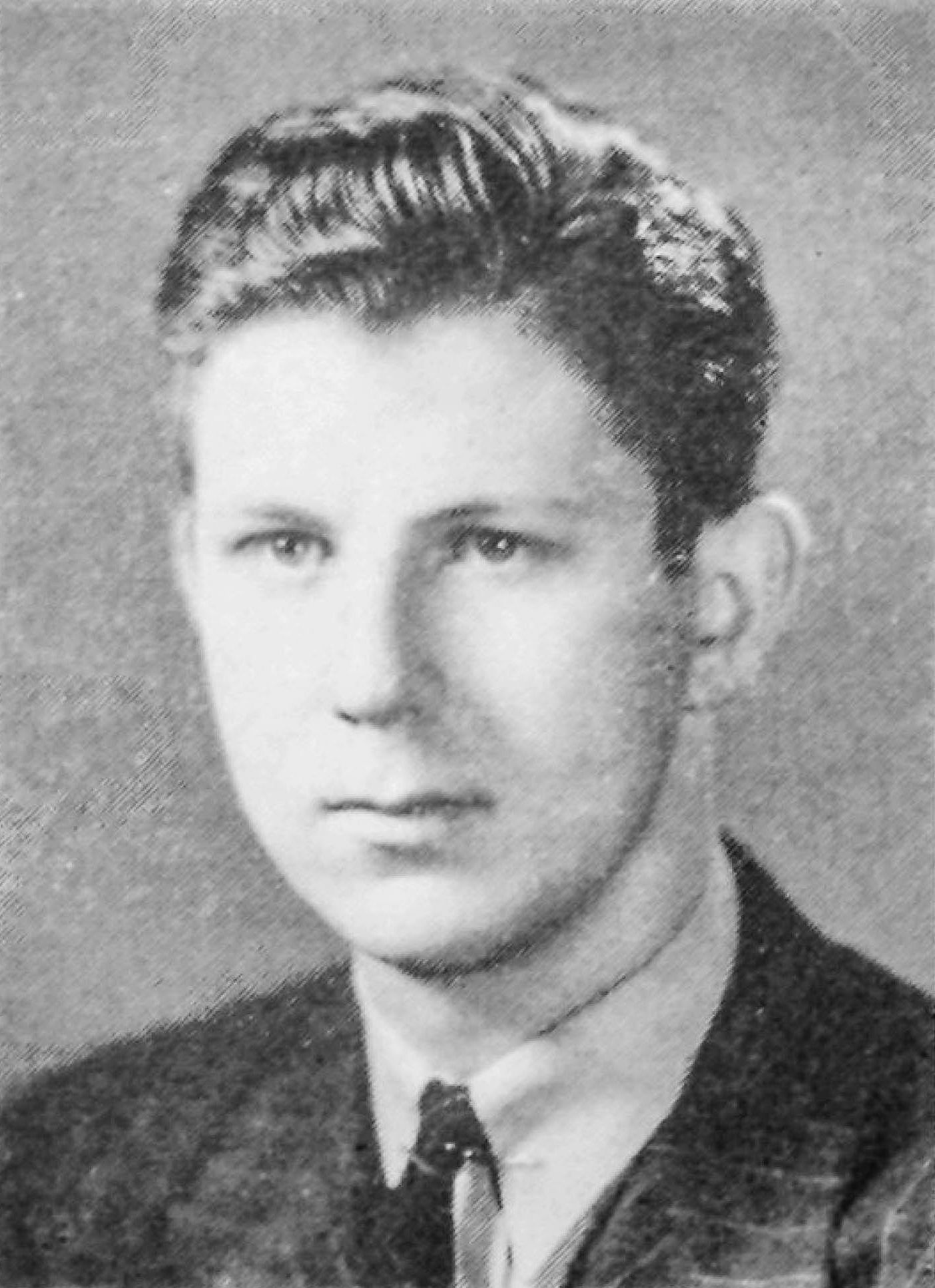
Fig. 1 — Public domain · Wikimedia Commons

A consulting room in Philadelphia, late 1950s: a patient lies on the couch, associating freely — and appears increasingly anxious. The analyst asks what is the matter. She is afraid of boring him, she says. Aaron Beck noticed in that moment something his training had not provided for: alongside the stream of free associations ran a second, quieter stream of sentences about the situation itself — sentences nobody interpreted because nobody asked after them. He called them automatic thoughts, and with them began the shift out of which cognitive therapy grew.
Beck was born on 18 July 1921 in Providence, Rhode Island, the youngest of five children of Jewish immigrants from Ukraine. Two siblings had died before his birth, and his mother suffered from depression — he later described his own childhood as life with a grieving mother. At eight, a bone infection following a broken arm led to a life-threatening sepsis; from that time he retained a blood phobia and a hospital phobia, which he later trained away himself with the means he developed — the first documented patient of his own method was himself.
He studied at Brown and Yale, became a neurologist and moved reluctantly into psychiatry, which he initially considered unscientific. He completed the psychoanalytic training in full nonetheless — and began to test its core assumptions: count dreams, measure hostility, state predictions. When the numbers did not fit the doctrine, he followed the numbers. The psychoanalytic society rejected his application for membership; Beck went on working at the University of Pennsylvania, where he stayed for six decades.
What he built there was a workshop of measuring instruments and instructions: the Beck Depression Inventory in 1961, later scales for anxiety, hopelessness and suicidal ideation — the hopelessness scale predicts suicide better than the severity of depression, one of his most consequential incidental findings — and, in 1979, the manual Cognitive Therapy of Depression, which made his procedure reproducible by others. This combination of number and manual is the reason cognitive therapy became the most-tested talking treatment in the world.
His late work turned to the most severe cases, for which talking therapy was held unsuitable. With recovery-oriented cognitive therapy he developed, from the 2000s onward, a procedure for people with long-term schizophrenia who lived withdrawn and listless in institutions — with the starting point of asking after their wishes instead of their symptoms. He worked on it past his hundredth year of life.
The break with his own training cost him his audience at first. The analysts held his work to be superficial because it began with what is conscious; the behaviour therapists held it to be unscientific because it spoke of thoughts at all. Beck later described those years as a time between two stools, in which applications failed and journals declined. What remained was the clinic: an outpatient unit in which he went on seeing patients, keeping records and trying out questionnaires. The instruments arose not from a research programme but from the need to prepare the next appointment better.
In private the picture was the opposite of his field’s combative rhetoric. Beck was married for seventy-two years to Phyllis Beck, a lawyer who in 1981 became the first woman appointed to the Superior Court of Pennsylvania; four children, a household in which things were argued out at the kitchen table. Colleagues described him consistently as friendly, curious and incapable of polemic — of all people, the man whose procedure counts as confrontational conducted his sessions with marked care and let critics finish speaking in public.
The honours of the last decades listed the usual prizes, among them the Lasker Award in 2006 — the highest medical distinction in the United States, for the first time for a psychotherapy. His daughter Judith Beck continues the Beck Institute in Philadelphia. Beck died on 1 November 2021, a hundred years old, surrounded by his family.
To the end he worked in a rhythm that co-workers described as unchanged since the 1960s: case discussions weekly, manuscripts in circulation, queries to younger colleagues about numbers he no longer collected himself. When the pandemic moved the meetings online, the centenarian took part from his living room.
The questionnaire of 1961 has meanwhile been translated into dozens of languages and is among the most-cited instruments in psychology altogether — a by-product that has outlived its originator.
His bequest to this archive is not a theory but a stance: he left his own school because his data contradicted it, and he built the instruments with which his own method can be contradicted too.
The question Beck asked in the mid-1950s was a test of loyalty: he wanted to underpin scientifically the psychoanalysis in which he had been trained. The doctrine held that depression is anger turned against the self — so the dreams of depressed patients ought to contain more hostility than those of others. Beck collected dreams and counted. What he found was the opposite: no surplus of anger, but themes of loss, failure and worthlessness — the very sentences the patients said about themselves while awake. Depression, went the conclusion, is not encrypted aggression but a pattern of thinking that lies open to view and that nobody had tested, because everyone was searching for something deeper.
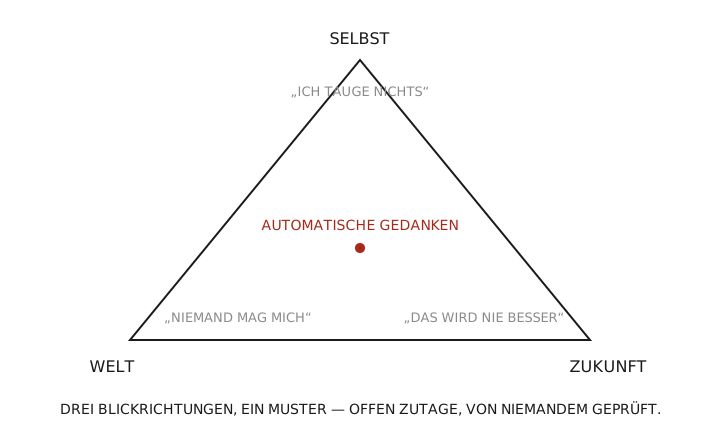
Out of this came a theory with three components. The cognitive triad: negative views of oneself, of the world and of the future. Automatic thoughts: the short, unexamined sentences that follow a situation and make the mood — “I’ll never manage this”, “Nobody likes me”. And the thinking errors that support them: all-or-nothing, overgeneralisation, catastrophising, mind-reading. The treatment Beck built on this reversed the direction of analysis: not interpret the past but examine the present — record thoughts, gather evidence for and against, set up small behavioural experiments and see what actually happens. The patient went from object of interpretation to collaborator in the investigation; Beck called it collaborative empiricism, and the name is the programme.
What made the thing testable were the instruments. The Beck Depression Inventory of 1961 — twenty-one questions, ten minutes to complete — gave the field for the first time a number for the severity and course of a depression, and it became clinical psychology’s most-used questionnaire. To it came a treatment manual: Beck wrote down what should happen in which session, so that others could reproduce it and studies could compare it. These two tools — a measure and a manual — are the real reason this particular procedure came to be tested so often.
The study that decided matters appeared in 1977. Forty-one depressed outpatients were assigned at random to twelve weeks of cognitive therapy or to imipramine, the standard antidepressant of the day. The result was a sensation and was treated as one: the talking treatment came off better than the drug, with fewer dropouts. For the first time a psychotherapy had held up against pharmacology in a randomised trial — and one you could read up in a manual.
The criticism of that first study is as old as the study itself and by now well documented: small sample, no blinding, therapists trained by Beck’s own group, the drug by today’s standards possibly underdosed and discontinued too early. A decade later the large American comparative trial came out soberer: in severe depression medication led; otherwise the procedures differed little. The first study’s finding was too good; the field’s finding is not.
The theory’s expansion went beyond automatic thoughts. Beneath them, in Beck’s later version, lie schemas: enduring basic assumptions about oneself and the world, as a rule acquired early, mostly unspoken and active only under strain — "I am only worth something if I achieve something" is the kind of sentence meant. Out of this level came procedures of their own for personality disorders, and out of the model came variants for anxiety (misreading bodily sensations as danger), panic (the catastrophic reading of a pounding heart) and obsession (the overrated responsibility for one’s own thoughts). Each of these applications brought its own scale and its own manual — the workshop went on working to the same plan.
Most consequential for practice was a side branch that concerned not depression but the risk of suicide. Out of the hopelessness scale, and the observation that hopelessness predicts later suicide better than the severity of the depression, came a short treatment aimed expressly at the repeat attempt: ten sessions for people who had shortly before survived a suicide attempt, with the single goal of preventing the next. In the randomised test of 2005 in an emergency-department population, the rate of repeat attempts was halved against usual care. It is the finding in this file that is likely to have saved the most lives, and it appears in no textbook chapter on the cognitive triad.
Dissemination followed reproducibility. Because the procedure was written down, it could be taught on a large scale — and in 2008 Britain built a state programme on it that brought psychotherapy into routine care: thousands of newly trained therapists, stepped treatment, outcome measurement at every session. For the first time a psychotherapy was rolled out like a drug and continuously measured while it was. The published outcome figures of that programme are today one of the largest data collections in psychotherapy — and a sobering one: the effect is real, the dropout rates are high, and the results under everyday conditions fall below those of the studies from which the programme was derived.
What came of it is nonetheless the greatest success story of psychotherapy research. Out of the depression treatment came manuals for anxiety, panic, obsession, eating disorders, personality disorders and psychoses; cognitive behavioural therapy is today the most-studied psychotherapy of any kind, listed in guidelines worldwide as a first-line treatment and tested in hundreds of randomised trials. The meta-analyses show a pattern this archive has come to know: the effect is there, it is meaningful, and it is smaller than the early figures promised. Carefully conducted studies deliver weaker results than careless ones; publication bias flattered the balance for decades; and in comparisons with other properly conducted psychotherapies the lead largely vanishes — the dodo verdict from the Rogers file, once again.
A widespread misunderstanding about this procedure concerns its tone. Because it is about thinking errors, cognitive therapy is taken to be instructive — as though someone were sitting there demonstrating the patient’s mistakes to them. Beck contradicted this all his life, and appealed expressly to the humanistic psychology folder in doing so: the conditions Rogers described — warmth, genuineness, close listening — are necessary for cognitive therapy, only not sufficient. The therapist asserts nothing but asks; the examination of a thought is a joint experiment whose outcome is open; and the commonest beginner’s error is wanting to talk the patient round. Whoever sets the recorded sessions of Beck beside those of his colleague Ellis hears two opposed temperaments on the same idea.
Open to this day is why it works. Beck’s theory says: because the thoughts change. Research on mechanism finds that only partly confirmed — behavioural activation alone, that is simply doing things again, works about as well as the whole package in several studies, and the question whether cognitive restructuring is the active ingredient or an accompanying circumstance is not settled. Durability too, the method’s strongest argument against medication, has since been measured more precisely: relapse rates are lower after cognitive therapy, but not by as much as the early studies suggested.
What stands today is therefore a remarkably honest finding. Cognitive therapy works — in depression, anxiety and obsession, in hundreds of studies, with medium effects and an effect that reaches beyond the end of treatment. It is better tested than any other talking procedure, because its inventor was the first to supply a measure and a manual with it. And it is, measured against its own claim, less superior than asserted: the mechanism is open, the lead over other procedures small, the early figures too optimistic. It is the balance sheet of a method that allowed itself to be tested — and the reason it is the one file in this archive whose author co-published the shrinking effects himself. For an archive that carries a replication status, that is the rarest entry of all: a method made more credible by its own corrections.
The textbook version introduces Beck as psychoanalysis’s opponent. More precisely: he was its most loyal tester. The dream studies of the late 1950s were meant to confirm the doctrine, not refute it — Beck expected more hostility in the dreams of depressed people because the theory predicted it, and looked for it with tally sheets instead of interpretations.
The note records what happened next, because it is rare in this archive: when the data did not support the prediction, Beck changed not the reading of the data but the theory. The psychoanalytic society thereupon declined to admit him; depression research got a model that can be tested.
The same movement repeated itself forty years later with the sign reversed. When the meta-analyses showed that the early efficacy figures of cognitive therapy had been too high, Beck and his successors published the corrections along with them. It is the least spectacular and rarest virtue in this collection — and the reason the file stands well despite shrinking effects: whoever revises their own numbers downward makes them more credible.
Replication status: replicated. Efficacy in depression, anxiety and obsessive-compulsive disorder is evidenced in hundreds of randomised trials — with medium effects that come out smaller under better methodology than in the early work.
Primary sources. Rush, A. J., Beck, A. T., Kovacs, M., & Hollon, S. (1977). Comparative efficacy of cognitive therapy and pharmacotherapy in the treatment of depressed outpatients. Cognitive Therapy and Research, 1(1), 17–37. Beck, A. T., Rush, A. J., Shaw, B. F., & Emery, G. (1979). Cognitive Therapy of Depression. New York: Guilford. — The manual. Beck, A. T., et al. (1961). An inventory for measuring depression. Archives of General Psychiatry, 4, 561–571. — The BDI.
The large comparative trial. Elkin, I., et al. (1989). National Institute of Mental Health Treatment of Depression Collaborative Research Program. Archives of General Psychiatry, 46(11), 971–982. — Soberer than the first study: an advantage for medication in severe depression.
Current balance. Cuijpers, P., et al. (2020). The effects of psychotherapies for depression on response, remission, reliable change, and deterioration. Acta Psychiatrica Scandinavica, 141(2), 115–127. — Effective, with smaller effects than earlier reported; publication bias corrects the balance downward.
The question of mechanism. Jacobson, N. S., et al. (1996). A component analysis of cognitive-behavioral treatment for depression. Journal of Consulting and Clinical Psychology, 64(2), 295–304. — Behavioural activation alone works about as well as the whole package.