Case file 030 · Clinic & Therapy
Albert Ellis
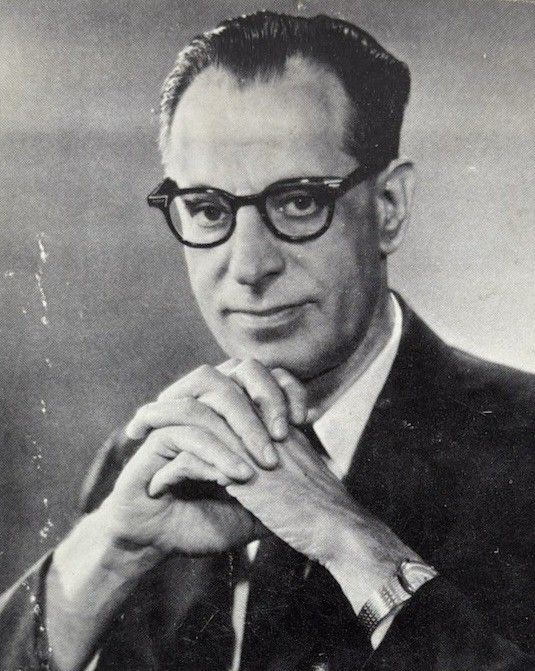
Fig. 1 — Public domain · Wikimedia Commons

In the summer of 1932, in the Bronx Botanical Garden, a nineteen-year-old student spoke every day to women sitting alone on a bench: a hundred of them, in one month. Thirty got up at once and left. Of the rest, exactly one date came about, and it was not kept. Albert Ellis drew from this self-experiment against his own shyness the conclusion that would later carry his whole therapy: nothing terrible had happened. Nobody had hit him, nobody had called the police — the catastrophe had taken place exclusively in his head.
Ellis was born on 27 September 1913 in Pittsburgh and grew up in the Bronx, the eldest of three children of an absent travelling salesman and a mother he described as self-absorbed. Illness marked his childhood: he lay in hospital for months at a time with kidney infections, often without visitors, and took on early the care of his younger siblings. He first studied business, wanted to be a writer, sold nothing — and found that what interested him about his own manuscripts was above all the advice-giving passages. In 1943 he took his master’s in clinical psychology at Columbia University, in 1947 his doctorate.
He then went through psychoanalytic training in full — training analysis included — and practised classically for some years. Around 1953 he broke with it, because the results did not convince him; in 1955 he put together his own procedure and called it rational psychotherapy, later rational-emotive and finally rational emotive behaviour therapy. In 1959 he founded in Manhattan the institute that was to bear his name, and began a practice run at speed: sessions every half hour, groups in the evening, and the famous Friday-night demonstrations in which he worked with volunteers in front of an audience — for decades, for a few dollars' admission.
His second field was sex education, and there he was radical early: books about sexuality without guilt, a defence of same-sex relationships at a time when homosexuality was still listed as an illness, expert opinions in censorship trials. The titles — Sex Without Guilt, How to Live with a Neurotic — earned him the reputation of a provocateur and an audience that stayed with him: Ellis wrote around eighty books, gave thousands of lectures and became one of the best-known psychologist figures in the United States. In surveys among professionals he repeatedly landed ahead of Freud in the front ranks of the most influential psychotherapists.
The style was both programme and target: loud, coarse, with expletives, humour and self-written songs he sang in lectures. Critics held against him that his confrontation bordered on disrespect; Ellis replied that respect means crediting someone with the ability to take contradiction. He applied his own teaching to himself consistently — diabetes from his fortieth year, later severe illnesses, and the statement that he was not happy about it but could stand it.
Remarkable is how far he corrected himself on one point. The early Ellis held religiosity to be a source of irrational demands and said so loudly; the later one distinguished between rigid dogmatism and lived faith, worked together with Christian counsellors and published with them an application of his procedure for religious clients. The judgement he held to concerned not the content of a belief but its form: what makes someone unhappy is not what they believe but that they phrase it as a demand on the world.
The last years brought a bitter dispute: in 2005 his own institute withdrew his licence to teach and his seat on the board; Ellis sued and was upheld in court, but taught to the end from his flat on the top floor of the same building. He died on 24 July 2007 in New York, ninety-three years old.
The Friday evenings remained his laboratory and his stage into old age: two volunteers from the audience, two problems, twenty minutes each, then questions from the hall. Much of it is recorded, and the recordings are to this day the most honest teaching material on this procedure — one sees in them both how quickly a demand can be worked out and how easily the style tips into self-righteousness. In his last years, weakened and working out of his own building, he taught together with his wife Debbie Joffe Ellis, who has continued his work since.
The institute in Manhattan survived the dispute and works on; the Friday-evening demonstrations were continued by successors after his death.
What remains of him appears in every therapy manual — the ABC scheme, the disputing, the shame-attacking exercise — mostly without his name. The case file tests how much of it is evidenced.
The question with which Albert Ellis broke in 1955 concerned not the theory but the clock. As a trained analyst he saw patients over years and found that insight into childhood helped them little; whoever had understood why he was afraid went on being afraid. What did help — so his observation in his own practice — was something less refined: telling people that their conclusions are wrong, and getting them to try the opposite. This procedure attends not to the origin of a suffering but to its ongoing justification.
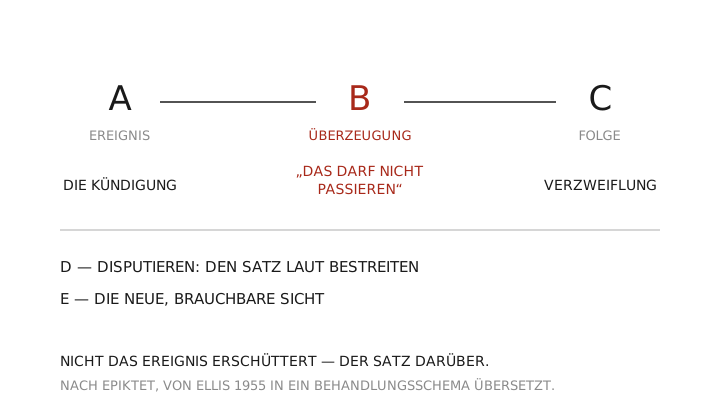
The formula that came of it is probably psychotherapy’s most-copied mnemonic: the ABC. A stands for the activating event, C for the consequence — feeling and behaviour. Common sense connects the two directly: being fired makes you desperate. Ellis inserted B in between, the belief: it is not the dismissal that produces the despair but the sentence one says about it — that such a thing must not happen, that one cannot bear it, that one is finished as a person. He called such sentences irrational, not because they are illogical but because they are phrased as demands: musts, shoulds, oughts. In therapy came D, the disputing — the loud, dogged contesting of these sentences — and later E for the new, usable view.
The treatment practice Ellis developed from this was, for its time, improperly direct, and remained so. He contradicted patients openly, demanded homework and sent them into shame-attacking exercises: asking strangers the time and talking nonsense while doing it, announcing the stations aloud on the subway, asking in department stores for things they do not carry. The purpose was not the embarrassment but its failure to arrive — the experience that disapproval is bearable and the catastrophe takes place in one’s head. Whoever knows the behaviour therapy folder recognises exposure here, only with a vocabulary out of philosophy: Ellis appealed expressly to the Stoics, to Epictetus and his sentence that people are disturbed not by things but by the views they take of them.
The priority question belongs in this file because it is often answered wrongly. Ellis presented his rational psychotherapy at a congress in 1956 and published it in 1957 — about six years before Beck’s first cognitive papers. Both developed independently a treatment that begins with beliefs; both came out of psychoanalysis and left it for the same reason. The difference lay in style and in methodology: Beck built scales and manuals, Ellis built language and a stage. The history of influence decided accordingly — cognitive behavioural therapy today bears Beck’s handwriting, while Ellis’s share has shrunk in the textbooks to a paragraph.
The procedure’s names tell its development. In 1955 it was rational psychotherapy and sounded like pure correction of thinking; because Ellis was charged with passing over feeling, it became rational-emotive therapy in the early 1960s; and because the homework and exposure exercises had belonged to it from the start, he added the word behaviour therapy in 1993 — rational emotive behaviour therapy, REBT for short. Three times the same core, three times a concession to criticism.
The core itself is a short list. Ellis reduced the irrational beliefs to four basic forms: the demand that something must be so; the catastrophising that turns a setback into the worst; the low frustration tolerance, the judgement that one cannot stand it; and the global rating that turns a mistake into a worthless person. All four can be recognised and named within one session, and precisely there lies this version’s practical advantage over Beck’s finer list of errors: it can be taught in a training week.
Out of the fourth form follows the idea for which Ellis argued most stubbornly, and it is aimed at a word that carries half the self-help literature. Self-esteem, he said, is the disease and not the cure: whoever couples their self to achievements and approval has built in the fall. His counter-proposal was called unconditional self-acceptance — the refusal to rate oneself as a whole at all, while rating one’s own behaviour soberly. As a stance that is one of the oldest ideas of the Stoa; as a component of therapy it is hard to test, because the questionnaires for it can barely be told apart from self-esteem scales — a measurement problem research has not solved to this day.
Ellis made his procedure testable only incompletely, and that is the core of the criticism. His early comparisons come from his own practice, with himself as treating clinician, rater and author; the success rates he reported for them are self-reports without a control group. A manual in Beck’s sense came only late, treatment fidelity remained hard to check because the procedure hung on the person of the therapist — and Ellis’s own sessions, many of which are recorded, show a style hardly anyone can copy without seeming rude.
The evidence falls into two unequal halves. The one is the claim about association: people with pronounced irrational beliefs report more anxiety, anger and depressive symptoms. That has been measured many times and is stable, but is largely correlational — the questionnaires capture distress and belief in the same sentences, which makes the association partly a measurement artefact. The other half is the claim about treatment, and there the study base is thinner than the level of fame suggests: a few dozen controlled comparisons over sixty years, often with small groups, seldom with independent raters, and regularly conducted by people close to the procedure.
Where it has arrived lies partly outside the clinic. Out of rational-emotive education came lessons for schools in which children learn to distinguish demanding sentences from wishing ones. In sport a small but active line of research has formed that works with single-case series and measures the effect on competition anxiety. And in coaching the ABC scheme has become so self-evident that it usually appears there without attribution — the last stage of influence an idea can reach, and the most thankless. In addiction treatment, finally, a variant of its own arose that does without the higher power of the twelve steps and works instead with Ellis’s sentences about frustration tolerance; it has stayed small, but it has existed since the 1980s and has a modest evidence base of its own.
What stands today is respectable and narrower than the claim. The review marking the method’s fiftieth anniversary found, across treatment studies, efficacy in anxiety and depression, with effects close to those of other cognitive procedures — on a markedly smaller and methodologically weaker study base than Beck’s. The core idea, by contrast, has long been common property: that appraisals stand between event and feeling, and that these appraisals can be changed, is the working basis of the whole of cognitive behavioural therapy, and the techniques — disputing, homework, exposure exercises against the fear of disapproval — appear in every manual. The third wave of behaviour therapy also lists Ellis as a forerunner, with one decisive objection: where he wanted to contest thoughts, acceptance procedures today teach letting them stand and acting anyway.
The two originators themselves never made a quarrel of the priority question. They knew each other, appeared together, and Beck confirmed Ellis’s chronological lead publicly several times, while Ellis recognised Beck’s measuring instruments as the thing he himself had lacked. Cognitive behavioural therapy today lists both as founders — in the order the evidence dictates, not the chronology.
The file therefore closes with an asymmetry typical of this archive: the man who was there first supplied the idea and left the testing to others. Whoever measures wins the history of influence; whoever is merely right gets a paragraph.
The textbooks mostly name cognitive behavioural therapy after Beck. The chronology says something else: Ellis presented his procedure in 1956 and published it in 1957; Beck’s first cognitive papers appeared in the early 1960s. Both arrived independently at the same shift — away from interpreting the past, toward examining present beliefs — and both had the same prehistory: a complete psychoanalytic training they held to be insufficient.
The note records what made the difference, and it was not the idea. Beck built a measuring instrument and a manual; Ellis built a stage. What can be put into numbers and reproduced by strangers gets tested, published and taken into guidelines. What hangs on the person of its inventor gets admired and dies with him.
For this archive that is the most practical lesson in the whole collection — the same one carried by Ebbinghaus’s syllable records and Ainsworth’s coding systems: it is not the better idea that prevails but the more testable one. Whoever wants their insight to survive must write it down so that others can refute it.
Replication status: partial. The core idea is common property of cognitive behavioural therapy and broadly evidenced; rational emotive behaviour therapy as a procedure in its own right rests on a markedly narrower and methodologically weaker study base than Beck’s line.
Primary sources. Ellis, A. (1957). Rational psychotherapy and individual psychology. Journal of Individual Psychology, 13, 38–44. Ellis, A. (1962). Reason and Emotion in Psychotherapy. New York: Lyle Stuart. — The ABC scheme in book form.
Balance. David, D., Cotet, C., Matu, S., Mogoase, C., & Stefan, S. (2018). 50 years of rational-emotive and cognitive-behavioral therapy: A systematic review and meta-analysis. Journal of Clinical Psychology, 74(3), 304–318. — Effective in anxiety and depression, with effects close to other cognitive procedures; number and quality of studies limited.
The neighbourhood. For the joint balance of the cognitive procedures see the evidence sheet of the Beck file; for the acceptance line, which expressly rejects Ellis’s disputing, the literature on acceptance and commitment therapy.
Document of its time. The teaching film Three Approaches to Psychotherapy (1965) shows Ellis, Carl Rogers and Fritz Perls in succession with the same client — see also the Rogers file of this archive.