Case file 001 · Psychoanalysis
Sigmund Freud
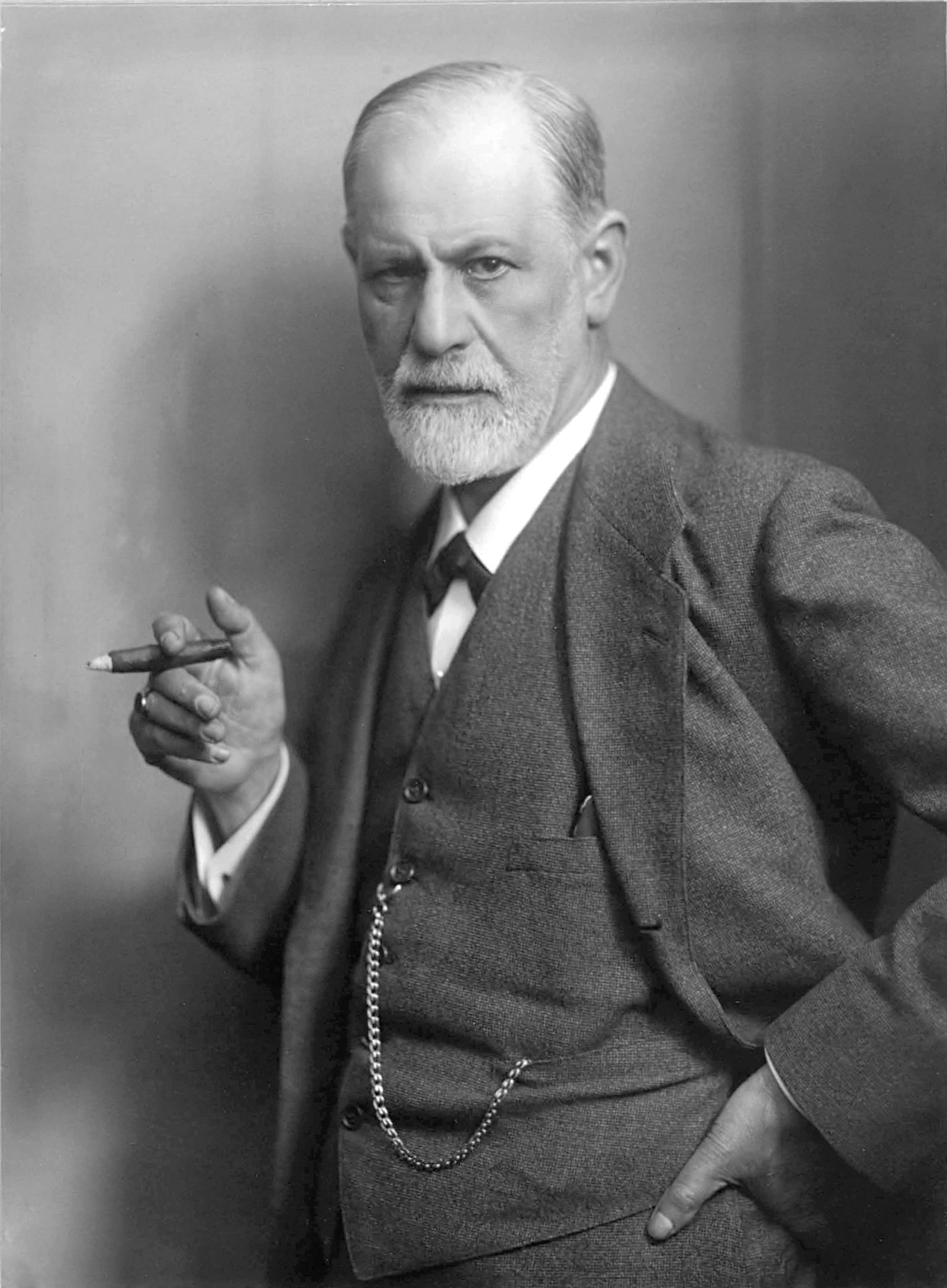
Fig. 1 — Public domain · Wikimedia Commons
.jpg)
In the night before 24 July 1895, at the Schloss Bellevue near Vienna, Sigmund Freud dreamed of a patient he called Irma. Five years later he wrote to Wilhelm Fliess that a marble tablet ought one day to hang on that house: here the secret of the dream had revealed itself to Dr. Sigm. Freud. The dream of Irma’s injection is the first he interprets in full — and the model for everything that followed.
Freud was born on 6 May 1856 in Freiberg in Moravia, the eldest child of a wool merchant whose business went badly enough that the family moved to Vienna in 1860. He stayed there for almost eighty years. He studied medicine, spent six years in Ernst Brücke’s physiological laboratory — crayfish nerve cells, the spinal cord of the lamprey — and would probably have continued on that path had it been able to feed a man without private means. Brücke himself advised him against it. He took his doctorate in 1881; in 1882 he became engaged to Martha Bernays, and the four years to the wedding are filled by more than 900 letters — the best-documented waiting period in the history of science.
Into those years also falls the episode that could have ended a career before it began: Freud experimented with cocaine, published the eulogy Über Coca in 1884 and recommended the substance to his friend Ernst von Fleischl-Marxow against his morphine addiction. Fleischl traded one dependency for the next and died wretchedly. Freud never publicly worked through the case; the file knows it from letters and from the biographies.
The turn to psychology came in 1885–86 with a period of study under Jean-Martin Charcot at the Salpêtrière in Paris, who presented hysteria as a describable phenomenon open to hypnotic influence — and with the remark that theory is all very well, but that doesn’t prevent the facts from existing. Back in Vienna, Freud opened a practice for nervous disorders and developed the talking cure with Josef Breuer, first under hypnosis, then without: the patient Anna O. had herself named the procedure “chimney sweeping.” Their joint Studies on Hysteria appeared in 1895; after that their paths parted, because Freud moved sexuality to the centre and Breuer would not follow him there. From 1896 he called his procedure psychoanalysis. In the same year his father died — the impetus for the self-analysis out of which the dream book grew.
The Interpretation of Dreams appeared in November 1899 with the year 1900 on its title page. Success came slowly, and the sales figures are transmitted inconsistently to this day — Ernest Jones counts 351 copies sold in the first six years; other accounts speak of a first printing of 600 that took eight years. On one thing all agree: it was not a commercial success.
What followed was an institution. From 1902 the Psychological Wednesday Society met in his apartment at Berggasse 19, becoming the Vienna Psychoanalytic Society in 1908; the same year the first international congress met in Salzburg. The movement grew — and lost its most prominent members to quarrels: Alfred Adler left in 1911, Carl Gustav Jung in 1913. Both times the question was the same, namely whether the libido must remain the centre, and both times Freud decided that whoever answers differently is no longer a psychoanalyst.
He rebuilt his own edifice twice along the way. In 1920 Beyond the Pleasure Principle set the compulsion to repeat and the death drive beside the wish; in 1923 The Ego and the Id replaced the old topography with the structural model of id, ego and super-ego — the version in which the theory became canonical. In the same year the cancer of the palate was diagnosed. Freud survived more than thirty operations, wore a prosthesis he called "the monster," and wrote for sixteen more years. In 1930 he received the Goethe Prize of the city of Frankfurt — the only major prize of his life; for literature, not for medicine.
In 1933 the National Socialists burned his books on the pyres of German university towns. Jones records Freud’s comment on what progress it was — in the Middle Ages they would have burned him; today they contented themselves with his books. Five years later the Gestapo stood in the Berggasse. After the annexation of Austria, Freud emigrated to London in 1938 with the help of Marie Bonaparte and Ernest Jones; Bonaparte advanced the demanded “Reich flight tax.” The family was allowed to leave, part of the library with them — four of his sisters stayed behind and were later murdered in National Socialist camps.
In London, at 20 Maresfield Gardens, he saw patients until the end and worked on the unfinished Outline of Psychoanalysis. He died there on 23 September 1939, after his physician Max Schur, at Freud’s own request — the two had agreed it years before — administered morphine. The study with the couch stands unchanged today in the Freud Museum; the collection of antiquities on the desk, which visitors report he would look at while writing as if at an audience, emigrated with him.
The question The Interpretation of Dreams asks was an unusual one for its time: not whether dreams mean anything, but by what rules they do. The medicine of the nineteenth century treated the dream as noise — a by-product of digestion, street sounds or circulation. Alfred Maury had himself tickled and sprinkled in his sleep to show that the stimulus makes the dream; the physiology textbooks filed dreaming among the accompaniments of sleep, at roughly the dignity of snoring. Freud treated the dream as a text with a grammar.
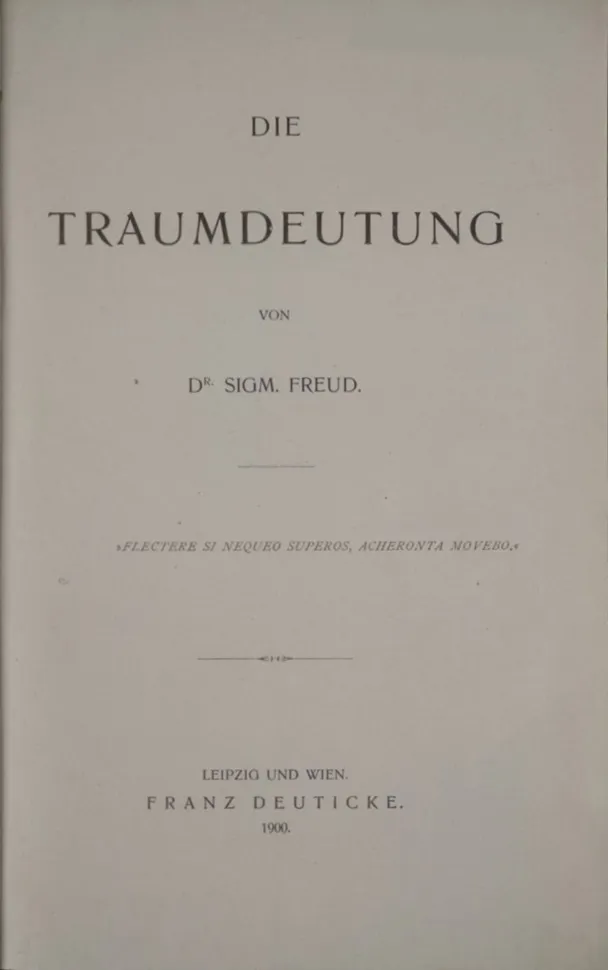
The book appeared on 4 November 1899 with the publisher Franz Deuticke, its title page postdated to 1900 — the publisher wanted the round year, and Freud got a publication date that looks like the threshold of an epoch. The first printing was 600 copies; how slowly it sold is transmitted inconsistently — Ernest Jones counts 351 copies sold in the first six years, other accounts say eight years to sell out. The sources agree only on the verdict: not a commercial success. The profession was largely silent, and where it was not, it reviewed the book as a curiosity. The author himself considered it his most important work for the rest of his life. “Insights such as these,” he wrote in the preface to the third edition, "fall to one’s lot but once in a lifetime."
The prehistory is on file because Freud wrote it down as it happened — in his letters to the Berlin physician Wilhelm Fliess, his closest correspondent of those years. There one finds the dream that became the book’s specimen case: in the night of 23–24 July 1895, at the Schloss Bellevue near Vienna, Freud dreamed of his patient “Irma,” into whose throat he peers in a great hall, and whose complaints turn out in the end to stem from a colleague’s unclean syringe. Freud’s reading: the dream exonerates the dreamer. It keeps shifting the responsibility for a failed treatment until the doctor is innocent — it fulfils a wish. Five years later Freud asked Fliess whether a marble tablet might one day hang on that house: "Here, on 24 July 1895, the secret of the dream revealed itself to Dr. Sigm. Freud." The tablet now actually exists.
His material was neither a sample nor an experiment. It was the dreams of his patients and, in great numbers, his own — collected in the self-analysis he began after his father’s death in October 1896, which forms the backbone of the book. That is the decisive methodological fact about this work: the author is at once subject, interpreter and the only authority that confirms the interpretation. Freud knew it. He called self-analysis impossible in one place and practised it anyway — a contradiction the file cannot resolve, only record.
The central thesis is that every dream is the fulfilment of a wish — usually a repressed one, usually one from childhood. Because this wish must not become conscious, a censorship transforms it. Freud called the transformation the dream-work and described four procedures: condensation of several thoughts into one image, displacement of the affect onto a trivial detail, considerations of representability — a dream can only show, not argue — and secondary revision, which gives the whole a story after the fact. From this the seventh chapter builds a general architecture of the mind: an apparatus of systems with a censor between them, and the unconscious as the true site of the action. The much-quoted sentence that the interpretation of dreams is the “via regia to a knowledge of the unconscious in mental life” stands exactly there.
The textbook version likes to reduce this to a dictionary of symbols. Freud himself warned against that: a symbol means nothing without the dreamer’s associations. The symbol lists come mostly from later editions and from the reception, not from the core of the argument — the book grew through eight editions in Freud’s lifetime, and what grew into it was not always an improvement.
The first serious crack came from within. In 1920, in Beyond the Pleasure Principle, Freud conceded that the dreams of the war neurotics — returning night after night to the terror that made them ill — do not submit to wish-fulfilment. He built the compulsion to repeat into the theory to accommodate them. One can read that as a refinement, or as what it is from today’s vantage: the first documented counter-example, entered into the record by the author himself.
Then sleep went into the laboratory. In 1953 Eugene Aserinsky and Nathaniel Kleitman in Chicago described the phases of rapid eye movements; people woken from REM sleep usually reported a dream. For a moment it looked as if physiology had found Freud’s subject matter. But the more precisely it was measured, the further dream and REM drifted apart — dreaming happens, less vividly, outside those phases too.
What stands today depends on whom you ask — and the two answers have been the same two for fifty years. J. Allan Hobson and Robert McCarley proposed the activation-synthesis hypothesis in 1977: REM sleep is triggered randomly from the brainstem, and the cortex builds a story out of the noise after the fact. No wish, no censorship, no disguise — the dream does not mean, it gets interpreted. It was sleep science’s formal settling of accounts with psychoanalysis, and for decades it stood in the introductory textbooks as the result.
From the 1990s onward Mark Solms set clinical findings against that reading which are hard to pass over. Patients with a destroyed brainstem REM generator go on dreaming. Patients with lesions in the ventromesial forebrain, by contrast, stop dreaming although their REM sleep remains intact. What is affected there is a dopaminergic system involved in motivation and seeking — the same pathway the older psychosurgery severed, whose patients lost dreaming as a side effect. That strikes Hobson’s randomness thesis and supports Freud’s basic intuition that dreams proceed from a drive — but not his doctrine of censorship and disguise.
The controversy has not been settled since, only sharpened. Hobson revised his model repeatedly and in the end granted the dream a function — as a virtual reality in which the brain rehearses its models of the world. The continuation of the Freudian line trades today as neuropsychoanalysis, with Solms as its most visible representative and a journal of its own; its critics consider it an attempt to carry a refuted theory forward under a new name. Both sides are still publishing.
A third line has meanwhile done what neither Freud nor Hobson did: count. Calvin Hall began collecting dream reports by the thousands in the 1940s and scoring them by a fixed scheme; the Hall–Van de Castle system remains the standard instrument of quantitative dream-content research to this day. The findings of these counts are unspectacular and revealing for exactly that reason: dreams deal mostly with the ordinary lives of their dreamers, with familiar people and places, with a stable surplus of mishap, worry and pursuit — the same themes across countries, decades and survey methods. For the grand doctrine of interpretation these tables yield nothing; against the claim that the dream is arbitrary noise, they are a quiet, data-rich veto.
The load-bearing remainder is thus narrower than the legend and larger than the reckoning: dreams are motivated and not mere noise; they hang on systems of wanting, not of seeing; and they preferentially process what occupies the dreamer by day — research calls this the continuity effect. That they disguise a forbidden wish has not been shown to this day. Of the four procedures of the dream-work, none has found a measurable counterpart. The Interpretation of Dreams thus remains the founding document of a science whose central claim is open — a file that cannot be closed, because its subject returns every night.
Of all the terms Freud coined, repression is the one everyday English has taken over completely — usually with the wrong meaning. In ordinary use, to repress something means not wanting to think about it. Freud meant almost the opposite: a process you know nothing about and can know nothing about, because its result is precisely that the matter has vanished from consciousness.
The core of the claim is not the forgetting but the cost. What is repressed does not leave the person’s household; it binds energy, finds detours and reappears altered — as a slip, a symptom, a dream. From that bookkeeping follows the therapeutic idea: make the repressed conscious and the energy is freed.
Empirically the term remains contested, and precisely so. That people can actively suppress distressing memories has been shown in the laboratory and is studied as motivated forgetting. That a trauma can vanish entirely from consciousness and return years later unaltered is the stronger claim — and exactly the one the debate about recovered memories turned on, with Elizabeth Loftus taking the opposing position. File 009 of this archive holds it.
Replication status: not applicable.
The Interpretation of Dreams is not a study. It contains no sample, no control condition and no statement of what observation would make its central thesis false. The status records that instead of claiming a test that never happened. What can be tested are the neighbours: the neurobiology of dreaming and memory research.
Primary work:
- Freud, S. (1900). Die Traumdeutung. Franz Deuticke, Leipzig/Vienna. Actually delivered in November 1899. — Dream-work, manifest and latent content, the dream of Irma’s injection.
- Freud, S. (1901). Über den Traum. — The short version, through which Melanie Klein came to the field in Budapest.
The two opposing positions in neurobiology:
- Hobson, J. A., & McCarley, R. W. (1977). The brain as a dream state generator: An activation-synthesis hypothesis of the dream process. American Journal of Psychiatry, 134(12), 1335–1348. — The dream as after-the-fact synthesis over random brainstem activity. The sharpest rejection of Freud’s censorship model.
- Solms, M. (2000). Dreaming and REM sleep are controlled by different brain mechanisms. Behavioral and Brain Sciences, 23(6), 843–850. — The clinical lesion findings that separate REM from dreaming and identify a motivational forebrain system as necessary.
On the history of its reception:
- Jones, E. (1953–1957). Sigmund Freud: Life and Work. Hogarth Press. — The source for the early sales figures; accounts differ, see the profile.
- Schur, M. (1972). Freud: Living and Dying. International Universities Press. — Freud’s physician on the last years and on 23 September 1939.
- Zaretsky, E. (2006). Freuds Jahrhundert. Die Geschichte der Psychoanalyse. Zsolnay, Vienna. — German-language social history of the field; explains why the dream book had its effect although it barely sold at first.
Overview: https://en.wikipedia.org/wiki/The_Interpretation_of_Dreams