Case file 016 · Psychoanalysis
Melanie Klein
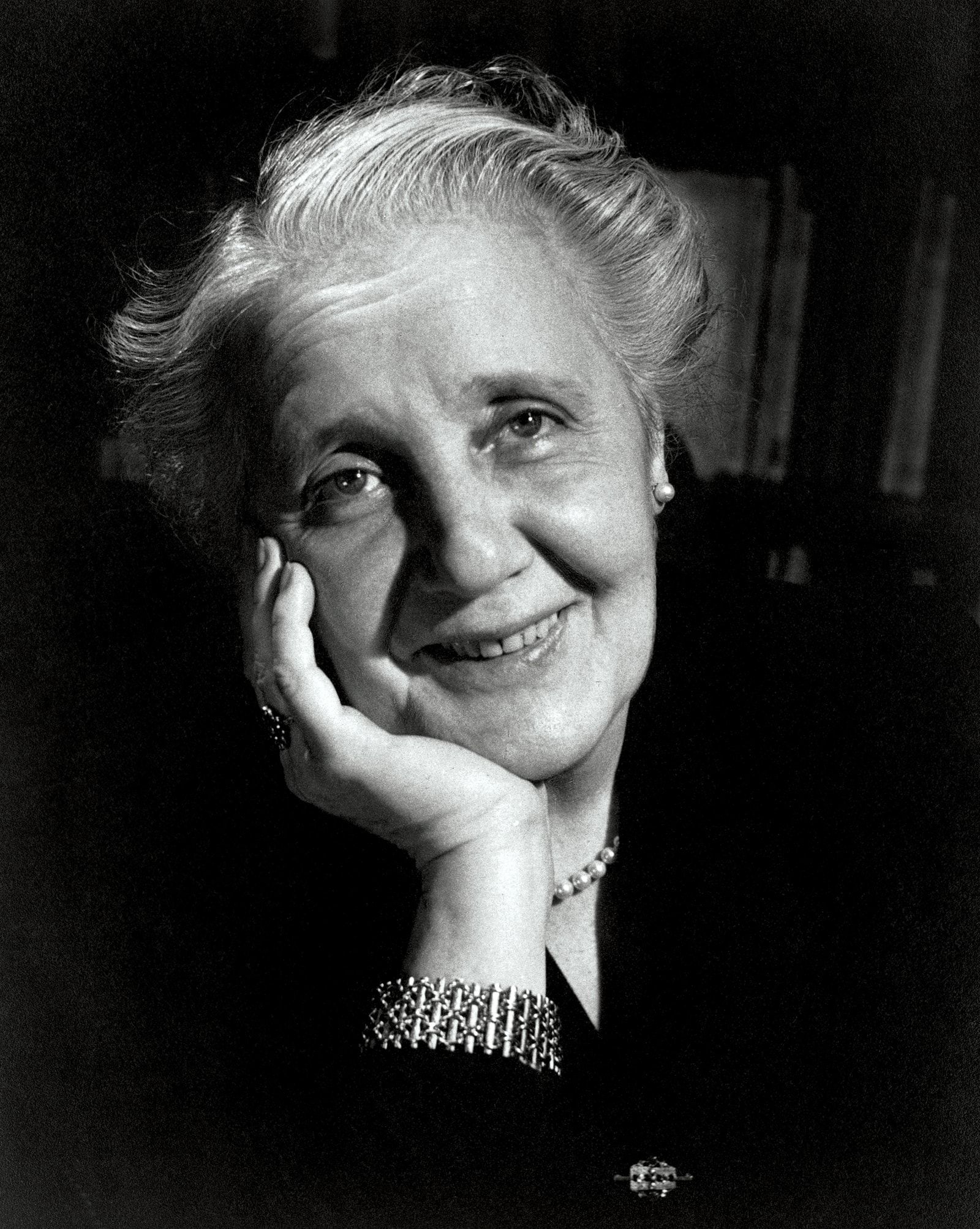
Fig. 1 — CC BY 4.0 · Foto: Douglas Glass

A playroom in Berlin, mid-1920s: on the table lie small wooden figures, paper, scissors, string, water. Melanie Klein does not interpret what a child tells her — she interprets what it does with the figures. The play technique was born, and with it the claim that even a two-year-old has an inner life that can be analysed.
Klein was born Melanie Reizes on 30 March 1882 in Vienna, the youngest of four children of a Jewish family; her father was a physician, the money short. The biography before psychoanalysis is a series of interruptions and losses that her biographers hold up against the theory not without reason: her sister Sidonie died when Melanie was four; her brother Emanuel, her closest confidant, at twenty-five. The medical degree she aimed for never came about — instead engagement at seventeen, marriage at twenty-one to the industrial chemist Arthur Klein, three children, relocations across half of Central Europe, and recurring depressive episodes for which the medicine of the day kept spa cures in store and little else.
The turn came in Budapest. There, around 1914, Klein read Freud’s On Dreams and began an analysis with Sándor Ferenczi — as a patient at first, not as a candidate for a profession that scarcely existed for women without a degree. It was Ferenczi who pointed her toward work with children; in 1919 she presented her first child study to the Hungarian Psychoanalytic Society and became a member. That the early papers on little “Fritz” rest on observations of her own son belongs to the basic data of this career — the founding generation analysed what was near it, and the file treats this not as a footnote but as a methodological datum.
In 1921 she moved to Berlin, then the liveliest institute of the movement. Karl Abraham took over her second analysis and backed her work against growing resistance — the idea of interpreting small children’s aggressive phantasies to them struck many Berlin colleagues as a violation. Abraham’s early death in 1925 took away her support; the same year she gave six lectures in London at Ernest Jones’s invitation and found there what Berlin denied her: an audience that considered her direction the most consistent continuation of psychoanalysis. In 1926 she moved to London; in 1927 she became a member of the British Psychoanalytical Society — her place for the rest of her life.
What she developed there shifted the moment at which the psychic drama begins far forward. Freud dated the Oedipus complex to the third to fifth year; Klein saw its precursors in the first. Out of this shift came her central concepts — the paranoid-schizoid and the depressive position, the internal object, projective identification — and her most important books: The Psycho-Analysis of Children (1932), the mourning papers of the late 1930s, Envy and Gratitude (1957). A school of her own gathered around her, with analysts such as Wilfred Bion, Hanna Segal and Herbert Rosenfeld — the Kleinians, to this day one of the shaping currents of international psychoanalysis, especially in Britain and Latin America.
The conflicts of her life ran increasingly through her own ranks. The dispute with Anna Freud, who had emigrated to London with her father in 1938, was fought out formally between 1941 and 1945 in the Controversial Discussions and taken down in minutes; it ended not in victory but in partition — the British society has trained in three groups ever since. Harder was what came before: her own daughter Melitta Schmideberg, herself an analyst, spoke openly against her mother in the society’s meetings, seconded by her analyst Edward Glover. The breach between mother and daughter was never healed; Melitta, it is reported, lectured in London on the day of Klein’s funeral wearing red shoes. The anecdote has been told so often that the file carries it — as transmission, not as evidence.
Into her last decade she remained a working clinician: patients in the morning, supervisions in the afternoon, and the case seminars from whose minutes her school teaches to this day. Klein died on 22 September 1960 in London, a few months after a diagnosis of colon cancer. Her concepts have shaped the field beyond psychoanalysis — projective identification is as current today in organisational consulting as in the clinic, and the formula of the “good” and the “bad breast” is one of the few psychoanalytic phrases to have made it into everyday irony. That the sharpest criticism of her method and the most productive continuation of her ideas came from the same city, sometimes from the same seminar room, is the most English point of this file.
The question Klein answers in 1932 in The Psycho-Analysis of Children is: with what does a child speak who cannot yet freely associate? The classical technique requires the patient to say everything that comes to mind. A three-year-old cannot do that. Freud had circumvented the problem by analysing Little Hans through his father — at second hand, by written instruction. Child analysis was thereby founded and at the same time adjourned: there was the claim that the neuroses are rooted in childhood, but no procedure that could reach childhood while it was still going on.
Klein’s answer was the play technique, developed from 1919 in Budapest and Berlin on her first cases — among them, as the file cannot conceal, her own children: by today’s undisputed state of the sources, the early papers on “Fritz” rest on her son Erich. In the founding generation this was no isolated case — next door, Freud was analysing his own daughter — but it belongs to the basic methodological data of this file, as the self-analysis does to Freud’s.
The procedure itself had a clarity its interpretations never attained. Each child received its own lockable drawer with always the same small, unspecific objects: figures, vehicles, building blocks, paper, scissors, string, and water besides. The objects were small and neutral so that the child could make them carriers of its own world; the drawer was the child’s own, so that nothing was lost between sessions — the material counterpart of analytic confidentiality. What the child did with the things, Klein treated as the equivalent of free association: a train driven into another, a little man locked away, scissors run into paper — all of it she read as communication and interpreted immediately, the aggressive parts included, with very young children included. Exactly here lay the scandal for her contemporaries: Anna Freud held small children to be unanalysable, their egos too weak, their parents still real presences; Klein interpreted two-year-olds' annihilation anxieties to their faces and reported that the anxiety afterwards did not grow but eased.
She first reported on it in papers of 1926 and 1927 on early analysis, then collected it in the book of 1932 — whose English edition appeared simultaneously with the German, a hint at where her audience now sat.
The claim behind it is the real case file. Klein postulated that the child lives from the beginning in relations to internal objects: not to the mother as a whole person, but first to part-aspects experienced as good or threatening. In the paranoid-schizoid position (first months of life) the child keeps good and bad apart; in the depressive position (from roughly the fourth to sixth month) it recognises that both belong to the same person — and feels guilt. The infant of Kleinian theory is no quiet creature not yet taking part in the world, but the scene of a drama of greed, envy, annihilation anxiety and reparation. It is the darkest picture of childhood in psychoanalysis — and, as its defenders note, the only one that reckons with the observable force of early childhood affects.
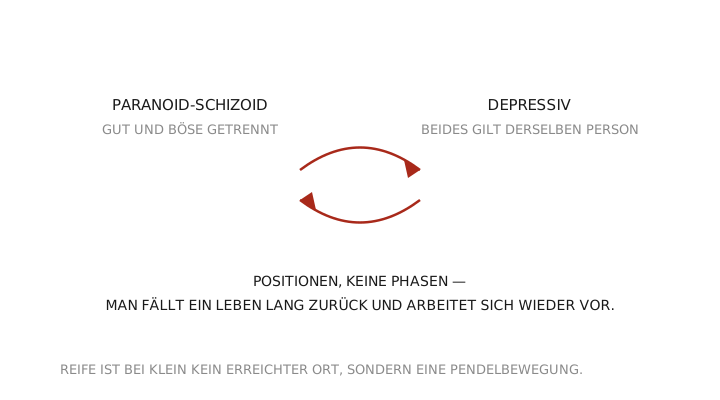
The textbook version turns this into a sequence of stages, almost a developmental ladder. Klein herself expressly called them positions, not phases: states into which one falls back for a lifetime — under pressure, in love, in illness. This distinction is regularly lost in the reception, and with it the model’s real point: that maturity is not a place reached but a pendular movement.
The reception ran as a chain of disputes. In Berlin, Karl Abraham supported the work; after his death in 1925 the city became untenable for Klein, and Ernest Jones brought her to London — in part, as the letters show, because he shared her view of the early mother relation. When Anna Freud emigrated to the same city in 1938, the two schools of child analysis suddenly faced each other within one society; the Controversial Discussions of 1941 to 1945 fought the conflict out formally and ended with the three-group division that stands to this day. Klein’s concepts were not discarded in the process but built in: Wilfred Bion turned projective identification into a theory of communication — the child deposits unbearable states in the mother, who returns them digested — and in that version the concept migrated from the clinic into team and organisational consulting.
The exchange with Anna Freud has, moreover, a precise file number: the 1927 Symposium on Child-Analysis, the British society’s answer to Anna Freud’s introductory volume. Klein and her London colleagues took the Viennese objections apart point by point — that small children develop no transference, that interpretation harms them, that analysis must supplement upbringing — and countered that half a procedure is not a gentler procedure but a worse one. The text is the place where a question of technique became two schools; the Controversial Discussions fifteen years later fought the same quarrel, only with greater gravity and under sirens.
What stands today: the play technique has remained and has become standard in child psychotherapy across all schools — every play therapy, the behavioural included and the non-directive line Virginia Axline developed out of the client-centred tradition, works on the assumption that play is communication. The claim to read concrete unconscious phantasies out of a two-year-old’s play is methodologically untestable — no procedure separates one interpretation from another, and Klein’s texts always present the interpretation as finding, never as hypothesis. Infant research since the 1970s has impressively supported Klein’s basic intuition that children are organised toward relationship from birth — newborns prefer faces, imitate, distinguish their mother’s voice. Her dating of concrete phantasy contents to the first year it has not confirmed; what a preverbal child experiences remains inaccessible in principle, and precisely where Klein’s theory claims to know most exactly, it is least testable.
And one Kleinian concept found the way into the empirically working clinic that the theory as a whole never went: splitting. Otto Kernberg built the paranoid-schizoid mechanisms — splitting into only-good and only-bad, projective identification, idealisation and devaluation — into his model of borderline personality organisation, and in that version they stand today in diagnostic manuals, therapy trials and measuring instruments. What in Klein was a claim about every infant has there become a testable claim about a particular group of patients — shrunk, and thereby made durable, the recurring fate of psychoanalytic concepts in this archive.
The geography of her school belongs to the finding. While the British society split into three training routes, Klein’s thinking became from the 1950s the dominant psychoanalytic idiom in Argentina and Brazil — transmitted by analysts trained in London and carried by institutes that were at times among the largest in the world. The consequence is an imbalance this archive meets more than once: the theory is tested least where it is applied most, and the empirical literature on its concepts arises predominantly in countries where hardly anyone treats according to them.
Klein moreover never published a case as completely as the Narrative of a Child Analysis (posthumous, 1961), the day-by-day record of the analysis of ten-year-old Richard over four months in 1941 — ninety-three sessions, written up on the evening of each, Richard’s drawings included. It is the densest document of her technique — and at the same time the best evidence of how far her interpretations ran ahead of the material: on these pages one can follow, sentence by sentence, how a fleet manoeuvre on paper becomes a mother imago. The file lays both side by side and leaves the verdict to the reader — with the note that a procedure documenting itself this completely offers criticism more surface than one that keeps its records to itself. Richard himself, it should be added, knew in the summer of 1941 that a war was running outside; his fleet manoeuvres had, as Klein’s interpretations rarely concede, an obvious model in the radio programme too. Both readings have stood side by side since publication, and that they can be tested against the same ninety-three records is more than most treatments of that era left to posterity.
In 1946 Klein coined a term that has since left psychoanalysis and turns up in team supervision, nursing notes and leadership seminars: projective identification. What is meant first of all is a phantasy — someone pushes an unbearable part of themselves into another person and from then on experiences it there.
The step beyond an ordinary projection is the interesting one. In a projection you see your own anger in the other. In a projective identification you also behave in such a way that the other actually begins to feel the anger. The attribution produces what it claims. Someone treated in a meeting as the sceptic has misgivings twenty minutes later — even if they arrived without any.
For treatment this opened an uncomfortable door: what the therapist feels may not be her own feeling but information about the patient. Wilfred Bion later developed his concept of containment out of this idea. The line to arbitrariness is thin, and it belongs in any honest description of the term: there is no criterion that distinguishes the therapist’s own feeling from a projective identification. That is precisely why the term travels so well — and why it is so hard to test.
Replication status: not applicable.
Klein’s work formulates no hypothesis that could be tested against a control condition. It consists of interpretations of individual cases and of terms that order those interpretations. The status is therefore not a criticism but a statement about the kind of claim being made: it is clinically grounded, not experimental.
What can be tested is a neighbour. Infant research from the 1970s onwards — Daniel Stern, later attachment research — has supported Klein’s basic assumption that children are organised towards relationship from the start and do not begin in an objectless state. Her specific dating of unconscious phantasies within the first year is thereby not confirmed; nor can infant research address it.
Primary work:
- Klein, M. (1932). Die Psychoanalyse des Kindes. Internationaler Psychoanalytischer Verlag. — The play technique and its justification.
- Klein, M. (1946). Notes on some schizoid mechanisms. International Journal of Psycho-Analysis, 27, 99–110. — First description of projective identification and of the paranoid-schizoid position.
- Klein, M. (1961). Narrative of a Child Analysis. Hogarth Press. — The session record of Richard’s analysis, 1941; published posthumously.
Dispute and context:
- King, P., & Steiner, R. (Eds.) (1991). The Freud–Klein Controversies 1941–45. Routledge. — The complete minutes of the dispute with Anna Freud. The best source for what was actually argued about; the common reduction to a power struggle does not survive it.
- Frank, C. (2009). Melanie Kleins erste Kinderanalysen. Frommann-Holzboog. — German-language reconstruction of the early cases from the original notes, including the question of whether Klein analysed her own children.
- Stern, D. N. (1985). The Interpersonal World of the Infant. Basic Books. — The infant research against which Klein’s early dating must be measured.