Case file 019 · Beginnings
Hermann Ebbinghaus
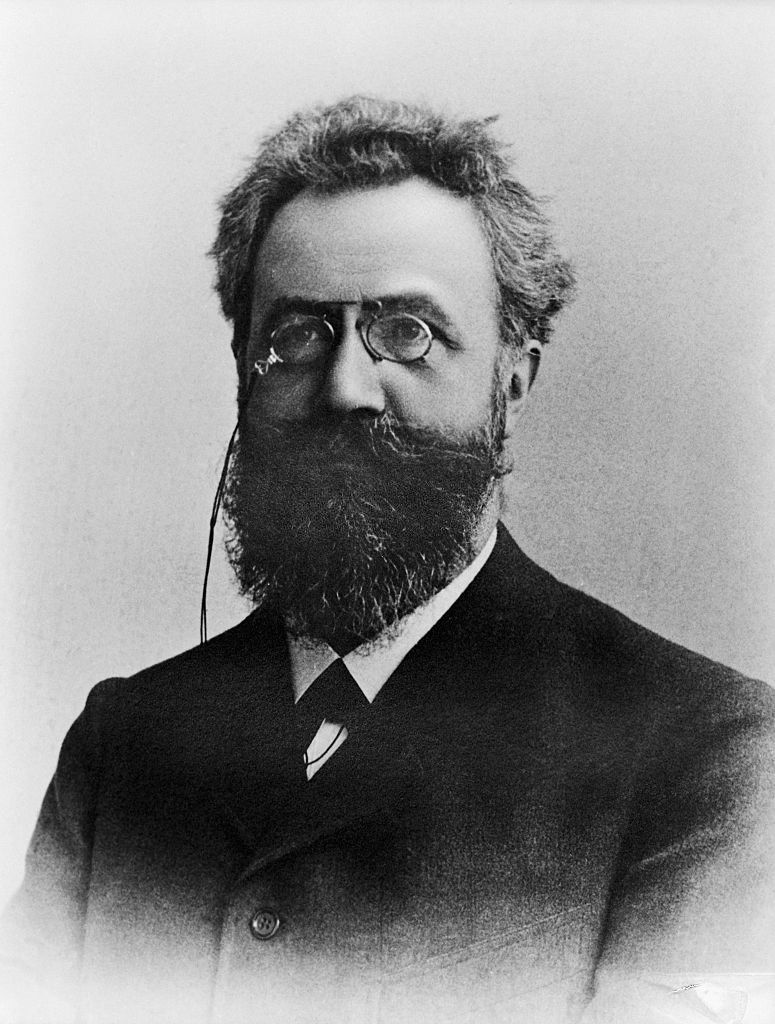
Fig. 1 — Public domain · Wikimedia Commons

A furnished room, a pocket watch, a metronome and a man reading himself syllables that mean nothing: WEZ, KOF, BAP. He learns rows of them by heart, notes the time, waits — twenty minutes, a day, a month — and learns the same rows again, the savings in seconds as the measure of what has been retained. Hermann Ebbinghaus spent years of his life this way, on meaningless material, in order to obtain a meaningful curve. It is the most ascetic feat in this archive.
Ebbinghaus was born on 24 January 1850 in Barmen, today a district of Wuppertal, the son of a well-off merchant — the father’s money later financed the private scholar’s years of travel. He studied history, philology and philosophy in Bonn, Halle and Berlin, served in the war of 1870/71 and took his doctorate in Bonn in 1873 with a work on Eduard von Hartmann’s philosophy of the unconscious — the future artist of measurement began, of all places, with the most speculative book of his time.
Barmen, the town he came from, was the Manchester of the Wupper valley — factories, piety and account books; biographers like to derive from this milieu the mixture that marks his work: commercial bookkeeping applied to one’s own head. What is documented in any case is the endurance that came with this inheritance — hardly a researcher of the century paid more dearly for his data, counted in hours.
The turn is a bookseller’s anecdote, and it is well attested: in the years of travel after his doctorate — England, France, posts as a private tutor — Fechner’s Elements of Psychophysics fell into Ebbinghaus’s hands at a Paris second-hand dealer. If sensations can be measured, ran the conclusion he drew, then perhaps memory can too — the higher mental life that Wundt had declared experimentally inaccessible. Ebbinghaus had no laboratory, no post and no subjects. He took himself.
The self-experiment series ran around 1879/80 and, repeated in full as a check, in 1883/84 — a workload of thousands of learning rows under conditions he kept as constant as a physicist keeps his apparatus: the same time of day, the same pace to the beat of the clock, the same empty emphasis. In 1885 On Memory appeared; in 1886 he was appointed associate professor in Berlin. The book made the private scholar the second pillar of the new psychology — the proof that the experiment carries even where Leipzig had not carried it.
The rest of the career was construction work. In Berlin he set up a laboratory; in 1890 he founded with Arthur König the Zeitschrift für Psychologie und Physiologie der Sinnesorgane — beside Wundt’s house journal the field’s second, non-partisan organ, in which the opponents of the Leipzig programme could publish too. In 1894 he went to Breslau — the Berlin promotion had failed against Dilthey’s resistance, and Ebbinghaus crossed swords in a famous essay against Dilthey’s descriptive psychology — and in 1905 to Halle. In Breslau he developed for the school authority a completion test in which children finish mutilated sentences: one of the first usable intelligence tests, years before Binet, and the ancestor of all cloze procedures.
He deliberately formed no school, and colleagues' reports explain why: Ebbinghaus was held to be cheerful, worldly and unvain — a researcher who preferred founding journals to gathering followers, and who devoted the second half of his working life to sense physiology, including a theory of colour vision of his own that was soon superseded. The man who had given the field its strictest protocol left behind no orthodoxy for it to work off — perhaps the reason his findings could age so peacefully.
As a university teacher he was popular and effective without producing disciples: contemporaries describe lectures without a manuscript, with demonstrations at the desk and a preference for the example before the definition. His influence accordingly ran through books and journals rather than through chairs he might have filled with students — the reason the family trees of early psychology show a broad branching at Leipzig and, at this point, a gap at Berlin.
His textbook Grundzüge der Psychologie became the most-read of the German-speaking world — the second volume had to be finished after his death by a colleague — and the small Abriss der Psychologie of 1908 opens with the sentence that became his second-best bequest: psychology has a long past but only a short history. His son Julius later became a well-known philosopher himself — the family stayed loyal to the lectern; only the metronome was not passed on. Ebbinghaus died on 26 February 1909 in Halle of pneumonia, fifty-nine years old, in the middle of his work — the second edition of the Abriss lay unfinished on the table. He left no school, no movement and no ism: only a method, two curves and the quietest point in the field’s history — that its best-replicated founding finding comes from a single subject.
The question of 1885 counted as unaskable. Wundt himself, who had just built the field its laboratory, held the higher processes — thinking, language, memory — to be experimentally inaccessible: too tangled, too soaked in meaning. Precisely that meaning Ebbinghaus identified as the solvable problem. That “house” sticks more easily than “wez” is not down to memory but to everything one already knows about houses. Whoever wants to measure memory itself must give it material to which it has no relations yet. So he invented the meaningless syllable — consonant, vowel, consonant, some 2,300 of them in stock, shuffled and drawn into rows — the first standardised stimulus material of memory research and its working stuff for the next eighty years.
The second invention was the measure. Whether something is “still there” is hard to ask about; whether it comes back faster can be counted. Ebbinghaus learned a row to the criterion of two errorless recitations, waited a defined interval and learned it again — the trials saved, the savings, are what has been retained, in per cent. The savings method thereby measures what has long since dropped out of consciousness: a memory beneath remembering, recorded decades before any theory of the implicit.
The scene of the study is of an almost comic severity. One subject — the author — the same time of day, the pace to a beat of 150 per minute, the voice without emphasis, for years; the complete series of 1879/80 was run through again in 1883/84 as a check. Ebbinghaus knew the weaknesses of his arrangement more exactly than his critics and was the first to reckon them up: the book reports error dispersions, checks his own constancy and treats the author as an apparatus whose running has to be calibrated. A sample of one was not carelessness but a price he declared.
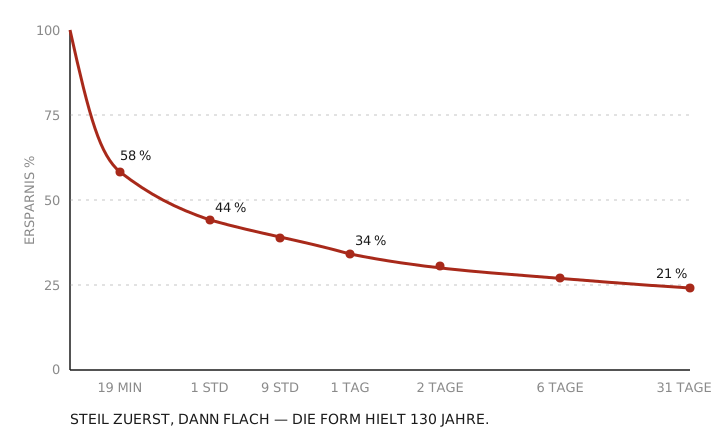
The numbers that came out of it have become the furniture of every textbook chapter on memory. Forgetting proceeds not linearly but steeply first, then flat — after twenty minutes a considerable part of the savings is gone, after a day the largest loss is over, and what survives the month stays almost stable. The learning curve shows the counterpart with diminishing gain. Distributed learning beats massed: the same number of repetitions holds longer with pauses in between — the spacing effect, already quantified in the book. And the ends of a row stick better than its middle: the serial position effect, out of which later research made primacy and recency.
Out of the syllable grew a whole industry. Mary Whiton Calkins built from Ebbinghaus’s material the method of paired associates, with which the field henceforth measured connections; the American verbal-learning tradition lived for half a century on lists, drums and syllables, and the interference theory of forgetting — that the new overwrites the old and the old obstructs the new — was developed and tested on exactly this material. Even an optical illusion bears his name: the Ebbinghaus circles, in which the same circle shrinks beside large neighbours and grows beside small ones, migrated into perception research via his textbook presentation — the memory researcher as eponym of a finding about seeing, the friendly irony of a career without a territory of its own.
And the curve found a mechanism late: the slight rise in retention after a day, which the original data already show, reads today as the fingerprint of consolidation — of the nightly sorting that sleep research has been measuring in the laboratory since the 2000s. Ebbinghaus had no term for it and smoothed the dent out of his formula; his raw data were more honest than his smoothing, and they turned out to be right.
The reception was, by the standards of the field, almost free of friction — William James called the book heroic, the method became laboratory standard, the syllable travelled the world. The serious objection came three quarters of a century later and was directed not against the data but against the programme: whoever shuts meaning out investigates a memory that does not exist outside the laboratory. Frederic Bartlett set stories against syllables in 1932 and found a reconstructing, sense-seeking remembering; Neisser’s campaign for ecological validity — in the neighbouring folder of this collection — brought the same objection against the whole syllable tradition. The quarrel has remained memory research’s standing conflict: purity against reality, the curve against the story.
Ebbinghaus intervened once directly in the field’s dispute over method, and the passage belongs here because it defends the syllables. When Wilhelm Dilthey proclaimed in 1894 that explanatory psychology could never reach mental life — one must describe it understandingly, not dissect it — Ebbinghaus answered in 1896 with an essay that drew the dividing line of the coming century: describing without testing, he argued, can decorate any claim but carry none. The quarrel between explaining and understanding has never been settled since — it returns in this collection as the quarrel between curve and story, laboratory and field, syllable and sense in every second folder, and Ebbinghaus founded his side with a curve instead of a manifesto.
This file’s archival turn is the friendliest in the whole holding. In 2015 Jaap Murre and Joeri Dros in Amsterdam repeated the core experiment to the original recipe — one subject, meaningless syllables, savings method, seventy hours of learning — and laid their curve over that of 1885: the shape matched, down to an unevenness that Ebbinghaus’s smoothed textbook curve leaves out — a small rise in retention after a day’s sleep that the original data already hint at. The oldest finding in the archive thereby passed, as one of the few, a literal hundred-and-thirty-year replication. And the spacing effect, the book’s second harvest, is according to meta-analyses over hundreds of experiments among the most robust findings in the whole of learning research — the flashcard software that today re-presents vocabulary at growing intervals is applied Ebbinghaus.
A marginal note for the archive’s present: Ebbinghaus’s sheets and calculation books have not survived — the 2015 replication had to reconstruct from the printed book what the original possessed in raw data. It could, because the book was complete. That is the definition of data availability before the term was invented.
A second offshoot of his arrangement was recognised as such only late. Ebbinghaus measured retention by learning again — and whoever learns again retrieves. Today’s learning research has made a finding of its own out of that side circumstance: whoever tests themselves retains markedly more than whoever reads the same material again, and the advantage grows with the distance to the examination. In controlled comparisons over vocabulary, expository texts and medical knowledge, the retrieval advantage is one of the best-secured results in research on teaching — and it reverses the intuition that rereading is the safe method. Ebbinghaus’s savings measure contained the effect without naming it: his measurement procedure was at the same time a method of learning.
The exact shape of the curve is still being calculated today. Ebbinghaus himself fitted a logarithmic function to his points; later analyses mostly preferred a power law, by which the loss runs steeply at first and then ever flatter, and others again showed that the apparent course of the curve changes when one averages over many people instead of looking at individual courses. For practice this changes little — that much is lost early and little later stands in every version — for theory it changes a good deal: which formula holds decides which mechanism of forgetting can be considered at all.
What stands today is therefore almost everything — with one precise exception. Shape of the curve, logic of savings, spacing, position effects: replicated, in use, productive. Not tenable is the tacit generalisation that syllable memory is memory as such; for meaningful material people forget differently, more slowly and more reconstructively, and modern research needs both traditions. For the archive the case has beyond this a lesson that reaches past memory: the study violates almost every present-day rule of method — N equals one, author equals subject, no preregistration but his own pedantry — and held nonetheless, because its procedure lay open and its object is stable. Replicability, this file says, is not a question of sample size alone but of transparency. A single man with a metronome can measure more durably than a field with funding — if he writes down what he does, and does what he writes down.
The textbook version shows a smooth curve and conceals how small its foundation is: a single subject, who was at the same time the author, who was at the same time the scorer. By every rule this archive otherwise applies, the file ought to be stamped red.
It is not, and the reason is the real memorandum. Ebbinghaus laid his design open so completely — material, beat, time of day, error calculation — that any successor can literally re-cook it. In 2015 someone did, for seventy hours of learning, and obtained the same curve. Meanwhile, in the replication crisis, findings with samples a thousandfold larger have fallen whose procedures no one could retrace. Sample size evidently insures less than the field long believed; transparency insures more.
The note further records what the smooth curve suppresses: already in the original data, retention rises again slightly after a day — presumably the sleep that sorts. The replication of 2015 found the dent again. Even the deviation was real; only the textbooks ironed it away, as they ironed away Asch’s independents and Milgram’s disobedient. It is this collection’s constant pattern: it is not the old studies that are the least reliable narrators — their summaries are.
Replication status: replicated. The archive’s oldest finding is at the same time one of its most cleanly repeated: curve shape and method passed a direct replication after 130 years, and the spacing effect is meta-analytically one of the most stable findings in learning research.
Primary source. Ebbinghaus, H. (1885). Über das Gedächtnis. Untersuchungen zur experimentellen Psychologie. Leipzig: Duncker & Humblot. — Self-experiment series 1879/80, control series 1883/84; savings method, forgetting and learning curves, spacing, serial position effects.
Direct replication. Murre, J. M. J., & Dros, J. (2015). Replication and analysis of Ebbinghaus' forgetting curve. PLOS ONE, 10(7), e0120644. — One subject, original protocol, about 70 hours of learning work; curve shape confirmed, including the slight rebound after about a day.
Spacing effect. Cepeda, N. J., Pashler, H., Vul, E., Wixted, J. T., & Rohrer, D. (2006). Distributed practice in verbal recall tasks: A review and quantitative synthesis. Psychological Bulletin, 132(3), 354–380. — Synthesis across hundreds of comparisons; distributed beats massed practice across materials and intervals.
Meaning’s counter-move. Bartlett, F. C. (1932). Remembering: A Study in Experimental and Social Psychology. Cambridge: Cambridge University Press. — Stories instead of syllables; reconstructive memory as the boundary stone of the syllable tradition.