Case file 017 · Beginnings
Wilhelm Wundt
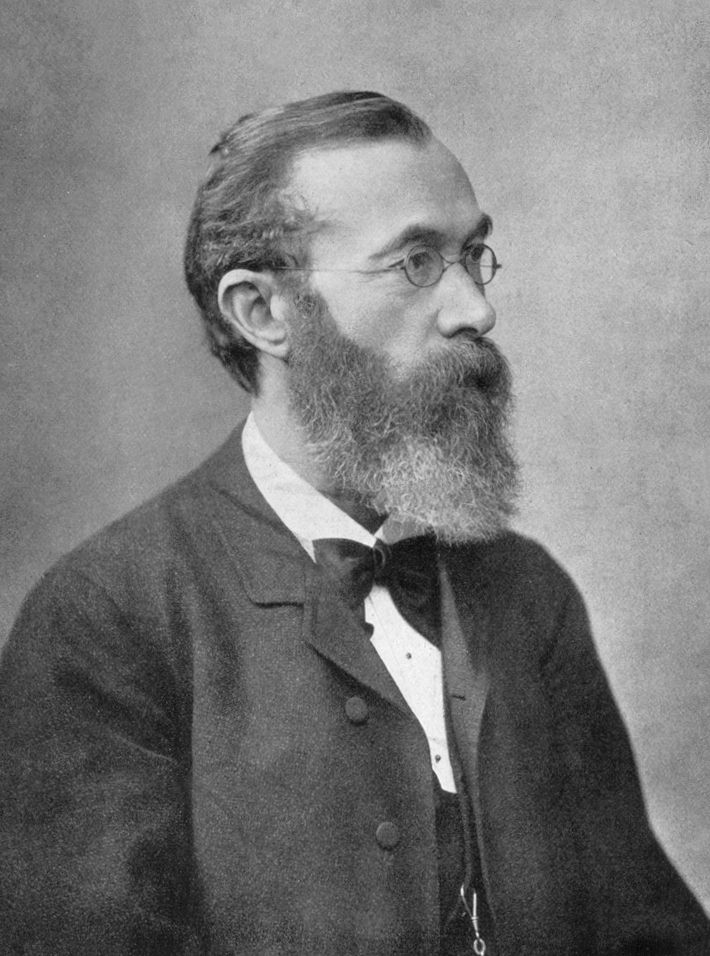
Fig. 1 — Public domain · Wikimedia Commons

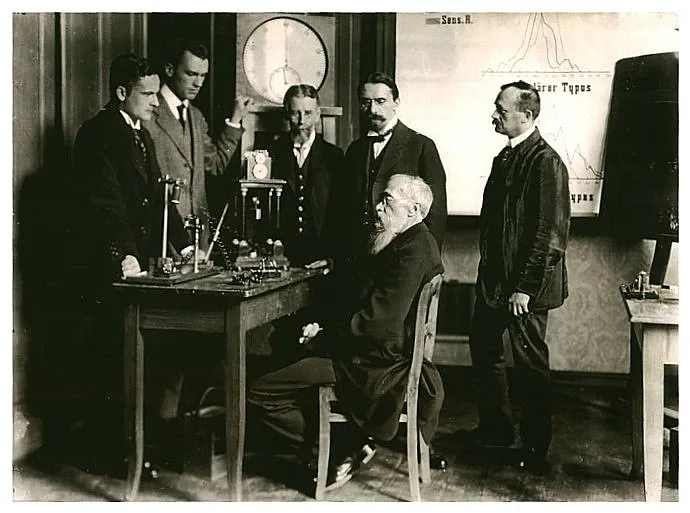
A seminar room in the Leipzig Konvikt building, winter semester 1879: a professor of philosophy leaves his private measuring instruments to two students and an American guest, to register reaction times. No founding resolution, no ceremony — but from this room the field has counted its history ever since. The world’s first psychological laboratory began as a side room with borrowed time.
Wundt was born on 16 August 1832 in Neckarau near Mannheim, a pastor’s son — the fourth child, of whom only he and one brother survived childhood. The boy was a solitary with a single friend and, by his own account, a daydreamer whom only the university woke. He studied medicine in Tübingen and Heidelberg, graduated at the top of his year, and decided against practice and for the laboratory: first a semester of physiology with Johannes Müller in Berlin, then, from 1858, years as assistant to Hermann von Helmholtz in Heidelberg — apprenticeship with the man who had measured the speed of nervous conduction and thereby demonstrated that even the inner has a duration.
In Heidelberg Wundt wrote the books that announced the new field: the Beiträge zur Theorie der Sinneswahrnehmung with their programmatic demand for an experimental psychology, then the Grundzüge der physiologischen Psychologie of 1874 — the textbook of a science that did not yet exist, written to write it into existence. The call came promptly: professor in Zurich in 1874, in 1875 to the chair of philosophy in Leipzig — a physician among philosophers, which shaped the field institutionally for decades: German psychology grew up inside philosophy departments.
In 1879 the laboratory work in Leipzig began; in 1883 the institute received official status and a budget; in 1881 Wundt founded with the Philosophische Studien the field’s first journal — the workshop now had its own organ of publication, in which its dissertations appeared. And they appeared in series: Wundt supervised well over a hundred and fifty doctorates in Leipzig, and the list of his students reads like the address book of the discipline’s history — Emil Kraepelin, who ordered psychiatry; James McKeen Cattell, his first assistant and America’s first professor of psychology; Edward Titchener, who translated Wundt for America and bent him in the process; Oswald Külpe, who rose against the teacher in Würzburg; Hugo Münsterberg, whom James brought to Harvard. Whoever founded a psychological laboratory anywhere in the world around 1900 had, as a rule, learned how in this Leipzig building.
The house’s method was stricter than its reputation transmits. Wundt had trained observers react under controlled conditions to simple stimuli — times, thresholds, spans — and he expressly forbade what later ran under his name: the free interrogation of the inner about complex processes. For the higher things — language, myth, custom — he considered the experiment unsuited and wrote a second life’s work for them: the ten-volume Völkerpsychologie, published between 1900 and 1920, a cultural psychology avant la lettre that the reception has almost completely ignored. The man of the laboratory held the laboratory to be only half of psychology; posterity remembered the half.
The everyday behind the work had a regularity his students transmitted half in awe, half in amusement: writing in the morning, the round of the institute in the afternoon, the lecture, the walk — a life on a timetable, led with weak eyes that made reading hard all his life and dictation his working form. In 1872 he had married Sophie Mau, daughter of a Kiel theologian; the son Max became a philosopher. And one personnel note deserves the file: among the well over one hundred doctoral students there was, with Anna Berliner, exactly one woman — the statistics of the founding era in a single number.
His old age was productive and, in one place, dark: like a considerable part of the German professoriate, Wundt signed and wrote for the war in 1914 — speeches and pamphlets in which the eighty-three-year-old defended the German cause. The file records it as it records Jung’s years after 1933: as part of the picture, not as a footnote.
The extent of his work is itself a finding and was duly counted up: the historian of science Edwin Boring added the printed pages and arrived, for the years between 1853 and 1920, at more than fifty thousand — on average a good two published pages for every day of an adult life. Not all of it is psychology; much is philosophy, logic and ethics, and a considerable part consists of new editions, which Wundt reworked each time. Hardly anyone in the twentieth century read the whole of it, and the English translations cover only a fraction — one of the plain reasons the caricature of Wundt survived so long.
Wundt died on 31 August 1920 in Großbothen near Leipzig, days after finishing his memoirs — an author to his final week, with a list of works whose extent the history of the field estimates in tens of thousands of printed pages. His Leipzig institute was destroyed by bombing in 1943; what the field has kept of him is no building and no thesis, but a matter of course: that psychology can be studied.
The question to which this institute was the answer is older than its founder: can there be a natural science of the mind? Kant had denied it — the inner lacks the measurable — and around 1850 psychology still counted as a province of philosophy. Then physiology entered: Helmholtz measured the speed of nervous conduction, Fechner joined stimulus strength and sensation in a formula, the Dutchman Donders decomposed reaction times into part-processes. The tools lay ready; what was missing was a place where they belonged to a discipline of their own. Wundt’s Grundzüge der physiologischen Psychologie of 1874 announced that place — the book opens with the sentence that a new domain of science is here being marked off — and Leipzig delivered it five years later.
The date the prehistory carries had been supplied by Fechner: on the morning of 22 October 1850, by his own telling, the idea came to the Leipzig physicist in bed that stimulus and sensation can be put into a measurable relation — psychophysics was born, and with the Weber-Fechner law the mental possessed its first equation. Wundt never disowned this inheritance; his institute lay in the same city, and the threshold measurements of his early years are applied Fechner. The difference was the ambition: Fechner wanted a formula, Wundt a discipline.
The institute’s prehistory hangs on a pendulum clock. As a young Heidelberg lecturer, Wundt had observed at a swinging pointer that one never grasps bell-stroke and pointer position simultaneously — attention needs a measurable span for the switch, his “thought meter.” From this observation grew the programme: if even the simple taking-together of two impressions costs time, then the mental has a chronometry, and whoever wants to measure it needs clocks that count thousandths. The Leipzig institute was first of all a cabinet of clocks — chronoscopes, kymographs, tachistoscopes, drop apparatus — and the workshop culture of calibrating instruments before measuring people is its most invisible legacy.
The house had a theory too, and it is more thoroughly forgotten than its apparatus. Against the English doctrine of association, which built mental life out of laws of linkage, Wundt set apperception: the active, attentive taking-together that makes more of elements than their sum — creative synthesis, he called it, and he held the will, not sensation, to be the basic process of the mental. This voluntarist psychology has survived no school; its echo has — whoever today sets top-down attention against mere stimulus chaining repeats the Leipzig front line in new words.
The scene is unspectacular, like most founding scenes in this field: a room in the university’s Konvikt building, used regularly from the winter semester of 1879 for the students' independent experiments. What was measured was what could be measured — reaction times on the Hipp chronoscope to the thousandth of a second, difference thresholds, attention spans at the tachistoscope, the course of feelings in pulse and breath. The observer was no naive subject but a trained colleague: whoever testified in Wundt’s laboratory had thousands of trials behind him, answered to simple, repeatable stimuli, and was to abstain from all interpretation. The house’s famous introspection was no self-immersion but a protocol under laboratory conditions — closer to psychophysics than to the couch.
The numbers this workshop produced are footnotes today — a subtraction logic of part-processes here, a threshold table there. Its real result was the system: in 1881 the first journal, in which the institute’s studies appeared; in 1883 official status and a budget; a course programme that turned listeners into experimenters; and a doctoral machine through which well over a hundred and fifty dissertations passed. The institute was less a site of discovery than an establishment of normalisation: it turned the question of whether the mental can be measured into a routine with an instrument cabinet and a semester plan. Whoever reads the case files of this archive — Pavlov’s counted drops, Ebbinghaus’s syllable series, Milgram’s voltage scale still — reads everywhere the same Leipzig ground rule: a mental process counts when it leaves a number behind.
How fast the model travelled can be read off the dates. In 1883 Wundt’s student G. Stanley Hall founded the first American laboratory in Baltimore, in 1887 the first American journal, in 1892 the American Psychological Association; Cattell carried the Leipzig culture of measurement to Pennsylvania as the first professor of psychology and coined, for its application to individuals, the phrase “mental test.” Within fifteen years the export model had produced more laboratories than the German Empire possessed — the founding was replicated before any finding had to be.
The reception then made a caricature of the founder, and this caricature is the file’s real point of dispute. The American textbooks of the twentieth century told Wundt as the man who had subjects stare into their own consciousness until behaviourism put an end to the haunting — an origin legend that cast Watson as redeemer. From 1980 Kurt Danziger tested this transmission against the sources and dismantled it piece by piece: Wundt expressly rejected the free self-observation of complex processes and did not permit it in his laboratory; the introspective excesses the textbooks ascribe to him come from others — from Titchener’s structuralism in America and from the Würzburg school of his renegade student Külpe, against whose “interrogation method” Wundt himself polemicised. The founding father of the field is, in its standard narrative, its most thoroughly misquoted author — also because scarcely anyone read him: only a fraction was translated, and the reception ran through the lens of his American students.
With the caricature, half the biography of the work disappeared. Wundt held the experiment to be only the ground floor of psychology; for language, myth and custom — the higher processes — he wrote the ten-volume Völkerpsychologie, a comparative cultural psychology he considered at least of equal rank. Posterity set the volumes aside: too philosophical for the experimenters, too psychological for the ethnologists. Only the newer history of the field and cross-cultural psychology carry them again as prehistory — a second demonstration that this file deals less in refuted findings than in selective memory.
There remains the finding about the observers themselves: Wundt’s trained witnesses were colleagues and doctoral students — experts who knew what the house expected. Modern methodology calls such things expectation effects and controls them with blinding; the Leipzigers controlled them with discipline. That both treat the same worry makes the institute the ancestor of its own critique as well.
Even the founding date is contested, and the dispute belongs in the file. At Harvard, William James had set up a room for demonstrations as early as 1875, in which students operated apparatus; American accounts therefore occasionally list it as the first psychological laboratory. The difference lies in the purpose: James’s room served teaching, Wundt’s institute the production of data, with records, a journal of its own and doctoral students who carried out their investigations there. Whoever asks for the first place where psychological apparatus stood finds several candidates; whoever asks for the first workshop that systematically produced and published findings finds Leipzig. The file keeps the two questions apart, because confusing them is the usual cause of the quarrel.
What stands today is therefore peculiarly immortal and invisible at once. No single Wundt finding carries a textbook chapter; but the mental chronometry his laboratory made routine has remained, as reaction-time measurement, the everyday tool of all of cognitive psychology — every priming experiment, every attention study stands in this line. The institution itself is the best-replicated finding: the Leipzig model of laboratory, journal and training was copied within a generation onto three continents, by his own students. And the boundary Wundt drew — the experiment for the simple, other methods for the cultural — is on record as the dispute over ecological validity, down to Neisser’s file in this archive. The replication status of this case file therefore reads not applicable, and that is no excuse: one cannot repeat an institution. One can only count how often it was rebuilt.
The textbook version needs Wundt as a straw man: the unworldly introspectionist whose method had to fail so that Watson could be right. The sources do not support it — in Leipzig, Wundt forbade precisely the procedure the legend ascribes to him, and publicly fought the schools that practised it.
How the caricature arose can be traced. Scarcely anything was translated; in America Wundt was read through Titchener, who made his own structuralism out of the Leipzig programme and taught it under the teacher’s name. When behaviourism then needed an opponent, the figure stood ready — and every textbook generation copied it from the one before. It is the same mechanism this collection documents with Little Albert and with Asch’s lines: the field’s history is told at second hand, and the second hand smooths.
Half the person vanished along the way. The alleged laboratory fanatic held the laboratory to be limited and wrote ten volumes of cultural psychology; the alleged ancestor of consciousness-dissection thought in processes and coined the word apperception for it. Whoever argues today about the limits of the experiment is continuing a debate the inventor of the psychological experiment opened himself — only hardly anyone knows it, because the volumes remained untranslated.
The note to this file is therefore a reading instruction: Wundt is not a refuted author but an unread one. In archival terms, that is the greater damage.
Replication status: not applicable. The founding of an institute cannot be repeated, only rebuilt — and rebuilt it was, on three continents, by Wundt’s own students.
Primary sources. Wundt, W. (1874). Grundzüge der physiologischen Psychologie. Leipzig: Engelmann. — The field’s programme before the field; later editions grew to three volumes. Wundt, W. (1900–1920). Völkerpsychologie, 10 vols. Leipzig: Engelmann/Kröner. — The ignored second half of the œuvre. Wundt, W. (1920). Erlebtes und Erkanntes. Stuttgart: Kröner. — The memoirs, finished days before his death.
Historiography. Danziger, K. (1980). The history of introspection reconsidered. Journal of the History of the Behavioral Sciences, 16(3), 241–262. — The source work that dismantled the introspection caricature. Bringmann, W. G., & Tweney, R. D. (eds.) (1980). Wundt Studies: A Centennial Collection. Toronto: Hogrefe. — The centennial volume of the re-evaluation. Blumenthal, A. L. (1975). A reappraisal of Wilhelm Wundt. American Psychologist, 30(11), 1081–1088.
Open points. The number of Leipzig doctorates (156–186 depending on the count) and the exact founding date of the laboratory rooms are given variously in the literature; the file follows the cautious reading "from the winter semester of 1879" and leaves the doctorate count as a TODO.