Case file 018 · Beginnings
William James
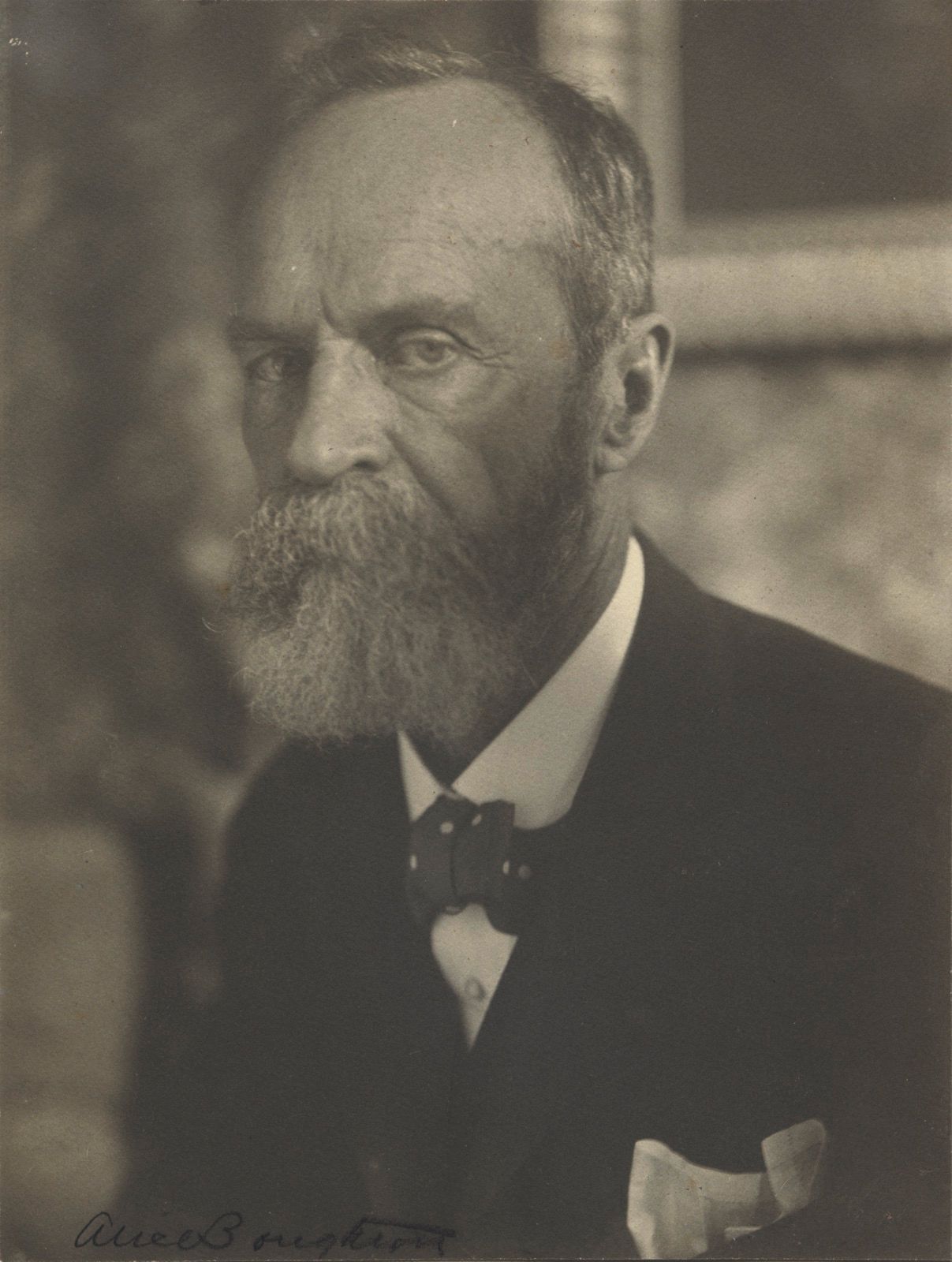
Fig. 1 — Public domain · Wikimedia Commons
.jpg)
A diary entry from the spring of 1870, written by a twenty-eight-year-old physician with his examination behind him and no future before him: his first act of free will, William James noted, would be to believe in free will. The sentence ended no depression overnight, but it is the smallest version of this life — a thinker who prescribed himself his capacity to work philosophically, and later made a philosophy of action out of it.
James was born on 11 January 1842 in New York, into a household that was itself an educational institution: his father, Henry James Sr., a theological writer of independent means and more independent views, drew the family through Europe as through a curriculum — Geneva, Paris, London, Boulogne, with New York and Newport between. William, the eldest, changed schools and languages by the year; his brother Henry became the novelist of the century, their sister Alice its most sharp-witted diarist. A regular education the man who became Harvard’s most famous teacher never completed.
He first wanted to be a painter, studied with William Morris Hunt in Newport and broke off; studied chemistry and comparative anatomy at the Lawrence Scientific School; went up the Amazon with Louis Agassiz’s expedition in 1865 and recognised in fever that he was no field naturalist; heard physiology in Germany, with Helmholtz among others, and took his medical degree at Harvard in 1869 — the only degree of his life, with which he never practised. Then came the dark years: back trouble, eye trouble, dread of death, an episode of panic fear he later described — thinly veiled — as a case in the Varieties. The diary entry of 1870 marks the turn inward; the appointment as instructor in physiology at Harvard in 1872, the turn outward.
There, in 1875, he set up a demonstration room with instruments — in the same half-decade as Wundt’s Leipzig founding, which was later worth a priority footnote to the Americans. The point is that James ran the laboratory as a householder runs the boiler room: necessary, but no place to live. “Brass-instrument psychology” was his name for the German school; his instrument was the sentence.
In 1878 he signed a contract with Henry Holt for a psychology textbook, delivery in two years. It became twelve. The Principles of Psychology appeared in 1890 in two volumes and some fourteen hundred pages — the book that gave consciousness its stream, habit its flywheel and the self its multiplication, and which James himself, in a letter to the publisher, abused as a bloated mass proving only that a science of psychology did not yet exist. The abridged version of 1892 — the “Jimmy” to the big “James” in seminar slang — became the textbook of a generation of Americans.
After that he left the field in slow motion. He lectured in 1896 on belief as a wager (The Will to Believe); gave the Gifford Lectures in Edinburgh in 1901–02, from which came The Varieties of Religious Experience — the first great psychology of religiosity, written from documents rather than dogmas —; and in his last decade made pragmatism the American philosophy: true is what proves itself in action. On the side he inspected the margins of the mental with an open-mindedness that embarrassed colleagues — mediums, hypnosis, psychical research — and as president of the American Psychological Association defended the young field’s openness against its early gatekeepers.
James the teacher is as much on record as the author: his lectures were conversations with digressions, his examination questions invitations to dissent, and among those who passed through his seminars were G. Stanley Hall, Mary Whiton Calkins — whose admission he won and whose Harvard doctorate he fought for in vain —, W. E. B. Du Bois and Gertrude Stein. He brought Hugo Münsterberg from Freiburg so that someone would run the laboratory that could not hold him.
James died on 26 August 1910 at his country house in Chocorua, New Hampshire, of the heart ailment he had worsened years before while climbing in the Adirondacks — two days after returning from his last European journey, on which he had visited his ailing brother. Henry wrote that he experienced the loss like an amputation. The field experienced him the other way round: it amputated the philosopher and kept the chapters — and reads in both halves to this day.
The question this book was to answer was more modest than its result: in 1878 Henry Holt wanted an American textbook for a field that scarcely yet existed in America. After twelve years James delivered, instead of a textbook, a survey — two volumes, twenty-eight chapters, from brain physiology to hypnosis, written in a prose the field has never reached again. The Principles of Psychology of 1890 is not a study and claims none; it is the catalogue of the questions the century after it worked on, and the file treats it as that: as a programme document with a single sharply testable centrepiece.
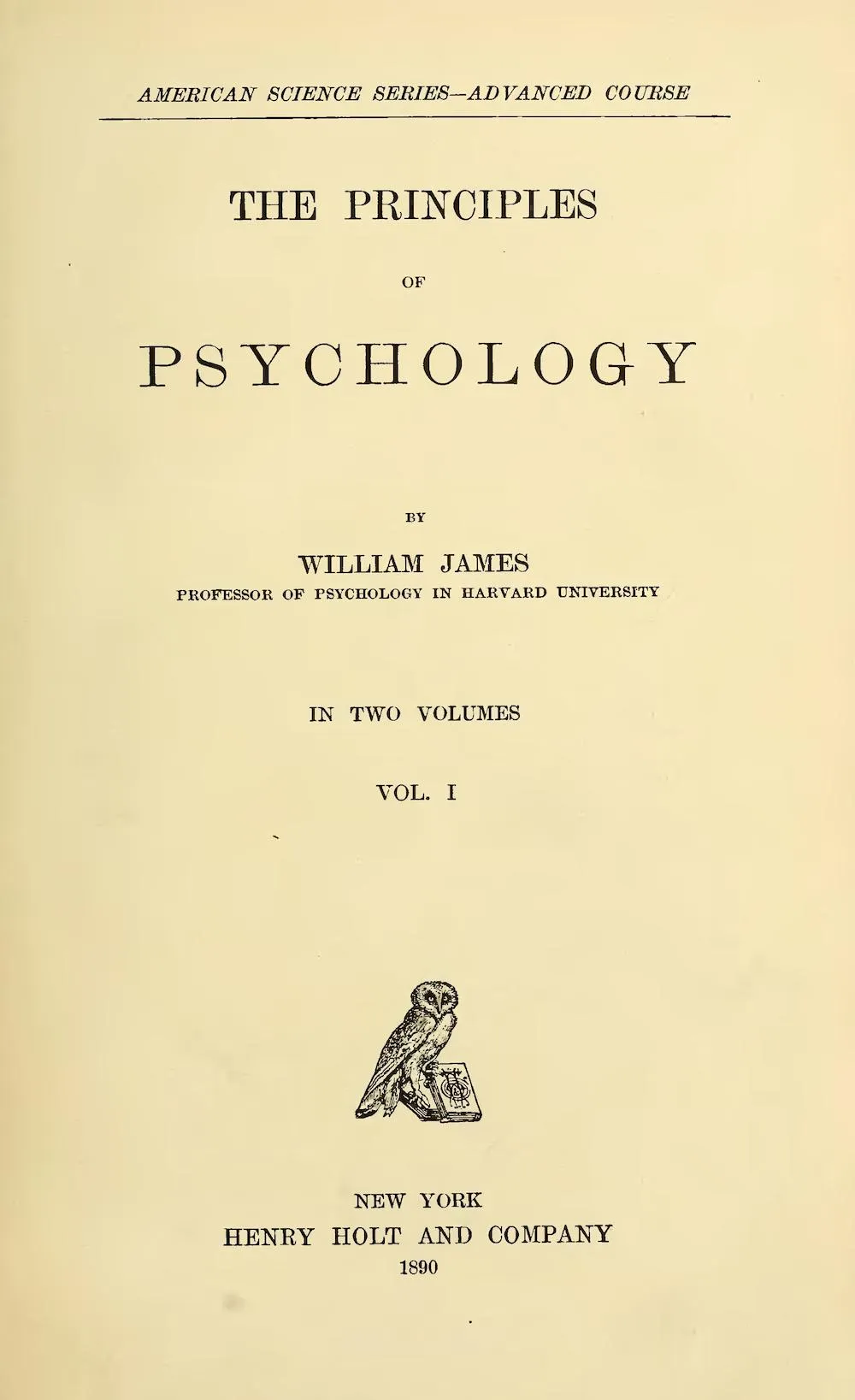
How the book came to be belongs in the file, because it explains its form. James wrote in bursts between neurasthenia and teaching, fled to Europe to work, and abused the growing manuscript in letters to the publisher as a shapeless mass — the testimony of an author who doubted the subject, not only the text. What came out is a work that lays its method open as otherwise only laboratory protocols do: where findings were missing, James wrote down that they were missing, and filled the gap with the most precise description available. The Principles are therefore both at once — the most honest and the most speculative book of the founding era.
The book’s most famous page is a rebuff to its German colleagues. Consciousness, James writes, is no chain of elements to be decomposed as a chemist decomposes his substances — it flows. The stream of consciousness became a technical term, a literary technique, and the quiet anticipation of what the field only cared about again after behaviourism: that experience is a course, not a construction kit. Beside it stand the chapters that name research fields to this day — habit as the “enormous fly-wheel of society,” attention as selection, the self in its plurality of one knowing I and as many social Mes as there are people whose opinion matters to us. Scarcely an introduction to attention, habit or self research does without a James quotation as founding charter.
The book’s most practical chapter concerns habit, and it is the only one written with instructions. Man, it says there, is a walking bundle of habits; youth is the plastic phase in which the pathways are laid, and whoever wants to found a new habit should launch with the greatest possible momentum, tolerate no exception until it sits, and seize every first occasion to act. Modern self-regulation and habit research has translated these maxims into study designs and confirmed a surprising amount — that stability of context carries habits, that exceptions are expensive at the start. It is the chapter with which James is quoted in advice literature to this day, mostly without attribution.
Beside it stand the quiet imprints: the notion of the specious present — the lived present a few seconds wide — organises time perception research to this day; the distinction of I and Me carries self-concept research; and the description of attention as renunciation — wisdom being the art of knowing what to overlook — has become the watchword of an attention economy James did not live to see and would have described like no one else.
The testable centrepiece is the theory of emotion, sketched in 1884 in the essay What is an Emotion? and built out in the book. Common sense says: we see the bear, are afraid, and therefore tremble. James reverses the order: we see the bear, the body reacts — heartbeat, trembling, flight — and the feeling is the perception of this bodily reaction. Without the body, all that would remain of affect is a pale, cold judgment. Because the Dane Carl Lange proposed something similar at the same time, the field carries the thesis as the James-Lange theory. It was the first theory of emotion to assert a falsifiable sequence — and on exactly that it was tested.
The test came in 1927 and bore the name Walter Cannon. The Harvard physiologist held four findings against the theory: the visceral reactions are too slow to carry the lightning-quick feeling; they are too uniform to distinguish fear from rage; artificially produced bodily states — adrenaline injections — produce no real feeling but an as-if; and severed spinal cords do not extinguish the feelings. Cannon’s alternative moved emotion into the thalamus, and the textbooks thenceforth had their duel: James-Lange against Cannon-Bard, periphery against centre. A century of emotion research is the continuation of this dispute with better instruments — Schachter and Singer in 1962 made arousal a raw material that only interpretation labels into feeling; Damasio’s somatic markers brought the bodily loop back into decision research; modern interoception research measures how precisely people read their own heartbeat — all part-questions of the one Jamesian reversal.
The archival turn of this file lies in the replication column, and it cuts both ways. The handiest derivation of the theory — whoever forces the facial muscles into a smile finds the comic more comic: facial feedback, classically demonstrated with the pen between the teeth — became the showpiece finding of the reversal thesis. In 2016 the pen experiment failed a registered replication across seventeen laboratories; a later meta-analysis across hundreds of effects found the mechanism again, but small and hedged with conditions. The finding of findings thus runs: the body has a say in feeling — only more quietly than the anecdote promises. That Cannon’s counter-arguments did not all hold either — people with spinal injuries do report changed emotional intensity, and the literature disputes it to this day — belongs to the case’s symmetry: here, for once, both sides of a textbook duel were partly refuted.
A school James never founded, and received one nonetheless: the Chicago functionalists around Dewey and Angell declared consciousness, around 1900, a function in the service of adaptation — expressly in James’s name and against Titchener’s structural dissection. Out of functionalism grew American applied psychology, out of that behaviourism, which then disposed of the ancestor along with the rest; modern emotion research in turn, up to Lisa Feldman Barrett’s construction theory, no longer reads Cannon and James as a duel but as a division of labour — the body supplies the raw material, interpretation the feeling. It is the most conciliatory reading of a quarrel the book of 1890 opened.
For completeness: the theory of emotion too has its textbook distortion. James spoke of the perception of bodily change, not of its production — the popular short form, that one can make oneself happy by smiling, is an application he never asserted, and it failed at precisely the point where it was tested.
What the author did next belongs in the file, because it contains his verdict on his own work. James had laboured twelve years on the book and called it, on finishing, a bloated mass to his publisher, one that proved chiefly this: that there is no science called psychology, only the hope of one. He turned to philosophy, wrote on pragmatism, religious experience and free will, and left the laboratory to others. For an archive that sorts findings by their durability, this is a remarkable self-assessment: the man who wrote the field its founding book in America thought it had been written too early.
What stands today: the book as map, and the reversal as a halved finding. Emotions without a body do not exist — the basic intuition of 1884 counts as rehabilitated, down into embodiment research. Emotions from the body alone do not exist either — interpretation, context, label decide with it. For the Principles as a whole, replication status is a category too small: one does not replicate a map, one checks whether its provinces exist. Attention, habit, the manifold self — the provinces exist, and they carry to this day the names James gave them. It is the rare file whose author anticipated its verdict: a science of psychology, he wrote to his publisher, did not yet exist — only the hope of one. The hope has proved his most durable finding.
The textbook version casts James as the American counterpart to Wundt: two founders, two laboratories, a race for priority. More precise is: James set up demonstration rooms at Harvard in 1875 and loathed what went on in them. “Brass-instrument psychology” was his mockery for the German school; the dissection of reaction times he held to be a method that could only prove what it presupposes. He hired Hugo Münsterberg so the laboratory would have a director — and went back to the desk himself.
The note records what this division of labour means for the archive. The field has two founding gestures, not one: the Leipzig gesture — measure what is measurable — and the Jamesian — name what is the case, so precisely that later measurements know what they are looking for. The stream of consciousness, the flywheel of habit, the many social selves: none of these was a finding in 1890; each became a research field. A discipline evidently needs both, the instrument cabinet and the vocabulary.
That the Principles are read to this day like no second textbook of the field has an uncomfortable reason: they are not outdated, because much in them was never precise enough to become outdated. James said it most sharply himself — psychology was not yet a science, but the hope of one. In this collection the sentence stands beside the replication columns of the other files as their secret motto.
Replication status: partial. What is tested is not the book but its sharpest piece — the James-Lange thesis that the bodily reaction precedes the feeling. The bodily share of emotion counts as confirmed, the strong reversal does not.
Primary sources. James, W. (1884). What is an emotion? Mind, 9(34), 188–205. James, W. (1890). The Principles of Psychology, 2 vols. New York: Holt. Lange, C. (1885). Om Sindsbevægelser (German Über Gemüthsbewegungen, 1887).
Critique and duel. Cannon, W. B. (1927). The James-Lange theory of emotions: A critical examination and an alternative theory. American Journal of Psychology, 39, 106–124. Schachter, S., & Singer, J. (1962). Cognitive, social, and physiological determinants of emotional state. Psychological Review, 69(5), 379–399.
Replications. Wagenmakers, E.-J., et al. (2016). Registered Replication Report: Strack, Martin, & Stepper (1988). Perspectives on Psychological Science, 11(6), 917–928. — The pen experiment fails across 17 laboratories. Coles, N. A., Larsen, J. T., & Lench, H. C. (2019). A meta-analysis of the facial feedback literature. Psychological Bulletin, 145(6), 610–651. — The mechanism survives as a small effect.
Biographical. Richardson, R. D. (2006). William James: In the Maelstrom of American Modernism. Boston: Houghton Mifflin.