Case file 028 · Learning & Personality
Albert Bandura
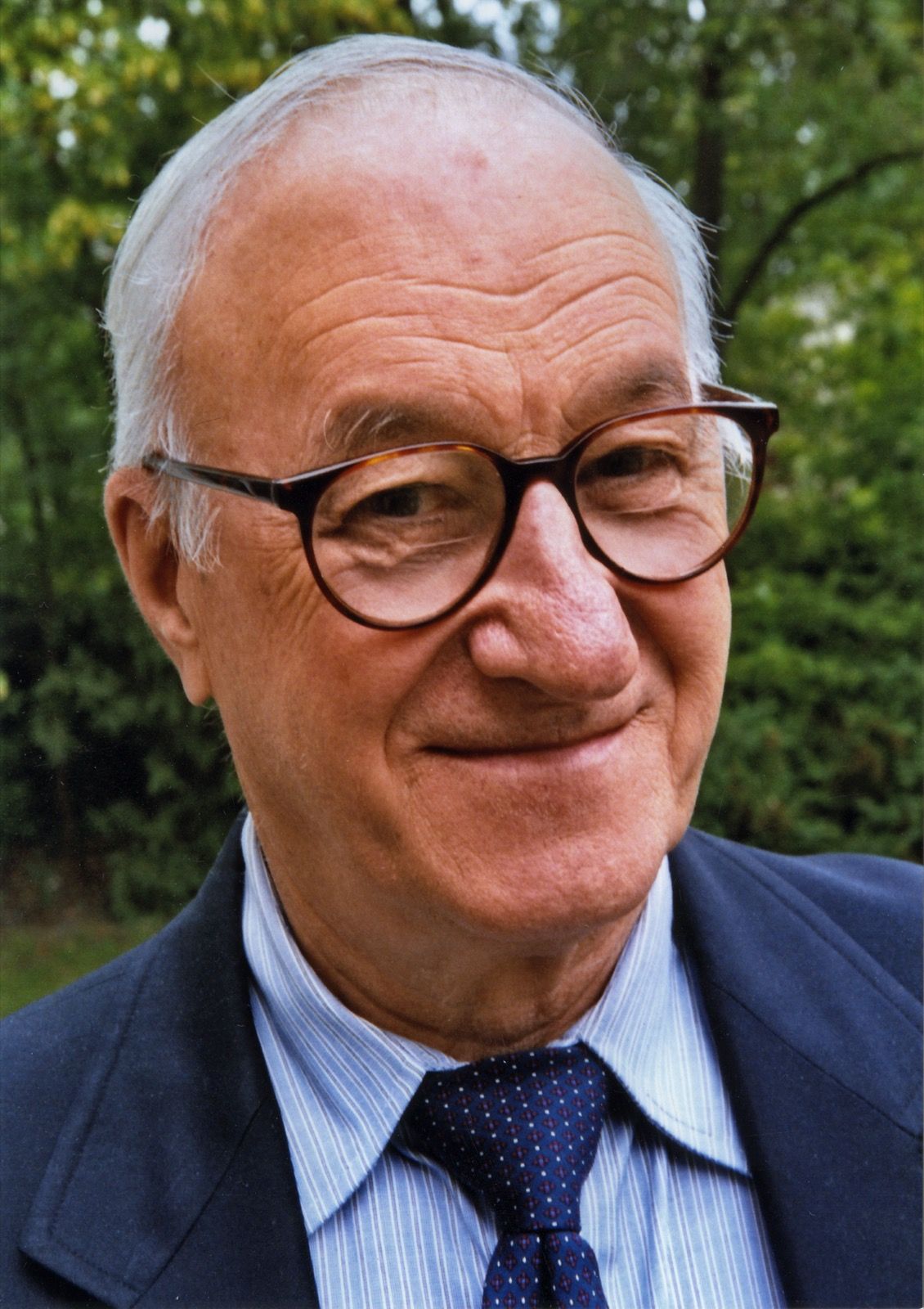
Fig. 1 — CC BY-SA 4.0 · Foto: Albert Bandura

The school in Mundare, Alberta, had two teachers for all subjects and a library one could finish over a rainy weekend. Albert Bandura, son of Polish-Ukrainian immigrants in a Canadian prairie village, later said it was the best instruction of his life: whoever must teach themselves everything learns that learning depends on oneself. Out of that experience grew a research programme — the question of what it depends on that someone trusts themselves to do something, and what follows from it.
Bandura was born on 4 December 1925 in Mundare, the youngest of six children; his father laid railway track, his mother worked in the general store, the family had no money and great respect for education. He came to psychology by an accident he liked to tell: as a student in Vancouver he rode to the university early in a carpool and, to fill the waiting time, enrolled in a course that met at the convenient hour — introduction to psychology. The degree in 1949, the doctorate in 1952 at the University of Iowa, then the centre of learning theory, where Kurt Lewin’s legacy and Clark Hull’s reinforcement doctrine worked side by side. In 1953 he came to Stanford and stayed there for life.
The early work concerned adolescent aggression; out of it grew the series with the Bobo doll that fills his case file, and with it the programme of observational learning: one learns not only from one’s own consequences but by watching what others do and what befalls them for it. Bandura called this first social learning theory and later — as the role of expectations, goals and self-evaluation grew more important to him — social cognitive theory: a psychology of reciprocal determinism in which person, behaviour and environment shape one another rather than one causing the next.
In 1977 came the concept that made him the most-cited living psychologist: self-efficacy — the conviction of being able to master a particular task. Bandura found it first in therapy: snake phobics whom he led step by step toward their fear improved to the degree that their confidence grew, not to the degree that their fear diminished. Out of this observation grew a quantity measured today in health promotion, education, sport and organisational research — with its own scales for each field, because by Bandura’s own instruction self-efficacy must always be assessed with reference to a task.
His late work turned to the question of how people put their own standards out of force: moral disengagement — renaming, distributing responsibility, minimising consequences, dehumanising victims — by which decent people become participants. Moral Disengagement appeared in 2016, when its author was ninety-one; it is the counterpart to Milgram and Zimbardo from the perspective of personality, and Bandura applied it expressly to corporations, the arms industry and climate policy.
To the person belongs a caution visible in the work: Bandura resisted appropriation by self-help literature all his life and insisted that self-efficacy has nothing to do with general optimism but is always tied to a particular task — whoever trusts themselves to give a speech does not therefore trust themselves to repair a bicycle.
He resisted the use of his best-known concept himself. When questionnaires on “general self-efficacy” appeared everywhere, Bandura published a guide to building such scales with a clear statement: self-efficacy always refers to a particular task under particular circumstances — trusting oneself to climb three flights of stairs is something other than trusting oneself to live with a diagnosis. A general measure therefore measures self-esteem or optimism, not what his theory is about.
The honours accumulated over six decades: presidency of the American Psychological Association in 1974, its highest scientific award, the National Medal of Science in 2016 from the president’s hand. Surveys of the field’s history regularly list him among the four most-cited psychologists at all — and as the only one of them who outlived his own century.
Bandura died on 26 July 2021 at Stanford, in his ninety-fifth year, after almost seventy years at the same university. What he left is a reversal of this archive’s starting point: behaviourism had asked what the environment makes of a person; Bandura asked what a person makes of themselves, and measured it.
The question of 1961 was aimed at the strongest doctrine of its time. Behaviourism in the neighbouring folder explained behaviour from consequences: what is reinforced occurs more often, and whoever does nothing learns nothing either. Albert Bandura held that to be demonstrably incomplete. Children acquire language, uses and manners at a speed no reinforcement schedule can supply, and they display actions they have never tried themselves and for which they have never been rewarded. His conjecture: one learns by watching — and the reinforcement, if any, arrives at the model, not at the observer.
The set-up with which he tested this is the field’s best-known after Milgram’s shock generator. Seventy-two children of a Stanford university nursery, three to nearly six years old, were brought individually into a room in which an adult was playing. In the aggressive condition this model, after a short time, went up to an inflatable, bottom-weighted doll — a Bobo doll that rights itself — struck it with a mallet, threw it to the floor, sat on it, punched its nose, and accompanied this with phrases such as “Sock him in the nose.” In the non-aggressive condition the adult played quietly with other toys; a control group saw no model at all. The children were then led into a second room with attractive toys they were not allowed to use after a short time — a small, deliberate frustration — and finally left alone in a third room containing, among other things, a mallet and a Bobo doll. Observers behind the one-way screen recorded for twenty minutes in five-second intervals.
The finding was clear and new in its form. The children of the aggressive condition struck the doll themselves, and not in just any way but in the model’s movements: the same mallet blow, the same sitting on it, sometimes the same phrases. They also showed novel, undemonstrated forms of aggression more often than the other groups. Boys struck more overall than girls, especially physically; and the model’s sex mattered: a man who struck was imitated more strongly by boys, while the same behaviour by a woman produced more bewilderment in the follow-up interviews — an early finding on the role of models.
What distinguished the procedure from learning theory was the care of the groundwork: the children were rated in advance by their nursery teachers for their habitual aggressiveness and assigned to groups on those scores, so that the wilder ones did not by chance land in the model condition. The observers were not always blind to condition — a defect by today’s standards — but the agreement of two independent coders was reported, and the categories were fixed in advance. For 1961 this is a cleanly built experiment; the weaknesses lie elsewhere, namely in the material.
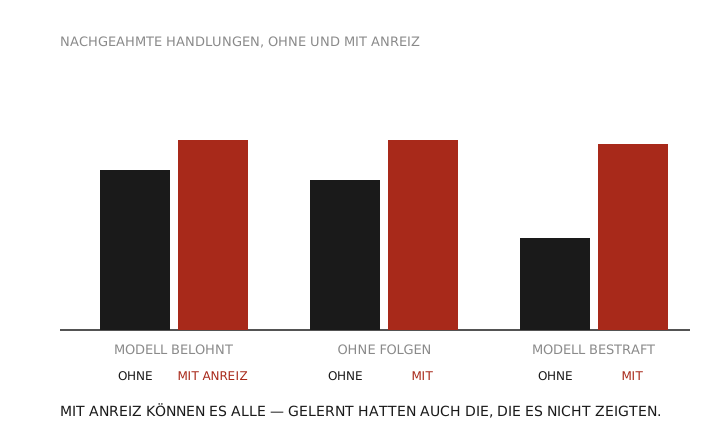
The follow-up experiments sharpened the claim at a decisive point. In 1963 Bandura compared live models with film and cartoon models and found similar effects — the model need not be in the room. In 1965 came the test that refuted behaviourism in its own language: if children saw the model punished for striking, they imitated it less often; if one then offered them a small reward for demonstrating it, all groups could suddenly do it equally well. With that the distinction was established that carries the whole programme: acquisition and performance are two things. All had learned; only those for whom it paid had shown it.
From the same programme comes the concept that made Bandura the field’s most-cited quantity, and it has nothing to do with dolls. In therapy experiments with snake phobics it emerged that improvement hung not on diminishing fear but on the growing conviction of being able to handle the situation: self-efficacy. Bandura named four sources — one’s own successes, watching successful models, encouragement, and the interpretation of one’s own arousal — and the first is the strongest. Out of this observation grew one of psychology’s most frequently measured quantities, with meta-analyses on school achievement, health behaviour, sport and occupational success that consistently find medium associations — and with the methodological caveat that self-efficacy and performance boost one another, which leaves the causal direction open in cross-sectional studies.
The reception made the experiment a weapon in the quarrel over media violence — and thereby loaded it with more than it can carry. The methodological criticism is old and serious: the Bobo doll is an object built to be hit; striking it is play and not aggression against a being that hits back or suffers. Observation followed immediately after the model and in the same surroundings — readiness to imitate in pure culture. The children had been deliberately frustrated. And the question whether the children understood what was expected of them belongs to the oldest objections: some are said to have remarked in the waiting room that this was the doll one is supposed to hit.
The series' effect reaches far beyond the aggression question, and its most practical offshoot stands in every anxiety therapy. Out of model learning came the technique of modelling: whoever treats a phobia first performs the feared behaviour themselves, lets the patient watch and then join in — participant modelling, which Bandura found superior to pure confrontation in controlled comparisons. In behaviour therapy it is standard to this day, in education likewise, and infancy research has since traced the readiness to imitate on which everything builds back into the first months of life — with a replication debate of its own about the earliest findings.
The ethical side of the arrangement belongs in the file, even if it looks harmless beside Milgram. Preschool children were deliberately shown an adult striking a doll, then deliberately frustrated by having attractive toys taken away, and then left alone with a mallet. Informing the parents about the purpose is not documented in the reports, and no committee review existed in 1961. Under today’s rules the series would require approval and in this form would probably not obtain it — not because of lasting harm, for which there is no indication, but because the procedure imposes on children a strain that could be produced otherwise.
The largest practical application of observational learning stands not in a therapy manual but in the television schedule. Out of Bandura’s theory grew a format that builds behavioural models into continuing entertainment serials: characters the audience identifies with demonstrate how to open an account, send a child to school or visit a clinic — and they experience the consequences, positive and negative. Serials of this cut have been produced since the 1970s in Latin America, Africa and South Asia, in several cases accompanied by surveys before and after broadcast. The efficacy evidence is uneven and methodologically difficult, because a control group inside the broadcast area is hard to form; the reach, by contrast, is undisputed, and Bandura advised this line into old age.
What stands today divides cleanly into two halves. The learning mechanism holds: observational learning is undisputed, evidenced in countless variants, in use in behaviour therapy as modelling, and traced in infancy research into the first months of life. Out of it grew Bandura’s social cognitive theory and self-efficacy, the most-measured concept in modern psychology. The aggression reading, by contrast, has shrunk. Across decades, meta-analyses of media violence find small associations with aggressive behaviour, but the estimates scatter widely, publication-biased and differing by author group — and for video games a series of registered studies and reanalyses has markedly shrunk the earlier effects. Bandura himself accompanied the debate to the end and criticised the abbreviation on both sides: whoever derives a ban from his findings overrates them; whoever declares them refuted confuses small effects with none. The sentence that carries the file is therefore narrower than the headline and more durable: children learn what they see. Whether they do it is decided by something else.
The textbook version shows children hitting a doll and concludes that seeing violence makes one violent. The more interesting half stands in the follow-up experiment of 1965 and is rarely shown along: children who saw the model punished for hitting scarcely imitated it — until one offered them a small reward for demonstrating it. Then all of them could, equally well.
The note records why that is the real discovery. Learning and doing are two different things; consequences do not steer what enters the repertoire but what is fetched out of it. With that, behaviourism was refuted in its own language: reinforcement decides the performance, not the rehearsal.
For the media debate an uncomfortable precision follows. That children learn actions they see is undisputed — including those from films and games. Whether they show them hangs on everything else: on models rewarded or punished for it, on opportunities, on inhibitions, on what the surroundings permit. Whoever quotes the Bobo doll to justify a ban quotes the rehearsal and means the performance.
Replication status: partial. Observational learning and the separation of acquisition and performance are confirmed many times over; the transfer to media violence yields small, scattered and publication-biased effects that have been corrected markedly downward since 2015.
Primary sources. Bandura, A., Ross, D., & Ross, S. A. (1961). Transmission of aggression through imitation of aggressive models. Journal of Abnormal and Social Psychology, 63(3), 575–582. Ibid. (1963). Imitation of film-mediated aggressive models. Journal of Abnormal and Social Psychology, 66(1), 3–11. Bandura, A. (1965). Influence of models' reinforcement contingencies on the acquisition of imitative responses. Journal of Personality and Social Psychology, 1(6), 589–595. — The experiment that separates acquisition and performance.
The theory. Bandura, A. (1977). Self-efficacy: Toward a unifying theory of behavioral change. Psychological Review, 84(2), 191–215. Bandura, A. (1986). Social Foundations of Thought and Action. Englewood Cliffs: Prentice-Hall. Bandura, A. (2016). Moral Disengagement. New York: Worth.
The media debate. Anderson, C. A., et al. (2010). Violent video game effects on aggression, empathy, and prosocial behavior: A meta-analytic review. Psychological Bulletin, 136(2), 151–173. — Small effects. Ferguson, C. J. (2015). Do angry birds make for angry children? Perspectives on Psychological Science, 10(5), 646–666. — Near zero after correction for publication bias. The controversy is not settled; the file carries both sides.